
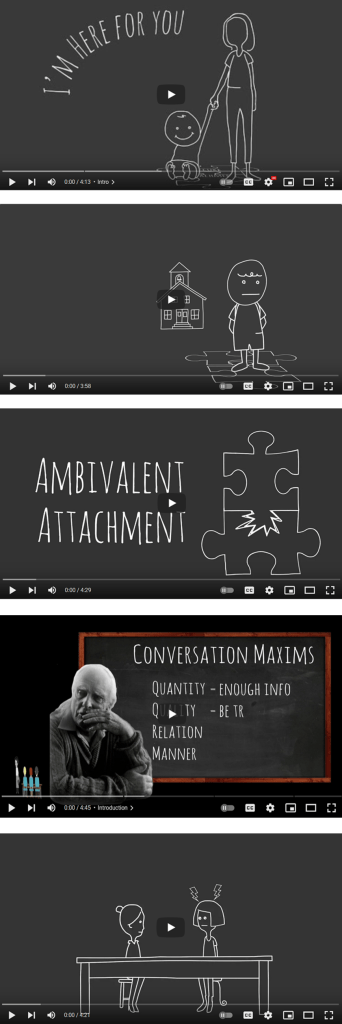
If you look up attachment or attachment style, you’ll find a whole bunch of right old guff– that suggests that your early life experiences have left you with what is known as an attachment style : that we are “a type”, that is fixed, and that – unless you’re one of the very lucky very few who’ve been left with a perfectly perfect attachment style known “secure attachment” then – you’re fucked for life.
It starts off as an adaption, a survival strategy, how we learned to survive as kids surrounded by whatever adults we were surrounded by, and depended on to survive.
Attachment styles are not fixed, and we likely use different styles in different situations, wit different people. That its leaned thing means we can also learn different ways.
But there’s a much simpler way to understand attachment and attachment styles, including how understanding how we’ve been shaped by our early life experiences we can learn and adapt and heal, grow and become who we can become.
-and it comes your way from Jacob Ham.
The first three videos give a simple description of the three main “attachment styles”.
In the latter two he goes on to show ways we can use understand how this plays out in us, particularly when we are challenged and stressed, for connecting, nurturing and healing.
As he says, at the beginning of the fourth video here…
Now that I’ve made three videos about attachment and the different types of attachment,
I kind of want you to forget everything I said…
because the worst thing
that can happen
is that you start going around
trying to simply reduce everyone
to being named…
– avoidant
– or ambivalent
– or secure
– or whatever.
and it’s just not that simple..
People have different types of attachment styles
with different people.
… but for me to explain what I mean by
how to track person state of mind
I think it makes sense to talk about
adult attachment
Below is a series of short videos from Jacob Ham.
Jacob Ham is the bomb.
Boom !
Secure Attachment – Jacob Ham
This is a simple description of secure attachment and its impact on student’s behaviours.
Avoidant Attachment – Jacob Ham
This is part 2 of 5 in my series of attachment.
Ambivalent Attachment – Jacob Ham
This video is about anxiously ambivalent attachment and how it shows up in students.
Attachment States of Mind
This video is about how attachment impacts the way we think and talk to another person, especially when we talk about stressful things.
Using Attachment for Healing – Jacob Ham
Part 5 of 5:
This video concludes the attachment series by explaining how mentalization is the key to fostering secure attachment.














































 agnotarte
 dave umbongo
 drkenplacebo
 highfellow
 recoverynetwork:Toronto


 recovery network: Toronto
You must be logged in to post a comment.