Three Movies One Dialogue


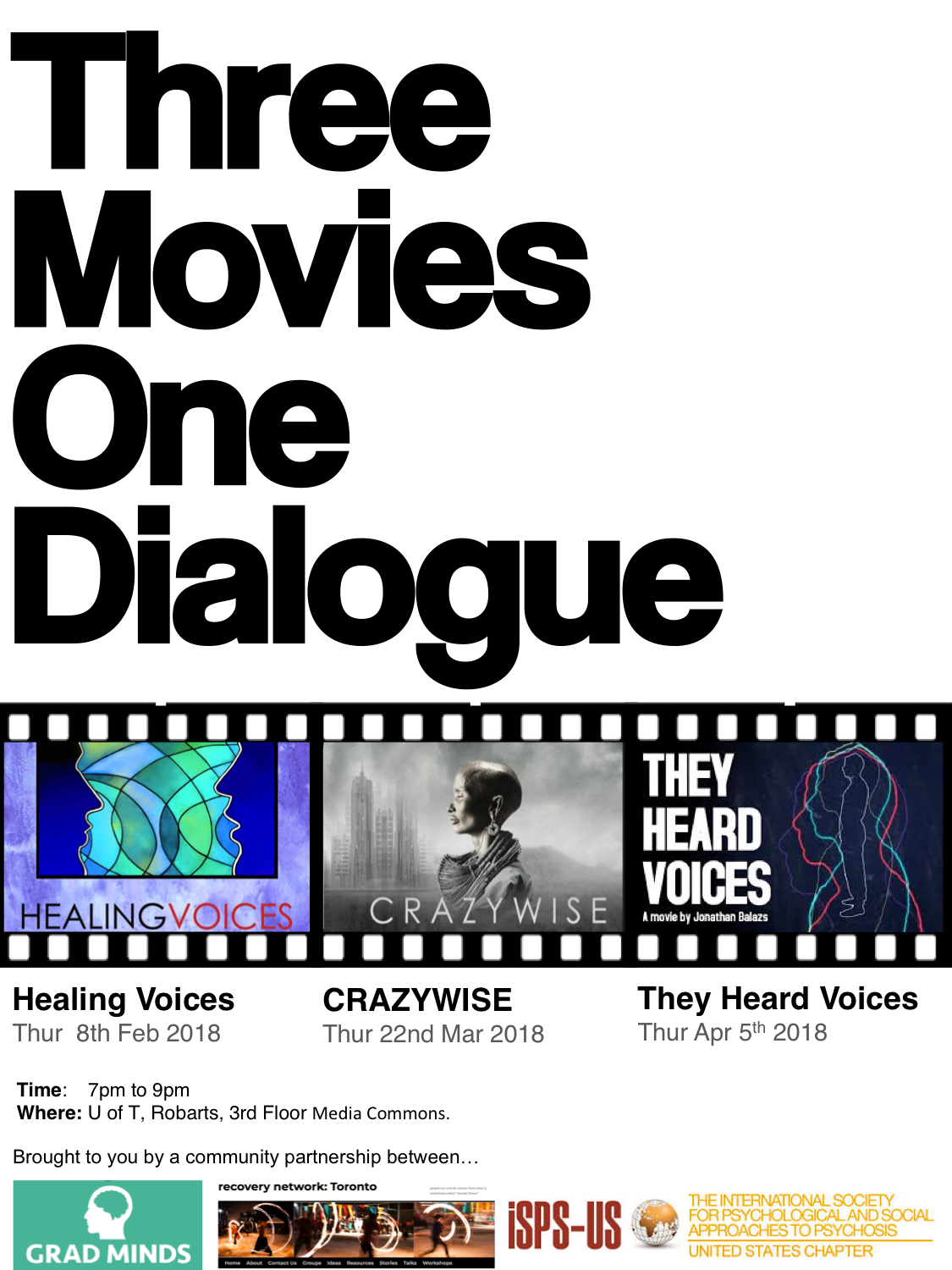
We are pleased to announce that in collaboration with community partners we are bringing to you a series of three events: Three Movies One Dialogue.

Three Independent movies sharing =different perspectives on human experiences clinicians call “serious mental illness” but you don’t have to.
Each event will also include a dialogue with invited guests and opportunity for questions.


One series, three evenings, three movie screenings, each movie independently produced, each screening including a panel of invited guests.

We invite you to a dialogue: a conversation with a centre and no sides, sharing many perspectives and world views on what often gets called “serious mental illness”.


Three Movies


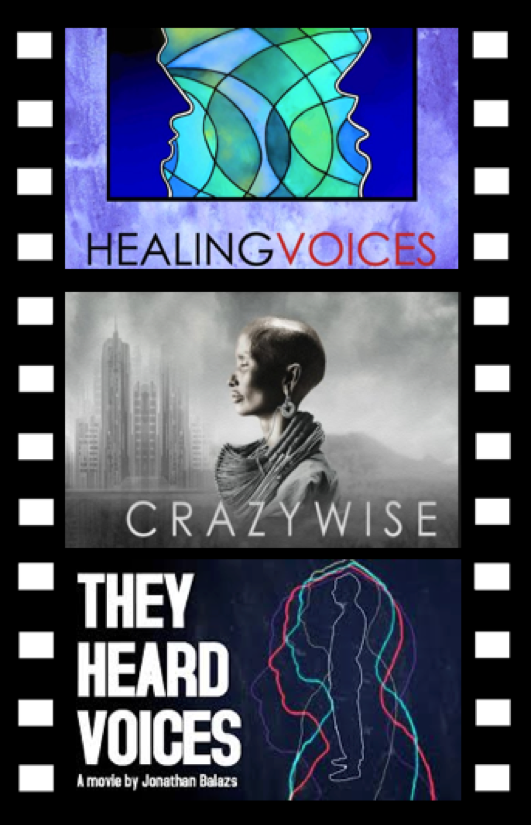
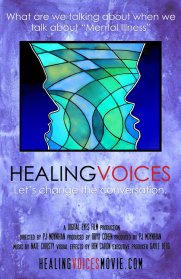
HEALING VOICES

HEALING VOICES is a feature-length documentary examining experiences commonly labeled as ‘psychosis’ or ‘mental illness’ in society, and a critical look at America’s broken mental health care system.

Director: PJ Moynihan

Website: http://healingvoicesmovie.com/


CRAZYWISE

Crazy…or wise? Ancient wisdom of indigenous cultures often contradicts modern views about a mental health crisis. Is it a ‘calling’ to grow or just a ‘broken brain’? The documentary CRAZYWISE explores what can be learned from people around the world who have turned their psychological crisis into a positive transformative experience.

Director:  Phil Borges

Website:https://crazywisefilm.com/


THEY HEARD VOICES

An “illness” with no “cure”, the label schizophrenia has persisted for over a century. Toronto-based filmmaker Jonathan Balasz’s film offers multiple perspectives. Is “schizophrenia” hard science? Or an arbitrary, catch-all term with no real meaning? The film weaves a series of wide-ranging interviews with voice hearers, medical historians, anthropologists and psychiatrists from Britain and America, presenting different people’s views side-by-side. The result offers a tapestry of contrasting colours.

Director: Jonathan Balasz
Trailer:    https://www.youtube.com/watch?v=vTD2dIoPn4w

Tickets

Free – Reserve yours on Eventbrite.

Note:  Please Arrive by 6:45pm – after that we reserve the right to allocate unused spaced for first come, first in any rush line.


This series is brought to you by a community partnership between:

  • Grad Minds – UofT Graduate Students’ Union’s mental health committee,
  • Toronto branch of ISPS-US, International Society for Psychological and Social Approaches to Psychosis,
  • Recoverynetwork: Toronto. 

Community partners and co-hosts

Grad Minds is the mental Health Committee of University of Toronto Graduate Students Union.


ISPS-US Toronto branch.
International Society for Social and Psychological approaches to Psychosis Toronto.

Info Pack

Printer-friendly  Information Pack:   Three Movies One Dialogue – Info Pack
info pack

Tickets

The screenings are free to attend: you can reserve your seat online Eventbrite.
[available soon]

Posted in Uncategorized | Comments Off on Three Movies One Dialogue

Team of Rival Zombie F#ckers


Millions of people hear voices – about 1,200,000,000 of us do so on a regular basis.

And there at least as many explanations we can choose from as the explanation that best fits our experience, or that best enables us to live our lives.

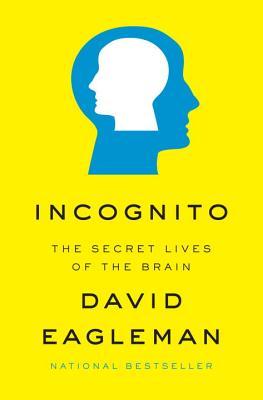
Here’s one of my favourites, it’s based on an idea from this book:
Incognito
David Eagleman

The book tackles the nonsensical notion that we use only 10% of our brains, turns that on its head and sets out how we’re mostly not aware of just how much is going on in there – or as he calls it “under the hood”.

We are only aware of a small part of what does go on and this is perhaps part of a smart energy conservation strategy – we just couldn’t eat enough to fuel our brains to be aware of every thing, all the time.

Zombie Routines
One term he uses is “zombie routines” – you’ll be familiar with this by the example he uses is travelling to work, first time we’re very aware of what we’re doing, in time it becomes automatic and we have all kinds of thing occupying our mind other than what we do to get to work without being aware or really noticing- he calls these “zombie routines”.

William James talked of much the same kind of thing with more familiar term – zombie routine is a kind of habit – what we do unthinkingly, or without needing to pay full, conscious attention.

David Eagleman suggest that this is mostly how we operate- by zombie routines. Occasionally, two or more zombie routines conflict – and pop up into our consciousness so that part of us that we call “me” becomes aware, and can make a conscious choice, an executive decision.

Team of Rivals
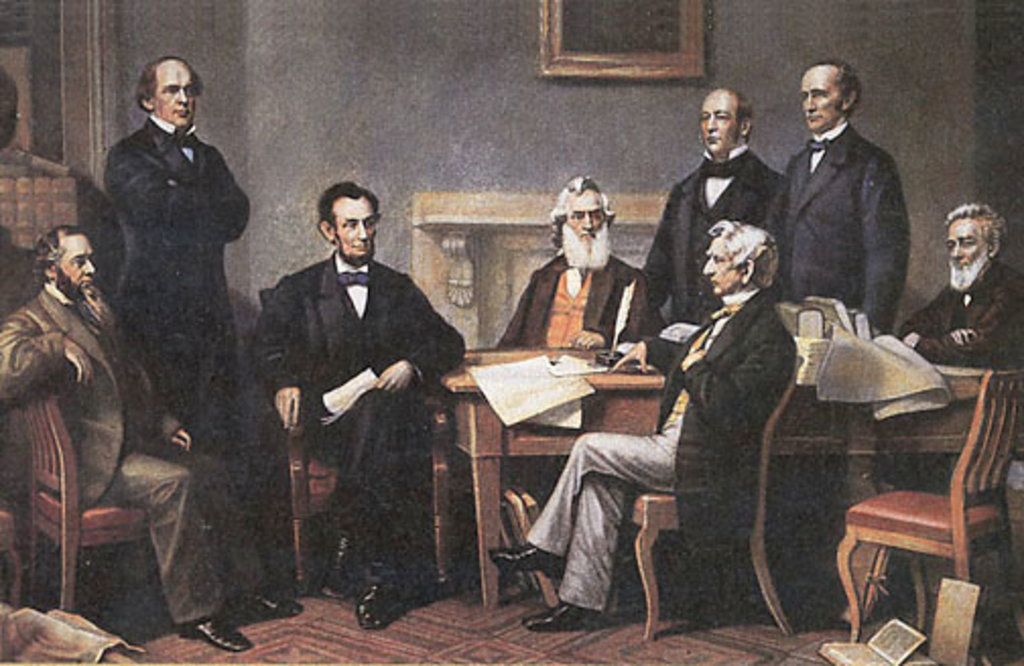
In another chapter he borrows a term from Doris Kearns Goodwin’s famous biography of Lincoln – Team of Rivals in which she portrays how as President, Lincoln assembled his cabinet deliberately bringing together people with strongly held and very different perspectives,  his job being to hear them all and to make final decisions.

This article at big think suggests “you can be your own team of rivals” and consult with your own inner rivals.

“Abraham Lincoln was one of the presidents who best understood the fact that you need to surround yourself with advisors who aren’t just Yes Men, who aren’t just going to agree with everything you say. “

http://bigthink.com/in-their-own-words/you-can-be-your-own-team-of-rivals

Eaglemann takes this idea and adds it to the Zombie Routines idea. Our job – meaning the conscious ‘I’ part of our experience – is to be Lincoln-like: aware of the conflicts that arise, learn when we need to get involved and learn to embrace the conflicts, the polyphony and many different perspectives – and to decide, to make a conscious choice from the zombie offerings.

Choose your zombie…

There are other undertandings and descriptions that describe something similar though with very different language and rarely involving zombies.

Team of  Rival Zombies
Or,  “Team of Rambunctious Rival Zombies”
Fits my lot perfectly.
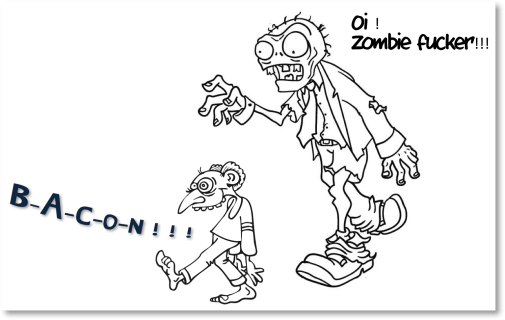
The more so because, since we read Eaglemann’s book together, that’s exactly  how they refer to their collective selves.
“oi ! Zombie fucker”

What do yours call themselves ?

or if you prefer…
how do the voices that only you hear “self – identify?”

Posted in Crazy World, Ideas, zombie | Tagged , , | Comments Off on Team of Rival Zombie F#ckers

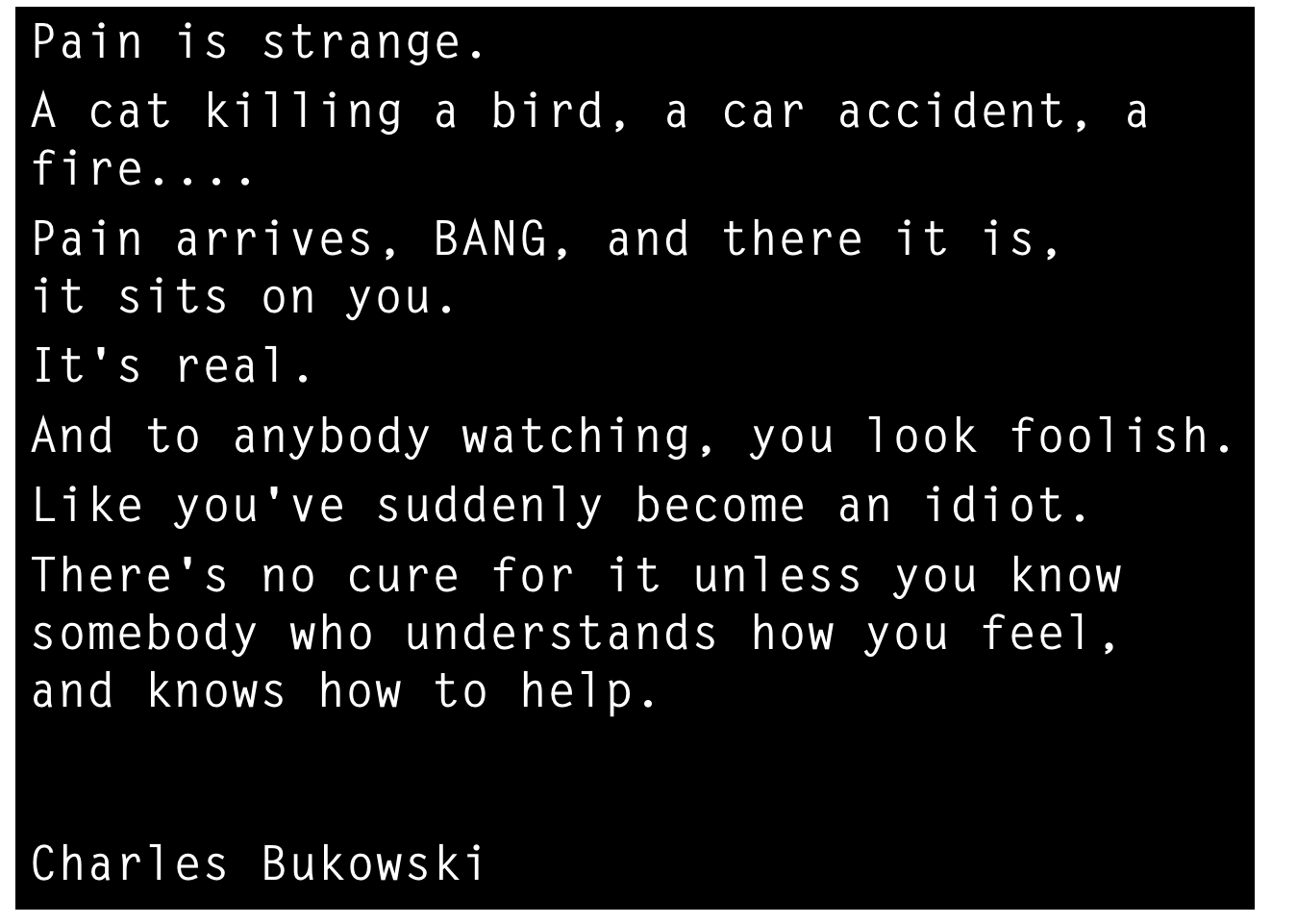
Pain is strange…


Pain is strange. A cat killing a bird, a car accident, a fire…. Pain arrives, BANG, and there it is, it sits on you. It’s real. And to anybody watching, you look foolish. Like you’ve suddenly become an idiot. There’s no cure for it unless you know somebody who understands how you feel, and knows how to help.

Charles Bukowski

Posted in Ideas, poetry | Tagged , , | Comments Off on Pain is strange…

The Trap – A Peculiar Kind of Freedom


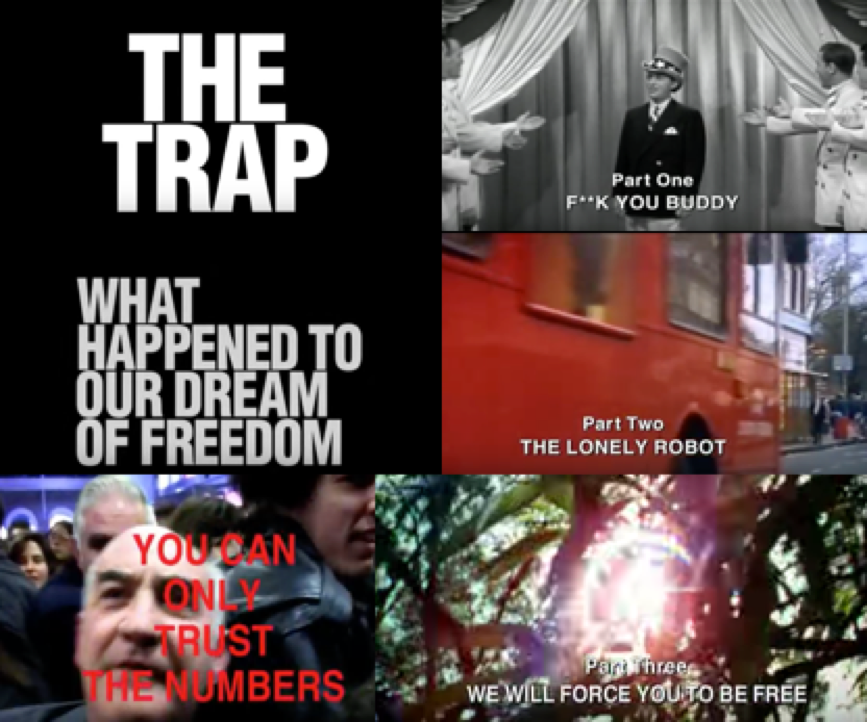
Adam Curtis’ three-part documentary: The Trap

…tells a tale of early days of what we have these days come to call “neoliberalism”. Drawing as it does on BBC Archives of the time it focuses on the peculiarly British version then called Thatcherism, and its entangled twin Reaganism. There are many threads carefully entwined together here and many players in the cast and few come out in a good light.

Many folks critique psychiatry for serving a “neoliberal agenda”.  This telling sheds light on how psychiatry is one of pillars upon which that neo-liberal agenda is built and without which it couldn’t exist.

You’ll see R.D. Laing, David Rosenhan having fun sticking out their tongues at psychiatry and changing bugger all  beyond providing further grist to the mill for psychiatry to go further down the route it had already chosen: scientismification, or giving the appearance of science without any of the encumbrances of science.

You’ll see Elliot Spitzer throwing open open the doors to the brave new world in which he stripped away all clinical judgement from the process of psychiatric diagnosis – proudly explaining how a lay interviewer gathers the data to be fed, on a punched card, into giant  building-filling computer.

The computer makes the diagnosis.

These days we skip the computer, the clinician gets you to do the work – hands you a checklist then counts how many boxes you ticked. That’s it.
If, that is,  you make it that far since most folks will diagnose themselves or each other using an app on their phone while waiting months for the appointment.

The whole piece is about freedom- a very “peculiar kind of freedom” or  as Curtiss narrates in the closing minutes of Part 1 F*ck You Buddy:

“a very narrow and specific type or freedom that meant shedding all ideas of working for the collective or public good and becoming instead an individual, constantly calculating what could be to one’s advantage in a system defined by numbers.

At the root of this were the simplified, self-interested creatures that John Nash had created back in the 1950s to make his game theory equations work.

But now the aim of the system of targets and incentives was to turn public servants into just these simplified beings – individuals who calculated only what was best for them and  did not think any longer in wider political terms.”

It is a right ripping yarn.


Part 1:  F*ck You Buddy

Part 2:  The Lonely Robot

Part 3:  We Will Force You To Be Free


Posted in bollocks, Crazy World, Ideas | Tagged | Comments Off on The Trap – A Peculiar Kind of Freedom

On some faraway beach – Brian Eno


faraway.pngGiven the Chance
I’ll Die Like a Baby
On Some Far Away Beach


Given the Chance
I’ll Die Like a Baby
On Some Far Away Beach
When the Season’s Over

Unlikely
I’ll Be Remembered
As the Tide Brushes Sand in My Eyes
I’ll Drift Away

Cast Up On a Plateau
With Only One Memory
A Single Syllable
Oh Lie Low Lie Low

Posted in music | Comments Off on On some faraway beach – Brian Eno

Blamestormfixing or healing…?


Seems we have a cultural addiction to blamestorming and blamestorm-fixing:
at the first signs of discomfort we look around for the nearest person to blame and discharge our discomfort on them.

We might just yell and  them names and leave it there, realising we’ve just behaved in the exact way that fits the name we just called the other person,

Often, we’ll go a stage further too  into blamestormfixing and issue forth direction in what they need do to fix things right now so we can feel better.

When we stop looking for people to blame
and give up looking for people to fix us
we make it easier for ourselves to find healing,

When we stop looking for others who we can see as needing to be fixed
as needing us to fix them,
as needing our fix,
we make it easier for them to find healing too.

When we find we don’t need to blame
and we don’t need to fix or be fixed
it’s easier to find healing
and easier to just be.


Posted in Uncategorized | Tagged , , , , | Comments Off on Blamestormfixing or healing…?

Pale Blue Dot – Carl Sagan


Look again at that dot.
That’s here.
That’s home.
That’s us.

On it
everyone you love,
everyone you know,
everyone you ever heard of,
every human being who ever was,
lived out their lives.

The aggregate of our joy and suffering,
thousands of confident religions, ideologies, and economic doctrines,
every hunter and forager, every hero and coward,
every creator and destroyer of civilization,
every king and peasant,
every young couple in love,
everymother and father,
hopeful child,
inventor and explorer,
every teacher of morals,
every corrupt politician,
every “superstar,”
every “supreme leader,”
every saint
and sinner
in the history of our species
lived there
-on a mote of dust
suspended in a sunbeam.

The Earth is
a very
small stage
in a vast cosmic arena.

Think of the rivers of blood spilled
by all those generals and emperors
so that, in glory and triumph,
they could become
the momentary masters
of a fraction
of a dot.

Think of the endless cruelties
visited by the inhabitants of one corner of this pixel
on the scarcely distinguishable inhabitants
of some other corner, how
frequent their misunderstandings, how
eager they are to kill one another, how
fervent their hatreds.

Our posturings,
our imagined self-importance,
the delusion that we have some privileged position
in the Universe,
are challenged by this point
of pale light.

Our planet
is a lonely speck
in the great enveloping cosmic dark.
In our obscurity, in all this vastness,
there is no hint that help will come from elsewhere
to save us
from ourselves.

The Earth is the only world known so far to harbor life.
There is nowhere else,
at least in the near future,
to which our species could migrate.
Visit, yes.
Settle, not yet.

Like it or not, for the moment the Earth is where we make our stand.

It has been said that astronomy is a humbling and character-building experience.
There is perhaps no better demonstration
of the folly of human conceits
than this distant image of our tiny world.
To me, it underscores our responsibility
to deal more kindly with one another,
and to preserve and cherish the pale blue dot,
the only home we’ve ever known.

― Carl Sagan,
Pale Blue Dot: A Vision of the Human Future in Space

Posted in Uncategorized | 2 Comments

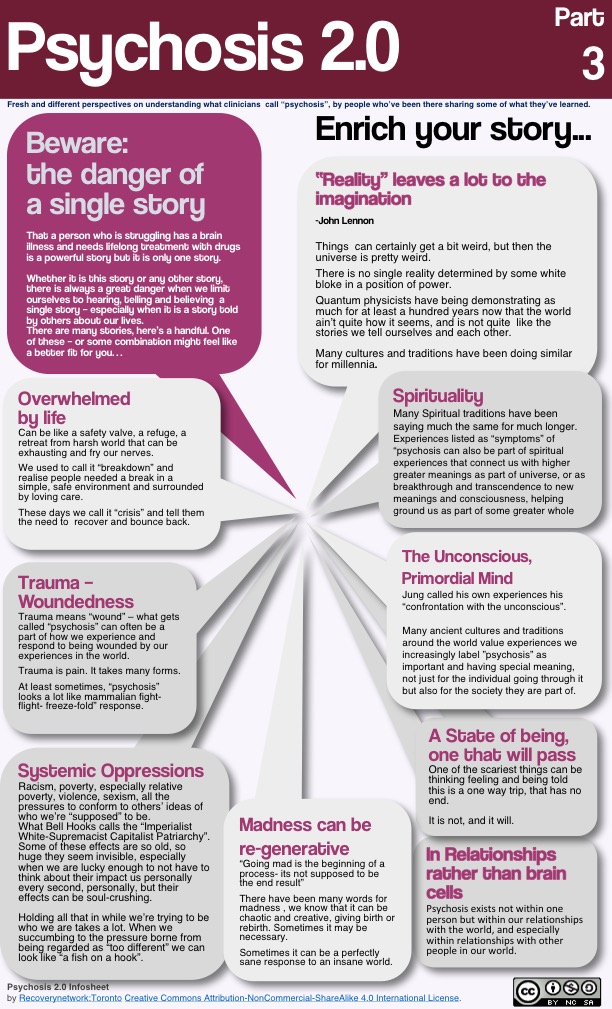
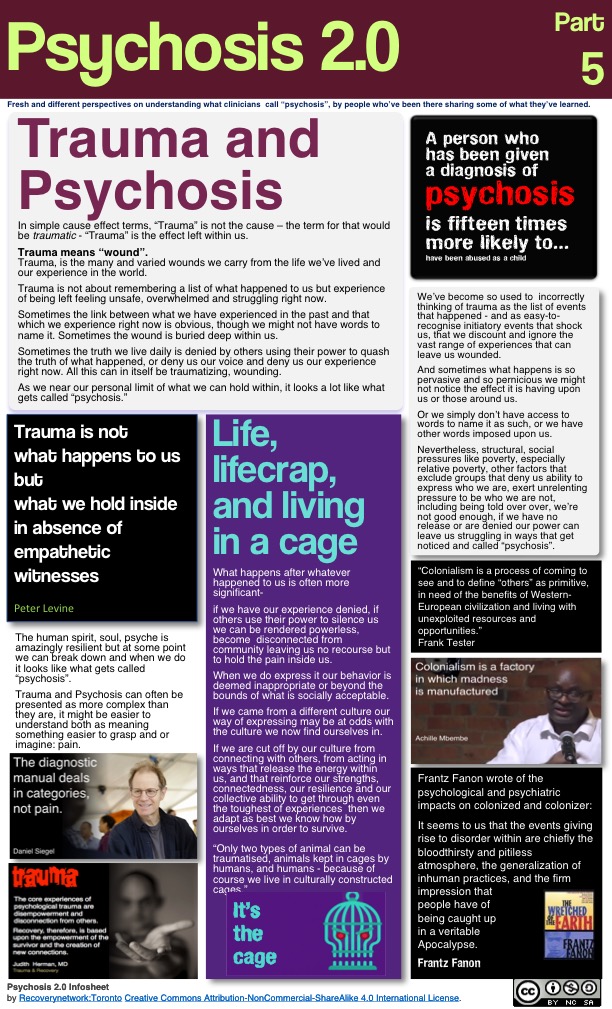
Psychosis 2.0 Infosheet


Fresh ideas and different perspectives on what clinicians call “psychosis” – but you don’t have to – and put together by people who’ve been there and wanted to share some of what they learned from their experiences.

You don’t have to like it all – or any of it – your choice: take what you like, leave the rest.

Specifically, this resource offers a broad spectrum of ideas and language that we intend to be non-diagnostic, non-categorizing non-disorderizing, non-problematizing.

A multi-part infosheet – use singly or together in any combo –  it’s your choice.
Made for sharing, so don’t keep it to yourself- share already, ok?

And we’re not finished, good folks are already working on more parts/pages/posters, so watch this space…

Printer Friendlier version
A printer friendly-er  pdf version is available at the bottom, it might also be better on some screens.
Psychosis2.0 – [18Dec2018]


Printer Friendly pdf.
Psychosis2.0 – [18Dec2018]

Posted in Uncategorized | Tagged , , | Comments Off on Psychosis 2.0 Infosheet

Wounded Healers: How peer support workers help patients in crisis


Excellent piece by CBC Radio, an edition of always excellent White Coat Black Art showcasing and exploring the role of peer support and a fine example of how it can work from North Bay, Ontario.

The best of it is the 30 min podcast itself, here:
http://www.cbc.ca/radio/popup/audio/listen.html

It does a great job of portraying just how overwhelming, disempowering and frankly frightening a human experience it can be to encounter MH services – just at a time when we’re already feeling our most overwhelmed and powerless and frightened, in short when we’re already least equipped to deal with what we can, all too often, find there…

It also does a good job of portraying the all too common attitude in such places, where staff too often feel exhausted and hemmed in by “the system”, and the trenchantly defensive routines that develop in any workplace when staff are badly treated. The unspoken attitude is given incredulous voice [and even hammed-up a little for dramatic effect] with: of how a person without professional training and, and a person with diagnoses [and especially that diagnosis!] can be allowed in here, let alone play a useful role rather than create mayhem and havoc.

People in Equal Partnership

Chris Fontaine works as a “Peer navigator” with a small organisation People in Equal Partnership, the name speaks volumes:  run by peers, Chris is “embedded” within the ER team in the local Regional Health Centre in North Bay.
More on people in Equal Partnership: PEPplace.org


He speaks to his own experience of having been many times to ER on the receiving end , the difficulties he experienced , the uncomfortable power dynamic, many staff felt they were 

“above me, better than me”.

Now ’tis only a few years ago that peer support was being heralded as miraculous, and  being seen as novel and dangerous – you’ll hear it here show-host Brian Goldman, an experienced ER Doc,  stops the tape with a guffaw to express astonishment that is still common in such places..

Goldman:

“I’m telling tales now…”

[if you’re not familiar, the basic premise of the show is that it tells tales of what goes on, because its important that someone does and that what goes on in medical institutions is something we do need to talk about.]

Particularly, important is the part of the conversation about how this couldn’t just be put-in anywhere and expected to work, it takes things to be in place already.


We hear from the Triage Nurse Leeanne Nesbitt how she sees the contribution made by Peer Navigator, Chris…

“I think its invaluable, provides so much support to those who come in and to us as Triage nurses and the emergency room nurses.”

And we hear from the Emergency room physician Dr Erica Buck:

“So much of healing comes from human connection.”

She even quotes Rumi – “where there’s a wound the light comes in.”

“Yes expertise and our knowledge and our skills are vital, but
human connection is deeply human in another way.”

Recognising that what he’s witnessing is perhaps not commonplace the  interviewer steps in and invites a reality check:

“In a busy emergency department that human connection can be hard to come by.”

Doc:

“It can be overwhelming, I wish I had more time”

Peer Supporters do not have magic faerie dust…

There are plenty of examples where it has just been ‘put in’ and didn’t work and isn’t working. Like the lightbulb, services, and those working in them have to both want to change and be ready to change.

There have been – and are – many more examples  of people being given a title “peer worker” peer specialist”  and led to believe that simply by dint of their existence -and perhaps by breathing – that they are going to single-handedly transform a whole health system.

Sadly, when they start many find themselves confronted with cold harsh reality familiar to many who have found themselves occupying the bottom rung of a tired, rigid hierarchy in a broken system, and a sick workplace: being bullied, gaslighted – stigmatized and frozen-out: marginalised by colleagues and left without support from managers.
Indeed many of these situationsinto which people enter with such hope so resemble the very worst kind of situations that so pressure human souls that they come to struggle in such ways that get deemed “mentally  ill” in the first place .

Inevitably many become exhausted, sick and leave and many give up and go to college so they can get more credentials so they can start further up the ladder in hope of escaping some of that institutionalised crap.

Many more do soldier on alone, driven by their conviction in their work even in face of every-day evidence that the system, as a whole is not ready for them and is a long way from taking their contribution seriously.

Of course, there are places it can work, and work now. There are a small few examples where it is working,  where the environment already places a strong focus on bringing humanity to services, on listening, on creating space and supporting the person struggling in identify their own needs and help them meet them rather than insisting on being right and knowing what they need.

The story here of how its working in one ER in North Bay is excellent example for how it can work and some of what it takes for it to work:   individuals prepared to bring their humanity to the fore and use that to make space in which their professional knowledge skills, expertise can work.

There are plenty other places where there is much work to be done before it can.


PEER means EQUAL

In the end “peer” means “equal”.
It does not mean:

“I have the answer”

It does mean:

“I’m alike with you.”

“I’ve struggled too/  I still do struggle in this world. “

“I am finding my way, I believe you can find yours too”


To borrow a phrase from Pat Deegan at its core, it’s about :

“Putting the human back in human services.”

And in that there is a role for everyone to play their part and bring their humanity to et fore.

From CBC Radio

Saturday December 09, 2017

Wounded Healers: How peer support workers help patients in crisis

Marcelle Lallemand believes that the quiet intervention of Chris Fontaine saved her life.

Lallemand was brought to the emergency department of the North Bay Regional Health Centre in handcuffs after what she calls “a big show on Main Street.”

“I was handcuffed to a bed, alone in a room,” she said. “Police were outside laughing about me and making jokes and waiting for me to calm down, but their remarks and the way they were addressing me, I was just getting more angry and more in crisis.”

Marcelle Lallemand with friends Jim and Judy Reid

Marcelle Lallemand with friends Jim and Judy Reid (Jeff Goodes)

Sitting alone, humiliated by her public arrest, Lallemand felt herself spiralling out of control, losing hope.

“I was praying and I was asking Jesus to come and save me. I had no hope and then Chris arrived.”

White Coat Black Art
Marcelle Lallemand talks about the night she met Chris Fontaine in the ER 

Chris Fontaine is a peer support navigator, someone with lived experience with mental health issues. In Chris’ case, he made many trips to the ER in his early 20’s, when he struggled with what was later diagnosed as borderline personality disorder and dysthymia (long-term mild depression).

Now in full recovery, Chris studies psychology while working for People for Equal Partnership in Mental Health Nipissing (PEP).  One of the country’s oldest peer-support organizations, it’s been offering services to those suffering from mental health and addiction issues for more than 26 years.

I think the peer support worker is fixing the downtime, the period between assessment and admission. Chris is giving that downtime significance by justifying the patient’s needs. Keeping them calm…so nobody’s ever left alone. You feel like you have a supportive person at your side.– Leeanne Nesbitt, triage nurse

“Between my education and my own personal experience, I can kind of provide strategies for coping with day-to-day struggles dealing with the symptoms of mental health issues.”

Chris remembers his own experiences in ER waiting rooms without peer support workers as “terrifying.”

“There was definitely that uncomfortable power dynamic where whoever I talked to, I felt like they were above me or better than me, and that made it a bit difficult. That’s a big part of why I had to keep going back as well,” he said. “I wasn’t able to really connect with an individual and feel comfortable with what I was dealing with or understand that it was something other people struggle with too.”

‘It’s invaluable’

Emergency departments can be intimidating and overwhelming environments. Doctors are often in a hurry, and the wait times are long. Letting the patient in crisis know they are not alone is the entire point of peer support, according to Deborrah Sherman, executive director of the Ontario Peer Development Initiative (OPDI).

“The basic tennet of peer support is saying ‘I’ve been where you are’,” Sherman said. “I’ve been through it. I’m doing okay. What can I help you with? How can I encourage you? How can I support you?”

Sherman said peer support workers are not interested in making a diagnosis. They aren’t there to cure or treat any ailments but rather “to provide hope and to exemplify that people do and can recover. That you’re not alone and that there are far more people with issues than you might know about.”

At North Bay Regional Hospital, Fontaine is embedded with the triage staff — having access to patients as soon as they arrive.

Nurse Leeanne Nesbitt

Triage nurse Leeanne Nesbitt (North Bay Regional Health Centre)

“I think it’s invaluable,” said Leeanne Nesbitt, a triage nurse who works with Fontaine. “I think Chris provides so much support to everybody that comes in and even us, as triage nurses and the emergency room nurses.”

When a patient is identified as needing mental-health support, they are brought to a more comfortable private room. A little while later Fontaine arrives to ask them how they are feeling and allows them to express their concerns.

The healing power of human connection

Chris dresses casually: Street clothes, big baseball cap, spacers in his ears. That helps too, he says. “Sometimes it can be difficult to talk to somebody about what your concerns are, what your needs are, especially if they’re a nurse in scrubs or a doctor with their clipboard. It can be a little intimidating, so sometimes we can get extra information that is useful for their care as well.”

Emergency room physician Dr Erica Buck

Emergency room physician Dr Erica Buck (North Bay Regional Health Centre)

ER doctor Erica Buck values the lived experience that peer support navigators like Chris bring to the team. “When one’s been wounded you have something more to share,” she says. “They automatically, because of their shared experiences can relate to a patient and make a patient feel at ease. Human connection is deeply healing.”

And for Lallemand, that extra care provided by Fontaine was crucial to her recovery.

“For sure Chris has saved my life that night.”

Original:
http://www.cbc.ca/radio/whitecoat/wounded-healers-how-peer-support-workers-help-patients-in-crisis-1.4439694

Posted in Healing, Ideas, peer support, Stigma begins with D, Trauma, woundedness | Tagged , , , , | Comments Off on Wounded Healers: How peer support workers help patients in crisis

Changes – Charles Bradley


Cover version of original song by Black Sabbath.

It took so long
To realize
And I can still hear
Her last goodbyes


I feel unhappy
I feel so sad
I lost the best friend
That I ever had

She was my woman
I loved her so
But it’s too late now
I’ve let her go

I’m going through changes

We shared the years
We shared each day
In love together
We found a way

But soon the world
Had its evil way
My heart was blinded
Love went astray

I’m going through changes

It took so long
To realize
And I can still hear
Her last goodbyes

Now all my days
Are filled with tears
Wish I could go back
And change these years

I’m going through changes


Posted in music | Tagged , , | Comments Off on Changes – Charles Bradley