
What did you do yesterday?
Did it SUCK LESS than this…?
Carnival des Voix, yesterday,
Oshawa, Ontario
#voicesonastick

What did you do yesterday?
Did it SUCK LESS than this…?
Carnival des Voix, yesterday,
Oshawa, Ontario
#voicesonastick
This one of my favourite articles, one of those I try to make a point of reading again every now and then. Margaret Wheatley on listening- such a simple act, an act of generosity.
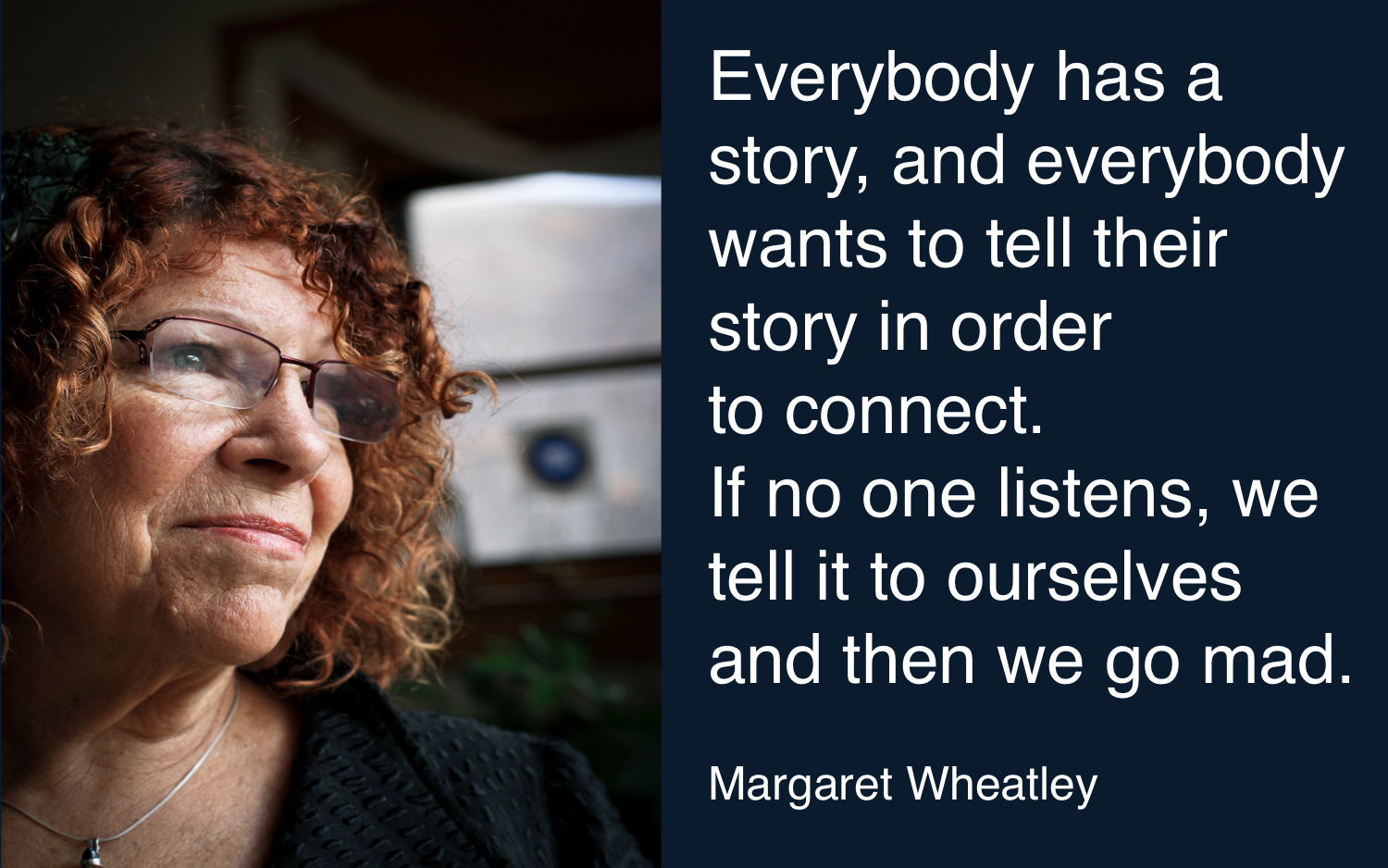
Shambhala Sun, December 2001
Margaret Wheatley
You are reading this in December, but I have written this just a few days after September 11th, 2001. I have tried to imagine what the world feels like now, two months later, what else might have happened, what has changed, how each of us feels, if we are more divided or more connected. In the absence of a crystal ball, I look to the things I believe to be true in all times and for most situations. And so I choose to write about one of these enduring truths: great healing is available when we listen to each other.
Listening is such a simple act. It requires us to be present, and that takes practice, but we don’t have to do anything else. We don’t have to advise, or coach, or sound wise. We just have to be willing to sit there and listen. If we can do that, we create moments in which real healing is available. I have seen the healing power of good listening so often that I wonder if you’ve noticed it also. There may have been a time when a friend was telling you such a painful story that you became speechless. You couldn’t think of anything to say, so you just sat there, listening closely, but not saying a word. And what was the result of your heartfelt silence, of your listening?
A young black South African woman taught some of my friends a profound lesson about listening. She was sitting in a circle of women from many nations, and each woman had the chance to tell a story from her life. When her turn came, she began quietly to tell a story of true horror–of how she had found her grandparents slaughtered in their village. Many of the women were Westerners, and in the presence of such pain, they instinctively wanted to do something. They wanted to fix, to make it better, anything to remove the pain of this tragedy from such a young life. The young woman felt their compassion, but also felt them closing in. She put her hands up, as if to push back their desire to help. She said: “I don’t need you to fix me. I just need you to listen to me.”
She taught many women that day that being listened to is enough. If we can speak our story, and know that others hear it, we are somehow healed by that. During the Truth and Reconciliation Commission hearings in South Africa, many of those who testified to the atrocities they had endured under apartheid would speak of being healed by their own testimony. They knew that many people were listening to their story. One young man who had been blinded when a policeman shot him in the face at close range said: “I feel what has brought my eyesight back is to come here and tell the story. I feel what has been making me sick all the time is the fact that I couldn’t tell my story. But now it feels like I’ve got my sight back by coming here and telling you the story.”
Why is being heard so healing? I don’t know the full answer to that question, but I do know it has something to do with the fact that listening creates relationship. We know from science that nothing in the universe exists as an isolated or independent entity. Everything takes form from relationships, be it subatomic particles sharing energy or ecosystems sharing food. In the web of life, nothing living lives alone.
Our natural state is to be together. Though we keep moving away from each other, we haven’t lost the need to be in relationship. Everybody has a story, and everybody wants to tell their story in order to connect. If no one listens, we tell it to ourselves and then we go mad. In the English language, the word for “health” comes from the same root as the word for “whole”. We can’t be healthy if we’re not in relationship. And “whole” is from the same root word as “holy.”
Listening moves us closer, it helps us become more whole, more healthy, more holy. Not listening creates fragmentation, and fragmentation is the root of all suffering. Archbishop Desmond Tutu describes this era as a time of “radical brokenness” in all our relationships. Anywhere we look in the global family we see disconnection and fear of one another. As one example, how many teen-agers today, in many lands, state that no one listens to them? They feel ignored and discounted, and in pain they turn to each other to create their own subcultures. I’ve heard two great teachers, Malidoma SomŽ from Burkino Fasso in West Africa, and Parker Palmer from the United States, both make this comment: “You can tell a culture is in trouble when its elders walk across the street to avoid meeting its youth.” It is impossible to create a healthy culture if we refuse to meet, and if we refuse to listen. But if we meet, and when we listen, we reweave the world into wholeness. And holiness.
This is an increasingly noisy era-people shout at each other in print, at work, on TV. I believe the volume is directly related to our need to be listened to. In public places, in the media, we reward the loudest and most outrageous. People are literally clamoring for attention, and they’ll do whatever it takes to be noticed. Things will only get louder until we figure out how to sit down and listen. Most of us would welcome things quieting down. We can do our part to begin lowering the volume by our own willingness to listen.
A school teacher told me how one day a sixteen year old became disruptive-shouting angrily, threatening her verbally. She could have called the authorities-there were laws to protect her from such abuse. Instead, she sat down, and asked the student to talk to her. It took some time for him to quiet down, as he was very agitated and kept pacing the room. But finally he walked over to her and began talking about his life. She just listened. No one had listened to him in a long time. Her attentive silence gave him space to see himself, to hear himself. She didn’t offer advice. She couldn’t figure out his life, and she didn’t have to. He could do it himself once she had listened.
I love the biblical passage: “Whenever two or more are gathered, I am there.” It describes for me the holiness of moments of real listening. The health, wholeness, holiness of a new relationship forming. I have a T-shirt from one conference that reads: “You can’t hate someone whose story you know.” You don’t have to like the story, or even the person telling you their story. But listening creates a relationship. We move closer to one another.
I would like to encourage us all to play our part in the great healing that needs to occur everywhere. Think about whom you might approach–someone you don’t know, don’t like, or whose manner of living is a mystery to you. What would it take to begin a conversation with that person? Would you be able to ask them for their opinion or explanation, and then sit quietly to listen to their answer? Could you keep yourself from arguing, or defending, or saying anything for a while? Could you encourage them to just keep telling you their version of things, their side of the story?
It takes courage to begin this type of conversation. But listening, rather than arguing, also is much easier. Once I’d practiced this new role a few times, I found it quite enjoyable. And I got to learn things I never would have known had I interrupted or advised.
I know now that neither I nor the world changes from my well-reasoned, passionately presented arguments. Things change when I’ve created just the slightest movement toward wholeness, moving closer to another through my patient, willing listening.
note to editor: I’d like to add the following reference to the end of this article. This column is adapted from Wheatley’s new book: Turning to One Another: Simple Conversations to Restore Hope to the Future, January 2002.
_____________________________________
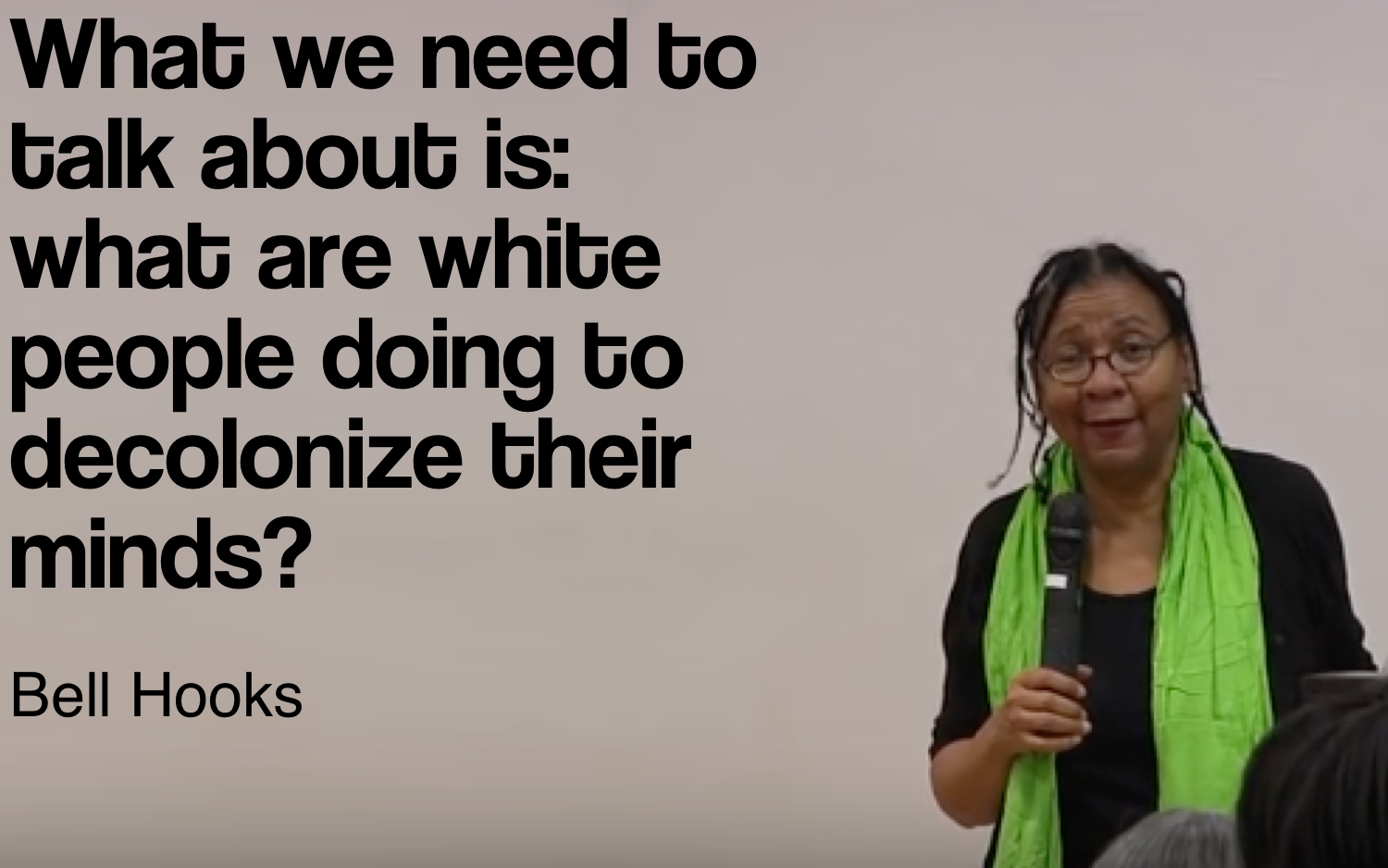
Psychosis is not a “thing” except as a kind of aperture or a lens through which we view someone struggling. It’s an interpretation, a way of seeing, of categorizing, naming, and talking about a person’s struggle.
That that lens, that interpretation, that way of seeing and talking about tells us as much and more about the person doing the looking as it does about the person whom they gaze upon and who is struggling.
… and that’s all our choice, the one we make.
Here’s one way of choosing…

Saturday 8 July 2017 07.00 BST Last modified on Saturday 8 July 2017 13.50 BST
Most people know about SSRIs, the antidepressant drugs that stop the brain from re-absorbing too much of the serotonin we produce, to regulate mood, anxiety and happiness. And a lot of people know about these drugs first hand, for the simple reason that they have used them. Last year, according to NHS Digital, no fewer than 64.7m antidepressant prescriptions were given in England alone. In a decade, the number of prescriptions has doubled.
The first indication that something was up came as I approached my local tube station. I noticed that I was in a state of extreme dissociation, walking along looking as though I was entirely present in the world yet feeling completely detached from it. I had drifted into total mental autopilot.
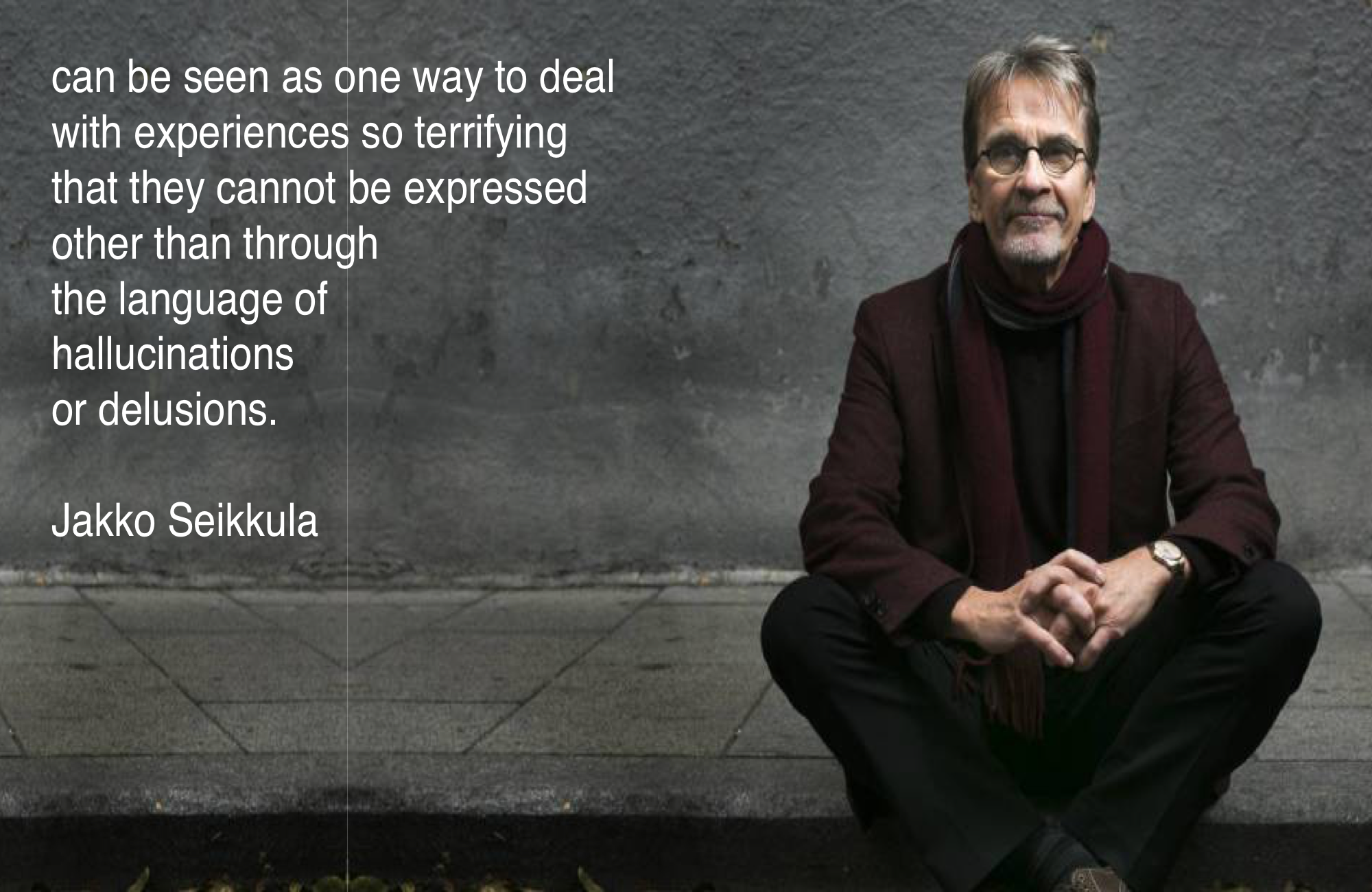
Luckily, I was able to recognise my fugue. It’s a symptom of my condition, which, as I’ve written before, is complex post-traumatic stress disorder. The drug-induced dissociation was more intense than I’m used to when it’s happening naturally. I use the word advisedly. Much of what is thought of as illness is actually an extreme and sensible protective reaction to unbearable interventions from outside the self.
Because I’ve been in very good psychotherapy for about a year now, I’ve learned to identify times of dissociation, and “ground” myself. Hitting myself in the centre of the chest works best for me, especially now that I’ve stopped wearing the necklace I used to thump into my breastbone. Of course, you look like a bit of a prat, striding about banging your chest, but there you are. The one thing that makes you feel normal is the one thing that alerts others to the fact that something weird’s going on.
I’ve been resisting dissociation for pretty much every minute I’ve been on the drug since then. Being in good company helps most, and being in parks, fields, gardens and nature. You have to keep busy. The leaflet that came with the drug, which I read thoroughly before starting the course, does warn that in the first few days you might find that the symptoms you’re trying to escape come back more strongly. Unfortunately, I tend to dissociate in order to avoid having panic attacks. So, as I get better at managing the dissociation, the panic attacks surge. It’s like playing symptom whack-a-mole, except that you’re whacking bits of your psyche, as well as your chest.
I spent pretty much all of Thursday in one long low-level panic attack – keeping busy, telling no one. I didn’t want to mention it, because that would make it worse. At one point, in the park with my brother, he insisted, randomly, that I walk up the hill to the bus stop instead of down it, like I wanted to, in the heat. By the time I got to the bus stop, my legs were barely working, and I was in the grip of convulsive shudders.
I go along with things I don’t want to do, things that ignore my wants and needs, then hate myself for my compliance. The little examples, such as this one, reawaken my feelings about the huge ones. I was bullied a lot as a child, and my parents were needlessly strict and deludedly all-knowing. It’s grown into a major cognitive dissonance. I loathe being bullied or bossed about, yet at the same time it feels so familiar and comfortable that I’m complying before I even know it, eager to please people who can’t be pleased.
Then I feel full of resentment and anger against the perpetrator of the control – so much so that it becomes overwhelming, and my mind and body rebel. I literally shake the feelings out. It’s the reason why I recently began to seek NHS psychiatric help, on top of private psychotherapeutic help. A couple of interventions of epic proportions have recently been perpetrated against me. They have left me so poleaxed that I’m unable to assert myself enough to walk downhill.
A breakthrough occurred, though. I was able to tell my brother, calmly, what was happening to me and why. He kissed me on the cheek. He never does that.
Why am I writing this down for publication? Practically, it’s because these powerful drugs arrived with so little guidance about what to expect. An NHS case-worker I’d been interviewed by once – not a doctor – called my GP’s practice and arranged for a prescription to be written by a GP I’d had nothing to do with. I was told on the phone what the prescription was, and that it was waiting for me to pick up from the local pharmacy. I wasn’t consulted about the drug I was being offered at all, although I had said that I wanted to try an antidepressant. I’ll meet a different GP and the case-worker in two weeks’ time.
The process has taken about five weeks, and has been circular. In crisis at the end of May, I asked my GP practice for help and was told to go to A&E instead. I didn’t react well, and left upset and furious. Returning a few days later, I said that I would prefer a less dramatic referral to mental health services than A&E, which is how I met the case-worker. Then, back to the GP practice and that remotely dispatched prescription. Which is not to blame the practice. The whole system is itself in crisis mode all the time. Which is particularly bad, obviously, for people with mental health problems.
There is “soaring demand” for NHS mental health services. Some 80% of bosses of NHS trusts surveyed by the trade organisation, NHS Providers, have expressed worries that they have too little budget to provide “timely, high-quality care”. That’s so dangerous. I absolutely needed a year of psychotherapy before I started taking this drug. At the start of the therapy, I had become emotionally numb, unable even to weep. I wouldn’t have had the insight to understand what this drug was doing to me, let alone control it or explain it to others when I couldn’t.
I might never even have got the diagnosis that helps me so much to make sense of my entire life, because that took months. All I can do, apart from look after myself and my kids, is speak out about how complex is the task of managing a mental health condition. There’s so very, very much more to it than popping pills.
ORIGINAL HERE: https://www.theguardian.com/commentisfree/2017/jul/08/antidepressant-effects-psychotherapy-mental-health-crisis-nhs
 Hey, how ya doo in?
Hey how ya doin’
Sorry ya can’t get through
Why don’t you leave your name
And your number
And I’ll get back to you
Hey how are ya doin’
Sorry ya can’t get through
But leave your name (uh)
And your number
And I’ll get back to you
Once again it’s another rap bandit
Fiending at I and I can’t stand it
Wanna be down with the Day-Glo
Knocking on my door, saying, “a yo yo”
Knocking on my door, saying, “a yo yo”
“I got a funky new tune with a fly banjo”
I can’t understand what the problem is
I find it hard enough dealing with my own biz
How’d they get my name and number
Then I stop to think and wonder
Bout a plan, yo man, I gotta step out town
You wanna call me up? Take my number down
It’s 222-2222
I got an answering machine that can talk to you
It goes
Hey how ya doin’
Sorry ya can’t get through
But leave your name and your number
And I’ll get back to you
Yo, check it, exit the old style, enter’s the new
But nothing’s new ’bout being hawked by a crew
Or should I say flock cause around every block
There’s Harry, Dick, and Tom, with a demo in his palm
Now I’m with helping those who want to help themselves
And flaunt a nut that’s doggy as in dope
But it’s not the mood to hear
The tales of limousines and pails
Of money they’ll make like a pro
I be like, “Yo black, just play me the tape”
But at the show the time to spare I just make
But the songs created in they shacks
Are so wick-wick-wack, situations like this
And now I hate they give me smiles Kool-Aid wide and ask
“Was it def?”
And with the straighest face I be like, “Hell yes”
I slip them the digits to Papa Prince Paul
So I don’t go AWOL but yet I know when they call
They get
Hey how ya doing
Sorry ya can’t get through
Why don’t you leave your name
And your number
And I’ll get back to you
Hey how are ya doin
Sorry you can’t get through
Why don’t you leave your name and your number
And I’ll get back to you
Check it out
Party at the dug-out on Diction Ave
Haven’t been to the jam in quite a while
Figure I’ll catch up on the latest styles
‘Stead piles and piles of demo tapes bi-da miles
All I wanna do is cut on the decks wild
But edition up here bi-da miles to the center
Reliever of duty, Plug One mosies in
And I be like, “Yo G, Pos does all the producing”
Now woe is me to the third degree
Mase pulls the funny so I make like a bunny
Jettin’
But I’m getting used to this demo abuse
Getting raped and giving birth to a tape
Cause there’s no escape from the clutches of a hawker
Attached to my success, sent like a stalker
Make way to my radius playin fly guy
Try to get on my back they force like Luke Sky
Me Myself and I go through this act daily
And rarely do I not
No matter how I dodge some jackal always nails me
No matter what the plot
And even out on tour they be like
“Yo I got a tape to play you back at the hotel”
I be like “Oh swell”
Unveil the numeric code to dial my room
And tell them to call me at noon
But of course there’s no answering machine in my room
But a pretty young adorer
Who I swung on tour
And if it rings while we’re alone
She’ll answer the phone
And with the quickness she’ll recite like a poem
“Hey, you done did the right thing, dial up my ring ring
Now you’re waiting on the beep
Say, I would love if you’d sing
The tune to Tru instead of fronting on the speak”
So no problemo, just play the demo
And at the end it’s break out time
Please oh please don’t press rewind
Cause I’ll just lay it down the line
Hey how ya doing
Sorry ya can’t get through
Why don’t you leave your name and your number
And I’ll get back to you
Hey how ya doing
Sorry ya can’t get through
Why don’t you leave your name and your number
And we’ll get back to you peace

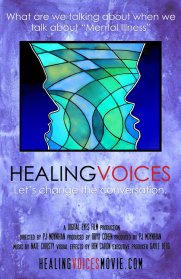
 This workshop offers a human way of understanding the kind of experiences that get galled “psychosis” and offers non diagnostic way of understanding such experiences and also offers a better understanding of how we can support those who live with them.
If so then this workshop might help you tilt your universe and emancipate yourself with new very simple and human ways to understand and begin to act.
Our aim is that you can feel more confident in your ability to offer yourself as a one person safe space to people who hear voices and struggle.
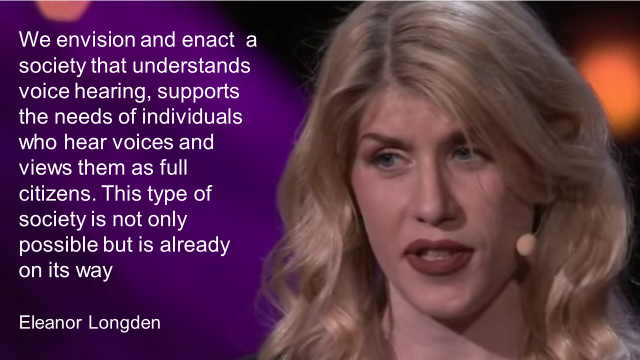 oin us in enacting a world that understands voice hearing, supports the needs of people who hear voices and regards them as full citizens.
Registration is required
 Either: click the red button to the left
 See below for a full Workshop Description.
You will also find there PDF easy-print versions of
There will also be an option to enjoy a $5 lunch from CMHA Durham’s teaching kitchen.
_______________________________________________________
If you have attended this workshop then you may be ready for the next step
Workshop #2 Working With Voices.
__________________________________________________
This unique and innovative workshop offers you a non-diagnostic understanding of the kinds of experience like hearing voices that are that are sometimes called “psychosis”.
We offer you simple, everyday language to show you how you can understand such experiences not as “disconnected from” but intimately connected with reality and in ways that can be overwhelming, painful, frustrating, sometimes terrifying response to the reality we share,
It also offers a framework you can use to connect and draw from your own experiences to help you truly empathize and understand how better to support people who might be undergoing such difficult experiences.
You’ll leave feeling more at ease with both yourself and your ability to offer yourself as a one-person safe-space to people who struggle.
Join us in enacting a society that understands voice hearing, supports individuals who hear voices and views them as full citizens. .
What you can expect and connect yourself with a community of people doing just that.
We believe the hearing voices approach is emancipatory for all.
 Workers
If, in your work, you work with you come into contact with people who hear voices and who struggle with that; and you have experienced how that can leave you feeling uncomfortable or worse, then we think you’ll find this one day workshop useful.
So, if you’re a doctor, nurse, social worker, community worker, housing worker, peer support worker, psychologist, therapist, police officer, etc. then it may be for you.
Families, carers, everyone.
The workshop is also highly suitable for you if you love, live with, care for people in your life who hear voices and struggle with that – and you have come to realise the limitations of an approach that limits understanding to illness-brain chemicals and you are curious about how else you may understand, and what else you can do..
This is an intensive workshop covering a lot of ground , together we will :
This workshop is designed to leave you feeling more competent and confident in your own ability to offer yourself as a one person safe space for people who hear voices.
You will not become an expert in one day but you’ll have a good basis for starting and feeling more comfortable – and more human – as you do.
Please feel free to help us let people know about this by print, post, distribute, …or why not hand to your worker colleague o boss, and ask… “when are you going to do this training?”
PDF Poster hv-trg-1-accepting-voices-poster-31mar2014
PDF Full Description: hv-trg-wkshp-1-accepting-voices-mar2017-full-description
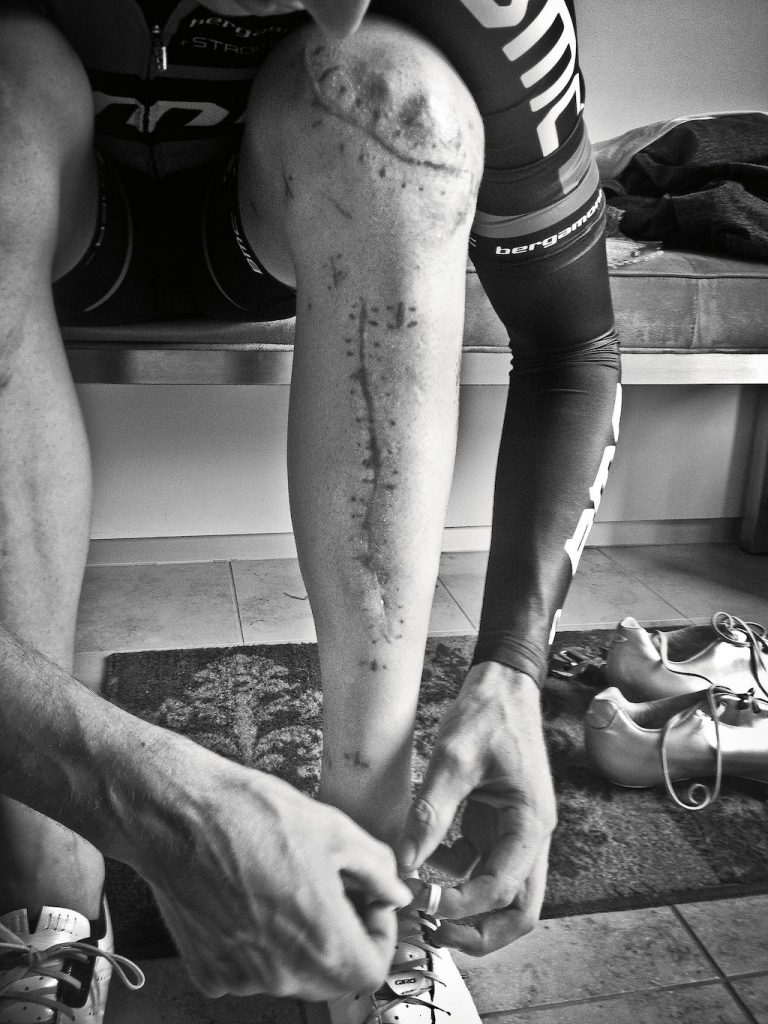
Taylor Phinney, “zen-ass-dude” and pro-cyclist and time-trial specialist on how all the voices in his head are “bread-and-butter “
“you kinda got to get to that point to be able to win any of these bike races”.
The image above gives an idea just how much pain, scars remaining from surgery after a high-speed crash in 2014 .
[At about 1:15min]
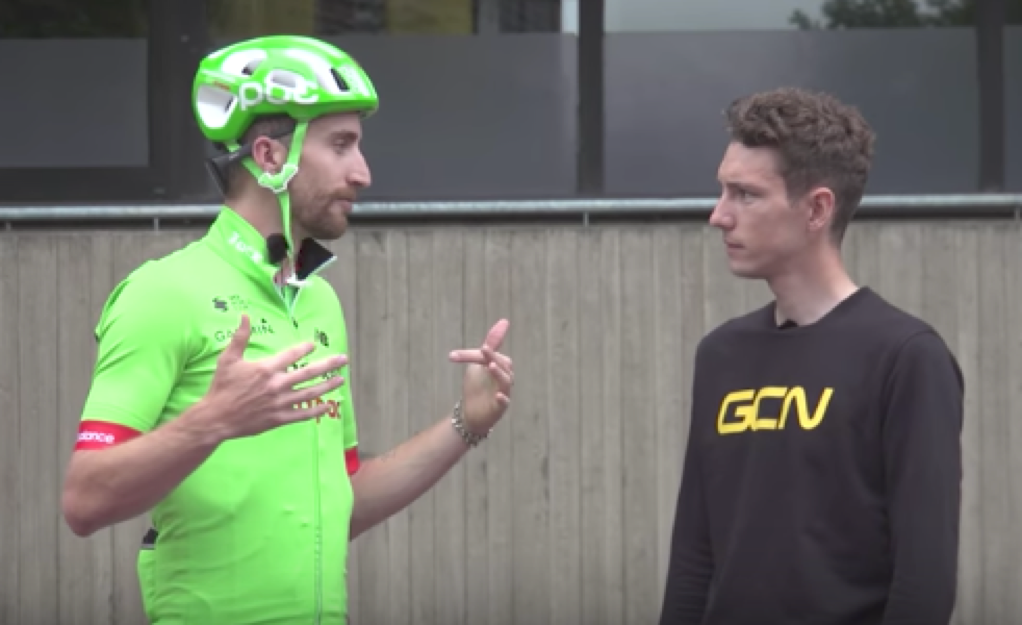 On being asked about how, unusually these days in pro racing, he rides without radio communications:
“I just find that I have a lot of voices in my head already,
inserting somebody else’s voice
who I may or may not wanna hear
when I’m in the depths of the pain cave
just doesn’t really do much for me.”
Interviewer Si:
“What are the inner voices telling you, is it like a balance…
‘go faster’..
‘this is hurting?’
or is it depending on how good you’re feeling on your bike…?
or is that too much insight?”
Taylor Phinney:
“No, its like your classical balance of
“you got this”
to
“you should retire: today”
“this,
this is the bread and butter of time trailing”
“pushing yourself to the point of …
retirement but then at the same time you kinda got to get to that point to be able to win any of these bike races”
You’ll also hear some top tips about speed and comfort and aerodynamic tuck .
“Find comfort, you’ll ride faster”
“Be a slave to speed, if anything”
And you don’t have to tell me how you feel
Cause I can see it in your eyes
And they don’t have to prove to me that pain is real
Cause I can hear it in their cries
And it’s hard to listen- but listen
Cause it’s much harder living it than listening
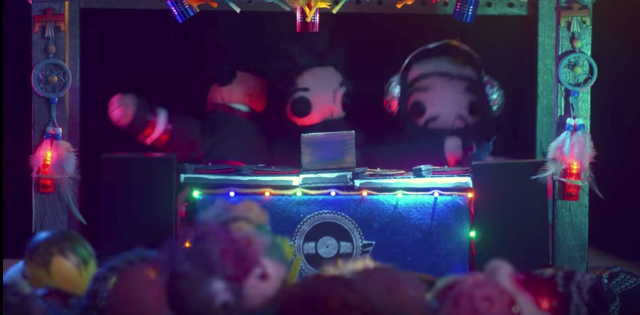
Well, I could never imagine the pain in the mother’s hearts
When life takes a turn for the worse
And creates another canvas that will never be completed
I’m a few degrees away and a thousand times defeated
My energy’s depleted but I want to stand and fight
Swinging with the spirits that have traveled back and through the light
I feel the tears and depression
Fears and aggression
Woven in society, from years of oppression
The violence is normalized, silence is horrifying
The truth is denied and the fact is that more are dying
You don’t have to tell how you feel
Cause I can hear it in the cries
And it’s hard to listen- but listen
Cause it’s much harder living it than listening to the hardships
So the hearts conditioned to condition the air when the air that conditions keep cool
But the more tears sometimes clear the vision [?]
Now what I see been a long time coming
The tribe running, rocking, reaching new peaks
So that them young’uns can finally summit
Climbing high above and then fly from it, up to the skies
Over standing the corruption and the deconstructing the lies
I’ve seen this country decline
Try to keep discussions confined
Hide the underside, over extract, and try to undermine
Damn, but I still believe in the truth whether as an MC in the booth or a PhD in a suit
Yo, when we yelling protest [?] feeling this peaceful
We profess, we pro-testify the will of the people, tell them what they must know
Turn it up loud, when we bust flows, not in hushed tones, speaking up, let the trust grow
Now, you ain’t gotta tell me how you feel
Cause I can see it in your eyes
You don’t gotta tell me that the pain is real
Cause I can hear it in your cry
Well, it’s the type of heartbreak that takes more than tears and time to stitch up
And heal wounds and heal the scars that leave behind
A separation from the fam, segregation on the land
It was all part of the plan and the blood is on your hands
It’s all divide and conquer, colonize the slaughter
Stabbing at the heart through the backs of our grandfathers
Now we see the daughters that are disappearing quickly
See it through cracks while ignoring all the history
Government’s been scooping babies way before the 60’s
When you legalize abduction, you legalize the misery
So now you see the mystery is really not too complicated
Justice is unequally distributed, my observation
Money to be made while the kids are steady [?]
Splitting up a family has now become an occupation
And it’s been part of the Occupation
Since residential schools enforced starvation
It’s a nation with racism
Here since the start of it
Hard to let go cause it’s carved in the heart of it
Relation to the land and our rise, we’re a part of it
Roots where I stand, I could never depart from it
And you don’t have to tell me how you feel
Cause I can see it in your eyes
And they don’t have to prove to me that pain is real
Cause I can hear it in their cries

Chimamanda Ngozi Adichie at TED on the danger of a single story and how, as she says:
“I’m a storyteller. And I would like to tell you a few personal stories about what I like to call “the danger of the single story.” I grew up on a university campus in eastern Nigeria. My mother says that I started reading at the age of two,although I think four is probably close to the truth. So I was an early reader, and what I read were British and American children’s books.
00:39
I was also an early writer,and when I began to write, at about the age of seven, stories in pencil with crayon illustrations that my poor mother was obligated to read, I wrote exactly the kinds of stories I was reading: All my characters were white and blue-eyed,they played in the snow,they ate apples, and they talked a lot about the weather,how lovely it was that the sun had come out.
01:12
Now, this despite the fact that I lived in Nigeria. I had never been outside Nigeria. We didn’t have snow, we ate mangoes,and we never talked about the weather, because there was no need to.
My characters also drank a lot of ginger beer, because the characters in the British books I read drank ginger beer. Never mind that I had no idea what ginger beer was.
And for many years afterwards, I would have a desperate desire to taste ginger beer.But that is another story.
01:44
What this demonstrates, I think,is how impressionable and vulnerable we are in the face of a story, particularly as children. Because all I had read were books in which characters were foreign, I had become convinced that books by their very nature had to have foreigners in them and had to be about things with which I could not personally identify. Now, things changed when I discovered African books. There weren’t many of them available,and they weren’t quite as easy to find as the foreign books.
But because of writers like Chinua Achebe and Camara Laye, I went through a mental shift in my perception of literature. I realized that people like me, girls with skin the color of chocolate,whose kinky hair could not form ponytails, could also exist in literature. I started to write about things I recognized.
02:36
Now, I loved those American and British books I read. They stirred my imagination. They opened up new worlds for me.But the unintended consequence was that I did not know that people like me could exist in literature. So what the discovery of African writers did for me was this: It saved me from having a single story of what books are.
02:59
I come from a conventional, middle-class Nigerian family. My father was a professor. My mother was an administrator. And so we had, as was the norm,live-in domestic help, who would often come from nearby rural villages. So, the year I turned eight, we got a new house boy. His name was Fide. The only thing my mother told us about him was that his family was very poor. My mother sent yams and rice, and our old clothes, to his family. And when I didn’t finish my dinner, my mother would say,“Finish your food! Don’t you know? People like Fide’s family have nothing.” So I felt enormous pity for Fide’s family.
Then one Saturday, we went to his village to visit, and his mother showed us a beautifully patterned basket made of dyed raffia that his brother had made. I was startled. It had not occurred to me that anybody in his family could actually make something. All I had heard about them was how poor they were, so that it had become impossible for me to see them as anything else but poor. Their poverty was my single story of them.
04:13
Years later, I thought about this when I left Nigeriato go to university in the United States.I was 19.My American roommate was shocked by me. She asked where I had learned to speak English so well, and was confused when I said that Nigeria happened to have English as its official language. She asked if she could listen to what she called my “tribal music,” and was consequently very disappointed when I produced my tape of Mariah Carey.
She assumed that I did not know how to use a stove.
04:49
What struck me was this: She had felt sorry for me even before she saw me. Her default position toward me, as an African, was a kind of patronizing, well-meaning pity. My roommate had a single story of Africa: a single story of catastrophe. In this single story,there was no possibility of Africans being similar to her in any way, no possibility of feelings more complex than pity, no possibility of a connection as human equals.
I must say that before I went to the U.S.,I didn’t consciously identify as African. But in the U.S., whenever Africa came up, people turned to me. Never mind that I knew nothing about places like Namibia. But I did come to embrace this new identity,and in many ways I think of myself now as African.Although I still get quite irritable when Africa is referred to as a country, the most recent example being my otherwise wonderful flight from Lagos two days ago, in which there was an announcement on the Virgin flight about the charity work in “India, Africa and other countries.”
So, after I had spent some years in the U.S. as an African, I began to understand my roommate’s response to me. If I had not grown up in Nigeria,and if all I knew about Africa were from popular images, I too would think that Africa was a place of beautiful landscapes, beautiful animals, and incomprehensible people,fighting senseless wars, dying of poverty and AIDS,unable to speak for themselves and waiting to be saved by a kind, white foreigner. I would see Africans in the same way that I, as a child, had seen Fide’s family.
06:35
This single story of Africa ultimately comes, I think, from Western literature. Now, here is a quote from the writing of a London merchant called John Lok, who sailed to west Africa in 1561and kept a fascinating account of his voyage.After referring to the black Africans as “beasts who have no houses,” he writes, “They are also people without heads, having their mouth and eyes in their breasts.”
07:05
Now, I’ve laughed every time I’ve read this. And one must admire the imagination of John Lok. But what is important about his writing is that it represents the beginning of a tradition of telling African stories in the West:A tradition of Sub-Saharan Africa as a place of negatives,of difference, of darkness,of people who, in the words of the wonderful poet Rudyard Kipling, are “half devil, half child.”
And so, I began to realize that my American room mate must have throughout her life seen and heard different versions of this single story, as had a professor,who once told me that my novel was not “authentically African.” Now, I was quite willing to contendthat there were a number of things wrong with the novel, that it had failed in a number of places, but I had not quite imagined that it had failed at achieving something called African authenticity. In fact, I did not know what African authenticity was. The professor told me that my characters were too much like him, an educated and middle-class man. My characters drove cars. They were not starving. Therefore they were not authentically African.
08:21
But I must quickly add that I too am just as guiltyin the question of the single story. A few years ago, I visited Mexico from the U.S. The political climate in the U.S. at the time was tense, and there were debates going on about immigration. And, as often happens in America, immigration became synonymous with Mexicans.There were endless stories of Mexicans as people who were fleecing the healthcare system, sneaking across the border, being arrested at the border, that sort of thing.
I remember walking around on my first day in Guadalajara,watching the people going to work, rolling up tortillas in the marketplace,smoking, laughing. I remember first feeling slight surprise. And then, I was overwhelmed with shame. I realized that I had been so immersed in the media coverage of Mexicans that they had become one thing in my mind,the abject immigrant. I had bought into the single story of Mexicans and I could not have been more ashamed of myself.
09:26
So that is how to create a single story, show a people as one thing, as only one thing, over and over again, and that is what they become.
09:37
It is impossible to talk about the single story without talking about power.
There is a word, an Igbo word,that I think about whenever I think about the power structures of the world,and it is “nkali.”It’s a noun that loosely translates to “to be greater than another.”
Like our economic and political worlds,stories too are defined by the principle of nkali: How they are told, who tells them, when they’re told, how many stories are told, are really dependent on power.
The Palestinian poet Mourid Barghouti writes that if you want to dispossess a people,the simplest way to do it is to tell their storyand to start with, “secondly.”Start the story with the arrows of the Native Americans, and not with the arrival of the British,and you have an entirely different story.Start the story with the failure of the African state,and not with the colonial creation of the African state,and you have an entirely different story.
10:52
I recently spoke at a university where a student told me that it was such a shame that Nigerian men were physical abusers like the father character in my novel. I told him that I had just read a novel called “American Psycho” — and that it was such a shame that young Americans were serial murderers.
11:25
Now, obviously I said this in a fit of mild irritation.
But it would never have occurred to me to thinkthat just because I had read a novel in which a character was a serial killerthat he was somehow representative of all Americans. This is not because I am a better person than that student, but because of America’s cultural and economic power, I had many stories of America. I had read Tyler and Updike and Steinbeck and Gaitskill. I did not have a single story of America.
When I learned, some years ago,that writers were expected to have had really unhappy childhoodsto be successful, I began to think about how I could invent horrible things my parents had done to me.
But the truth is that I had a very happy childhood, full of laughter and love, in a very close-knit family.
But I also had grandfathers who died in refugee camps. My cousin Polle died because he could not get adequate healthcare. One of my closest friends, Okoloma, died in a plane crash because our fire trucks did not have water. I grew up under repressive military governments that devalued education, so that sometimes, my parents were not paid their salaries. And so, as a child, I saw jam disappear from the breakfast table, then margarine disappeared, then bread became too expensive,then milk became rationed. And most of all, a kind of normalized political fear invaded our lives.
12:57
All of these stories make me who I am. But to insist on only these negative stories is to flatten my experience and to overlook the many other stories that formed me.
The single story creates stereotypes, and the problem with stereotypes is not that they are untrue, but that they are incomplete. They make one story become the only story.
13:25
Of course, Africa is a continent full of catastrophes:There are immense ones, such as the horrific rapes in Congoand depressing ones,such as the fact that 5,000 people apply for one job vacancy in Nigeria. But there are other stories that are not about catastrophe, and it is very important, it is just as important, to talk about them.
13:45
I’ve always felt that it is impossible to engage properly with a place or a person without engaging with all of the stories of that place and that person.The consequence of the single story is this:It robs people of dignity. It makes our recognition of our equal humanity difficult. It emphasizes how we are different rather than how we are similar.
14:09
So what if before my Mexican trip, I had followed the immigration debate from both sides, the U.S. and the Mexican?What if my mother had told us that Fide’s family was poor and hardworking? What if we had an African television network that broadcast diverse African stories all over the world? What the Nigerian writer Chinua Achebe calls “a balance of stories.”
14:33
What if my roommate knew about my Nigerian publisher,Muhtar Bakare,a remarkable man who left his job in a bank to follow his dream and start a publishing house? Now, the conventional wisdom was that Nigerians don’t read literature. He disagreed. He felt that people who could read, would read, if you made literature affordable and available to them.
14:56
Shortly after he published my first novel, I went to a TV station in Lagos to do an interview, and a woman who worked there as a messenger came up to me and said, “I really liked your novel. I didn’t like the ending. Now, you must write a sequel, and this is what will happen …”
15:14
And she went on to tell me what to write in the sequel. I was not only charmed, I was very moved. Here was a woman, part of the ordinary masses of Nigerians, who were not supposed to be readers. She had not only read the book,but she had taken ownership of it and felt justified in telling me what to write in the sequel.
15:33
Now, what if my roommate knew about my friend Funmi Iyanda, a fearless woman who hosts a TV show in Lagos, and is determined to tell the stories that we prefer to forget? What if my roommate knew about the heart procedure that was performed in the Lagos hospital last week? What if my roommate knew about contemporary Nigerian music, talented people singing in English and Pidgin,and Igbo and Yoruba and Ijo, mixing influences from Jay-Z to Fela to Bob Marley to their grandfathers.
16:06
What if my roommate knew about the female lawyerwho recently went to court in Nigeria to challenge a ridiculous lawthat required women to get their husband’s consent before renewing their passports?What if my roommate knew about Nollywood, full of innovative people making films despite great technical odds, films so popular that they really are the best example of Nigerians consuming what they produce? What if my roommate knew about my wonderfully ambitious hair braider,who has just started her own business selling hair extensions? Or about the millions of other Nigerians who start businesses and sometimes fail,but continue to nurse ambition?
16:47
Every time I am home I am confronted with the usual sources of irritation for most Nigerians: our failed infrastructure, our failed government,but also by the incredible resilience of people who thrive despite the government, rather than because of it. I teach writing workshops in Lagos every summer,and it is amazing to me how many people apply, how many people are eager to write,to tell stories.
17:14
My Nigerian publisher and I have just started a non-profitcalled Farafina Trust,and we have big dreams of building librariesand refurbishing libraries that already existand providing books for state schools that don’t have anything in their libraries, and also of organizing lots and lots of workshops,in reading and writing, for all the people who are eager to tell our many stories.
17:36
Stories matter. Many stories matter. Stories have been used to dispossess and to malign, but stories can also be used to empower and to humanize. Stories can break the dignity of a people, but stories can also repair that broken dignity.
17:56
The American writer Alice Walker wrote this about her Southern relatives who had moved to the North. She introduced them to a book about the Southern life that they had left behind. “They sat around, reading the book themselves, listening to me read the book, and a kind of paradise was regained.”
18:17
I would like to end with this thought: That when we reject the single story,when we realize that there is never a single story about any place, we regain a kind of paradise.








































 Deborah Orr
 agnotarte
 dave umbongo
 drkenplacebo
 recovery network: Toronto
You must be logged in to post a comment.