Who hears voices?
If you think its only a few people with broken brains then you’re wrong and you’ve been duped – maybe you’re listening to the wrong voices.
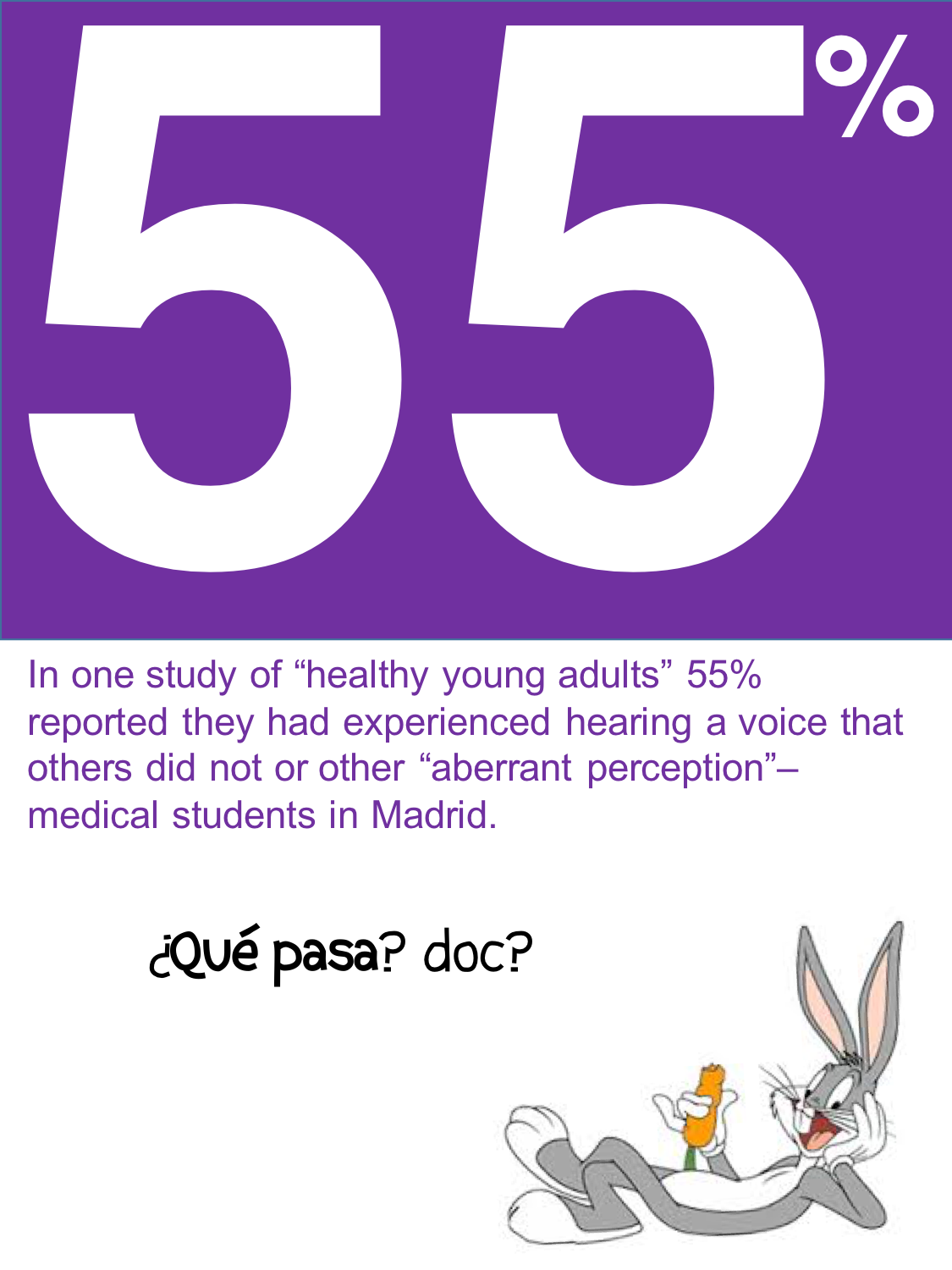
Many researchers have become fascinated with the hearing voices “phenom” and have been asking questions like “so how many people do?”, “and how many health people do ?”, and “how many healthy young adults hear voices?”.
Well here’s the result from one study in which the answer was 38.7% of healthy young adults hear voices that no one else does.
And, the voices ask” “exactly which population of healthy young adults did they survey to get such a crazy result?”
Why, none other than third, fourth, fifth and sixth year medical Medical students in a leading Spanish university – Spain’s finest, future doctors.
So, hearing voices is not only a sign of being a perfectly healthy young adult, its practically a qualification for becoming a Doctor.
Can you hear me now?
You can read the study, published in Neurologia, 18th Feb, 2012 here…
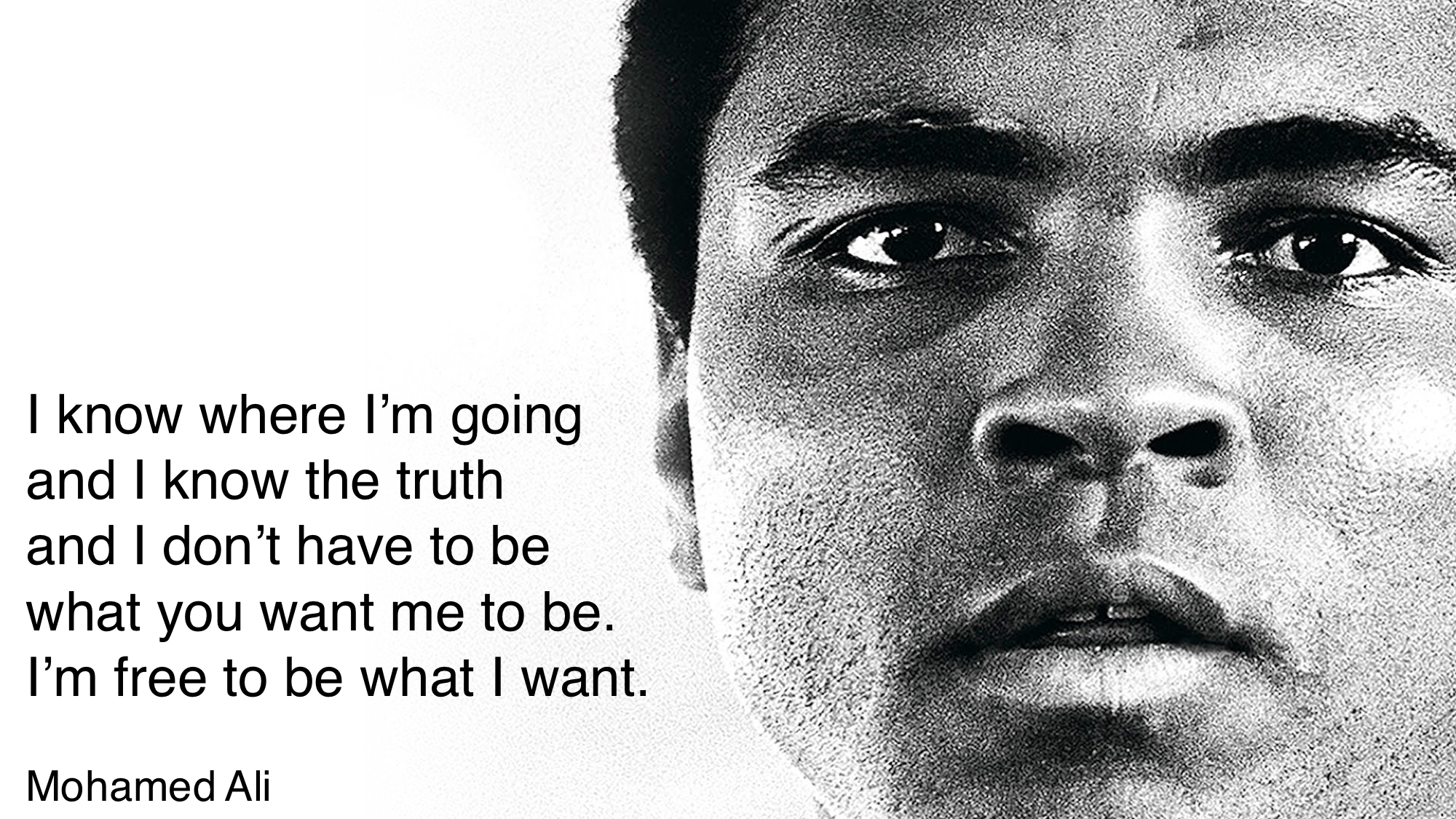
There was a time when it was said of Mohamed Ali that “it seems he’d fight anyone but the Vietcong” and when even the likes of Dr Martin Luther King were telling him who to be, what to call himself and how to be.
He was vilified and cast out but never gave up being who he was and speaking his truth to power.
“Boxing is a lot of white men watching two black men beat each other up.”
He fought with his fists and his body but also with his mind, using his smarts and with much humour – and in claiming his right made it easier for us to do make the same choice.
Jessica Valenti on her experiences growing up in New York City, especially experiences of dicks on subways, of the very real and lasting effects it can have and the compromises that women and even young girls have to make in this society we have created.
To those who confuse having a dick with being a dick – it is not inevitable, it is a choice.
Next time you see it happening, say something and watch them shrivel.
As Jessica Valenti she says :
Naming what is happening to us, telling the truth about it – as ugly and uncomfortable as it can be – means that we want it to change. That we know it is not inevitable.
I want the line of my mother and grandmother, that world’s worst birthright of violations, to stop here.
The Guardian, Sat 28th May, 2016
Jessica Valenti: my life as a ‘sex object’
In her teens, strangers flashed her on the subway, teachers asked for hugs and boys joked about her breasts. Should she laugh off a lifetime of objectification – or get angry?
The two worst times for dicks on the New York subway: when the train car is empty or when it’s crowded. As a teenager, if I found myself in an empty car, I would immediately leave – even if it meant changing cars as the train moved, which terrified me. Because, if I didn’t, I just knew the guy sitting across from me would inevitably lift his newspaper to reveal a semihard cock, and even if he wasn’t planning on it, I sure wasn’t going to sit there and worry about it for the whole ride.
On crowded train cars I didn’t see dicks – I felt them. Pressing into my hip, men pretending that the rocking up against me was just because of the jostling of the train.
The first time I saw a penis on the subway, I was on the platform for the N train three blocks from my house in Queens, on my way to school. I was 12. I had just missed a train, so I was the only person there other than a man all the way at the other end of the platform. He was so far away that I could see only the outline of his shape, but soon I noticed his hand moving furiously – and that he was walking quickly towards me with his penis in his hand. I had always thought myself prepared for something like this; I knew I was supposed to yell or run, but I just stood there. I didn’t look away or turn around, and even though I felt my knees giving out, my feet felt strongly planted to the ground.
As another train started to pull into the station, he stopped midway down the platform and zipped himself up. The doors of the train opened and he walked on, normally. My feet still in the same place, I tapped a man in a suit coming off the car on the shoulder and asked for help in a small voice, but he didn’t stop moving. So I stood there. When the next train came, I got on, figuring I should get to school, but I got off one stop later, to call my parents from a station phone booth. I noticed that my hands and face had pins and needles.
***
It’s called the cycle of violence, but in my family, female suffering is linear: abuse is passed down like the world’s worst birthright, largely skipping the men and marking the women with scars, night terrors (and fantastic senses of humour). My aunts and my mom joked about how often it happened to them when they were younger: the man who flashed a jacket open and had a big red bow on his cock; the neighbourhood pervert who masturbated visibly in his window as they walked to school as girls. (The cops told them the man could do whatever he wanted in his own house.) “Just point and laugh,” my aunt said. “That usually sends them running.” Usually.
Of course, what feels like a matrilineal curse is not really ours. We don’t own it; the shame and disgust belong to the perpetrators. At least, that’s what the books say. But the frequency with which women in my family have been hurt or sexually assaulted starts to feel like a flashing message encoded in our DNA: Hurt. Me.
My daughter is five and I want to inoculate her against this. I want Layla to have her father’s lucky genes – genes that walk into a room and feel entitled to be there. Genes that feel safe. Not my out-of-place chromosomes that are fight‑or-flight ready.
This is the one way in which I wish she was not mine.
***
For months after the man showed me his penis on the subway platform, my father walked me up the stairs every morning to wait for the train. The booth worker let him through the gate without paying, after my dad explained what had happened. He gave him a bag of cherries from the tree that grew in our yard as a thank you every week.
As we were talking on the platform under the sun, I noticed an odd shape under my father’s jacket. He tried to distract me with a joke, but when I asked him about it a second time, he pulled up his shirt to show me a metal pipe sticking out of the top of his trousers. He assured me that no cop would ever arrest him for beating a man who flashes children. Today he tells me he knew that was a lie, but he brought the pipe with him anyway.
On the worst day – a few years later – I didn’t notice the man at all. The train was crowded; my mind was elsewhere. I was listening to A Tribe Called Quest on my Walkman and thinking about how warm it was. When I stepped out of the subway, the sun hit my face and I was happy to be almost home. But when I started to put my hand in my back pocket, I felt something wet: I had made it the whole ride back without noticing that a man, whose face I would never see, had come on me.
I wiped my hand on the lower leg of my jeans and looked around to see if anyone had noticed. I walked the three blocks home with my backpack slung as low as possible, so that no one walking behind me could see what had happened or could think I had peed myself.
I peeled the jeans off when I got home and, even though most of the semen had landed on the pocket – giving me two, rather than just one, layers of protection – the skin on my ass was still damp from it. I ran the tub until there were two inches of scalding water along the bottom, squirted in some of my sister’s Victoria’s Secret vanilla-scented bath gel, and sat in it quickly, my shirt still on.
I wrapped a pink towel around myself when I stepped out of the tub and turned my jeans inside out before putting them in the laundry basket so my mother wouldn’t find out. I knew she would cry. I piled some sheets on top of the jeans to be safe.
Later I would find out that the guy rubbing up on you in the subway isn’t just an asshole – he has a disorder. In the Diagnostic and Statistical Manual of Mental Disorders, the American Psychiatric Association describes “frotteurism” as “recurrent, intense, or arousing sexual urges or fantasies, that involve touching and rubbing against a nonconsenting person”. There are online forums for men – because, let’s be real, frotteurs are almost exclusively men – who rub on women and girls on the train, in bars, wherever they can do it while getting off unnoticed.
They have handles like “Bum Feeler” and “Rock Hard”, and share stories of their exploits and pictures of the women they have surreptitiously dry-humped. Some give advice, such as backing away occasionally, so your victim gets the impression that you’re working hard not to touch her and that any contact is the fault of the crowd.
“Women are forgiving if you can make it seem like this,” Rock Hard writes. “Almost like you can’t help it, not like you’ve preyed on them like a piece of meat.”
***
There was a large mirrored cabinet above the sink at the house I grew up in. If I pulled out all three of the doors, I could create a three-way mirror to look at my face from all possible angles.
I wrote in my diary at the time, I’m so ugly I can’t stand it. I have a big gross nose, pimples, hairy arms. I will never have a boy like me or a boyfriend. All of my friends are pretty and I will be the one with no one.
I was feeling that loneliness acutely at the time, because I was obsessed with a boy named Matt. Matt – the first in a long line of blond boys I would fall for – told me once that I would be so, so pretty if not for my big nose. All I heard was, he thought I could be pretty!
I started to measure my nose. First with my fingers, which I would try to keep the same distance apart as they were when they were on my face and then bring them over to my mother and her nose to demonstrate just how much bigger mine was compared with hers. She would insist that my nose was smaller – the kind of well-meaning parenting that just inspired fury and distrust. The nicest thing someone said to me was that a lot of people my age had big noses, and that I would eventually “grow into it”. The comment acknowledged that the ugliness I was feeling was valid and not some childish self-hatred. It was the only thing that gave me hope, the idea that my face would slowly morph into something more proportional than the monstrosity I was currently working with.
The thing about hating your face so intently is that it takes an extraordinary amount of care and attention. The obsession is almost contradictory, because you start to love the self-hatred a little bit. It becomes a part of your routine – you whisper, “I hate you” when you pass by a mirror, or you think it when trying on clothes or putting on makeup, acts that feel foolish at the time, because you know you’re not tricking anyone into thinking you’re beautiful. There’s nothing that you could pile on your body or face that would make it worthy.
But at least I could bear to look. A friend I lived with for a short while had an ID card for work that she was supposed to keep around her neck at all times. To avoid having to look at the picture of herself, she carefully cut a small piece of yellow paper into a square and taped it over her face. Later, I would find plastic bags of vomit hidden underneath her bed, wrapped in towels meant to mask the smell that eventually led to their discovery.
I started carrying a piece of paper with me that I would position over the bump on my nose when I looked in that three-way mirror to see what I might look like if it were gone. My father tells me my nose is part of my Italian heritage, that getting rid of it would be a slap in the face to our ethnicity. I tell him we’ll always have spaghetti. He is not convinced.
I imagined all of the things that would go right if I were just to have a smaller nose. I would have a boyfriend and the girls in school would stop making fun of me. That year, several girls would bring me to a playground to have a “talk” about why we could not be friends any more. Because I am too loud, because I agree with everything they say – desperate for approval in a way that is unseemly. We’re not trying to be mean, they say, it would just be better if you ate lunch somewhere else. I know if I looked more like them, with a small nose and long, light hair in braids and bows, I would not have to go to the building where the younger children are to eat lunch with my sister.
I find out from my male friends that there are cute girls, pretty girls, hot girls, sexy girls, and sometimes variations or combinations of all of the above. The worst to be is a fat girl or an ugly girl. I was an ugly girl who became a sexy girl once my breasts grew in and I started telling dirty jokes with abandon.
As soon as I “got a chest”, as my mom would say, the taunts about my face stopped as boys became more interested in feeling me up than making me cry. I started to forget about my face and mean girls, and focused on the things my body could do and inspire. During summer break, a male friend whom I had known since childhood put his hand on my breast as we watched a movie in the room over from our parents, saying nothing. I remained frozen, unsure what to do. Wasn’t he supposed to kiss me first? I was 11.
***
When I left junior high, I had what I thought seemed like a reasonably womanish body and improving makeup skills. I was optimistic that I could leave behind my reputation as the nerdy one of my friends. In my new school, a top school, full of maths and science aficionados, the girl with well-developed boobs was queen. I was being asked on a lot of dates. Proper dates to pool halls and movie theatres, lunches at a diner on the weekend or a walk to Central Park. I had boyfriends. Later, in between high school relationships, my male friends would jokingly/not jokingly ask to “talk business” with me – code for “Let’s negotiate how it’s in your best interest to suck my dick.” I turned them down, but was secretly pleased nonetheless. It hadn’t yet occurred to me that the boys my age would want to hook up for any other reason than they liked me.
At first I was thrilled to be in a class in my junior year of high school with a teacher whom I’ll call Mr Z. He was a well-known easy grader and kind of a joke in a sad-old-man way; he had what we suspected was a glass eye, a hard time keeping drool in his mouth as he spoke, and walked with difficulty. The kind of classes he taught were normally held on the sixth floor, but administrators made sure he was out of sight on the 10th.
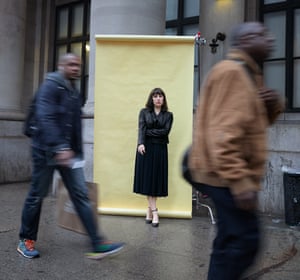
‘Pretending these offences roll off our backs is strategic – don’t give them the satisfaction – but it isn’t the truth.’ Photograph: Chris Buck for the Guardian
On the first day of class, Mr Z told us that if anyone came in to observe the class – “an important-looking person” – we should raise our hand no matter what question he asked. “If you don’t know the answer, raise your right hand. If you do know the answer, raise your left. I’ll only call on you if you’re raising the left!”
Everyone looked around at each other, smirking.
Mr Z didn’t really teach as much as he showed movies like Braveheart, but one day he had an actual lesson. And though he almost never called on students, he called on me. “Come up to the board, Jessica.” He smiled, small bits of white spit accumulating at the corners of his mouth. “We all want to get a closer look at your shirt.”
He laughed, but the class was silent. I wasn’t really wearing a shirt but a brown bodysuit, which was popular at the time – it snapped at the crotch and I wore it with jeans baggy enough to see the cutout above my hips. I remember the way I slid sideways through rows of desks, my arms crossed over my chest. I don’t remember what I wrote on the board. I never went back to the class.
***
When I started at high school, I went from being one of the smartest kids to being a nominally good student without the same drive and pedigree as my cute and smart girlfriends. Their parents had gone to college, grad school even. They lived on the Upper West Side or in Park Slope, in apartments filled with books and paintings and cabinets full of alcohol. One friend had an entire floor of a four-storey park-side brownstone as their “room”. I lived in a house where once or twice a week my mom would go outside wearing yellow rubber gloves to clean up the used condoms that littered the sidewalk.
One of my best girlfriends was a lithe dancer who had professional head shots for when she did the occasional acting job. She was the kind of Wasp-y pretty I desperately wanted to be – the type of beauty that provoked starry-eyed crushes instead of ass slaps. She lived in a duplex apartment with a spiral staircase, and we bonded over our older boyfriends. The first time she came to my house, she remarked how much she liked my mom’s “uneducated” accent. “It’s cute!” she said, smiling as she helped herself to a soda from the fridge.
That same year I was called to the board in Mr Z’s class, 1995, the school started investigating an English teacher for describing sex fantasies and his masturbation routine during class. He talked about having a dream in which he raped a maid who had his wife’s face. Another student said he asked her to play spin the bottle with him and later let her off writing an essay because she was “pretty”. He was suspended for a few months, and then four years later – after a different man, an assistant principal, was arrested for fondling and exposing himself to a freshman – he was suspended again. That first time, though, the feigned outrage in the school lasted as long as the newspaper articles did. We had a brief student assembly on the subject and moved on.
A few weeks before the semester was going to end, I ran into Mr Z in the hallway, and he pointed at me, smiling. He was wearing a striped shirt that was slightly discoloured in spots, and his belly was hanging low over his trousers. “I’ve been missing you!” he said as he walked up to me. He was breathing heavily, as if the walk down the hall had taken effort. He asked if I still wanted a good grade. I responded that of course I did.
Just give me a hug, then, he said, opening his arms. All I want is a hug from you.
I aced the class.
***
We know that direct violence causes trauma; we have shelters, counsellors, services. We know that children who live in violent neighbourhoods are more likely to develop PTSD. Yet we still have no name for what happens to women living in a culture that hates them.
When you catch a cold or a virus, your body has ways of letting you know that you are sick. But what diagnosis do you give to the shaking hands you get after a stranger whispers “pussy” in your ear on your way to work? What medicine can you take to stop being afraid that the cab driver is not actually taking you home? And what about those of us who walk through all this without feeling any of it – what does it say about the hoops our brain had to jump through to get to ambivalence? I don’t believe any of us walk away unscathed.
I do know, though, that a lot of us point and laugh. The strategy of my aunts and mother is now my default reaction when a 15-year-old on Instagram calls me a cunt or when a grownup reporter writes something about my tits. Just keep pointing and laughing, rolling your eyes in the hope that someone will finally notice that this is not very funny.
Pretending that these offences roll off our backs is strategic – don’t give them the satisfaction – but it isn’t the truth. You lose something along the way. Mocking the men who hurt us, as mockable as they are, starts to feel like acquiescing to the most condescending of catcalls: “You look better when you smile.” Because even subversive sarcasm adds a cool-girl nonchalance, an updated, sharper version of the expectation that women be forever pleasant. This sort of posturing is a performance that requires strength I do not have any more.
My daughter is happy and brave. When she falls down or gets hurt, the first words out of her mouth are always: “I’m all right, Mom. I’m OK.” And she is. I want her to be OK always. So while my refusal to keep laughing or making people comfortable may seem like a real fucking downer, the truth is that this is what optimism looks like.
Naming what is happening to us, telling the truth about it – as ugly and uncomfortable as it can be – means that we want it to change. That we know it is not inevitable. I want the line of my mother and grandmother, that world’s worst birthright of violations, to stop here.
You can look, but you can’t touch I don’t think I like you much
Heaven knows what a girl can do
Heaven knows what you’ve got to prove
I think I’m paranoid
And complicated
I think I’m paranoid
Manipulate it
Bend me, break me anyway you need me
All I want is you
Bend me, break me, breaking down is easy
All I want is you
I fall down just to give you a thrill
Prop me up with another pill
If I should fail, if I should fold
I nailed my faith to the sticking pole
I think I’m paranoid
Manipulate it
I think I’m paranoid
And complicated
Bend me, break me anyway you need me
All I want is you
Bend me, break me, breaking down is easy
All I want is you
Paranoid
I think I’m paranoid
Bend me, break me anyway you need me
All I want is you
Bend me, break me, breaking down is easy
All I want is you
Steal me, deal me, anyway you heal me
Maim me, tame me, you can never change me
Love me, like me, come ahead and fight me
Please me, tease me, go ahead and leave me
Bend me, break me anyway you need me
As long as I want you, baby, it’s alright
Bend me, break me any way you need me
As long as I want you, baby, it’s alright
Songwriters
Manson, Shirley Ann / Vig, Bryan David / Erickson, Douglas Elwin / Marker, Steve W
Samuel Beckett was a master at capturing and conveying relentless, unceasing inner speech – taking what can drive us mad if we’re left to deal with it alone, and turning it into art.
“We are all born mad. Some remain so.” Samuel Beckett
Here’s a piece by Marco Bernini published in the Guardian in conjunction with Hearing The Voice.
Samuel Beckett’s articulation of unceasing inner speech
The literal sounds in his characters’ minds express a subtle and revealing understanding of how we all talk to ourselves
Marco Bernini
Tuesday 19 August 2014 09.30 BST Last modified on Monday 22 September 2014 11.39 BST
In a letter to Alan Schneider in 1957, Samuel Beckett wrote that: “My work is a matter of fundamental sounds (no joke intended), made as fully as possible, and I accept responsibility for nothing else. If people want to have headaches among the overtones, let them. And provide their own aspirin.”
This laconic statement has nourished a vast array of critical readings focusing on the sounds of words and the presence of music in Beckett’s fictional worlds. However, undoubtedly the most ubiquitous sound in Beckett’s work is that of the mysterious voices buzzing, murmuring or whispering within the heads of his characters. To borrow from the narrating figure in The Unnamable (1953), the narrative core of Beckett’s dark universes seems to be “all a matter of voices; no other metaphor is appropriate”. The question is: to what extent are voices in Beckett’s fiction just metaphorical presences?
The qualities of Beckett’s voices (alien, autonomous, without a recognisable source, and having aggressive or commanding contents) resonate with and sometimes even match the phenomenology of auditory verbal hallucinations (hearing voices in the absence of external stimuli).
From psychologist Louis Sass and philospher Gilles Deleuze, who first spoke of a “schizoid voice” in Beckett’s work, to investigators on the recent Beckett and Brain Science project, critics have highlighted correspondences between the distorted perceptions of Beckett’s characters and a wide gamut of psychiatric disorders. Nonetheless, this pathological framework of interpretation can be, if not reversed, at least complemented by non-pathological approaches which draw on contemporary cognitive research.
In fact, recent research in cognitive science and other fields has shown that hearing voices is more common than we think, including among people with no psychiatric diagnosis. The restless sound of our inner speech is a key experience of this commonality.
As the Dutch neurobiologist Bernard J Baars reminds us, “we are a gabby species” and “the urge to talk to ourselves is remarkably compelling”. Can Beckett’s voices be interpreted as the fictional rendering of our inner monologues – of the dialogues we constantly entertain within ourselves? Inner speech is hard to stop or to escape from, exactly as the sound described in Molloy (1951): “[it] is not a sound like other sounds, that you listen to, when you choose, and can sometimes silence, by going away or stopping your ears, no, but is a sound which rustles in your head, without you knowing how, or why. It’s with your head you hear it, not your ears, you can’t stop it, but it stops itself, when it chooses.”
Psychologists and cognitive scientists are, like Molloy, still struggling to understand the role and modalities of inner speech. What is certain is that for most of us it is, as the narrator of The Unnamable says, a “sound that will never stop”. A better understanding of inner speech can therefore help revisit the pathological framework through which Beckett’s voices have been largely interpreted. At the same time, Beckett’s fictional rendering and exploration of the pervasiveness of inner voices can expand the field of research by pointing, for instance, at new relationships between the internal dialogue we entertain with ourselves in inner speech and the imaginary creation/reception of literary characters; or even at the tight entanglement of inner speech and the narrative construction of our sense of selfhood.
Take, for example, works like Ohio Impromptu (1981). This late piece for theatre features an identical reader and listener. The reader tells the listener the story of the listener’s life. If we look at this work through the lens of the new research on inner speech, it appears as a masterful rendition of the simultaneous narrative and receptive activities that go on in our inner life. This inner relation in which we voice ourselves to ourselves relies extensively on our capacity to use our inner voice to allow multiple imaginative perspectives to emerge, as we do when we silently voice characters when reading literature.
If inner speech is the raw material for hallucinatory phenomena, it is also at the centre of our imaginary engine – supporting our simple need for, as the homonymous text by Beckett portrays, an intimate Company (1980) in the inaccessible dark of our subjectivity.
Marco Bernini is a postdoctoral research fellow on the Hearing the Voice project. The Hearing the Voice project is conducting a survey in collaboration with the Edinburgh international book festival to explore the ways readers imagine, hear or even interact with the voices of characters in stories.
Toni Mac talks of the very real and practical situations that lead people to decide that sex work is their best available option – always a survival strategy, a complex choice made in complex circumstances.
Then she explains how the four basic approaches used round the world for regulating sex work each results in workers being trapped into making choices that leave everyone less safe: criminalized, vulnerability to violence, prey to corrupt officials or simply unable to move on when they do have better options available to them.
And then she talks of the kind of regulations and laws that sex workers actually want and that would actually be more effective.
“No doubt many of you work for a living.Well, sex work is work, too.Just like you,some of us like our jobs,some of us hate them. Ultimately, most of us have mixed feelings.”
“We want full decriminalization and labor rights as workers.”
Toni Mac
Posted May 2016Rated Courageous, Informative
I want to talk about sex for money.I’m not like most of the people you’ll have heard speakingabout prostitution before.I’m not a police officer or a social worker.I’m not an academic, a journalist or a politician.And as you’ll probably have picked up from Maryam’s blurb,I’m not a nun, either.
Most of those people would tell you that selling sex is degrading;that no one would ever choose to do it;that it’s dangerous; women get abused and killed.In fact, most of those people would say,“There should be a law against it!”Maybe that sounds reasonable to you.It sounded reasonable to me until the closing months of 2009,when I was working two dead-end, minimum-wage jobs.Every month my wages would just replenish my overdraft.I was exhausted and my life was going nowhere.Like many others before me,I decided sex for money was a better option.Now don’t get me wrong —I would have loved to have won the lottery instead.But it wasn’t going to happen anytime soon,and my rent needed paying.So I signed up for my first shift in a brothel.
In the years that have passed,I’ve had a lot of time to think.I’ve reconsidered the ideas I once had about prostitution.I’ve given a lot of thought to consentand the nature of work under capitalism.I’ve thought about gender inequalityand the sexual and reproductive labor of women.I’ve experienced exploitation and violence at work.I’ve thought about what’s neededto protect other sex workers from these things.Maybe you’ve thought about them, too.In this talk,I’ll take you through the four main legal approachesapplied to sex work throughout the world,and explain why they don’t work;why prohibiting the sex industry actually exacerbates every harmthat sex workers are vulnerable to.Then I’m going tell you about what we, as sex workers, actually want.
The first approach is full criminalization.Half the world,including Russia, South Africa and most of the US,regulates sex work by criminalizing everyone involved.So that’s seller, buyer and third parties.Lawmakers in these countries apparently hopethat the fear of getting arrested will deter people from selling sex.But if you’re forced to choose between obeying the lawand feeding yourself or your family,you’re going to do the work anyway,and take the risk.
Criminalization is a trap.It’s hard to get a conventional job when you have a criminal record.Potential employers won’t hire you.Assuming you still need money,you’ll stay in the more flexible, informal economy.The law forces you to keep selling sex,which is the exact opposite of its intended effect.Being criminalized leaves you exposed to mistreatment by the state itself.In many places you may be coerced into paying a bribeor even into having sex with a police officerto avoid arrest.Police and prison guards in Cambodia, for example,have been documented subjecting sex workersto what can only be described as torture:threats at gunpoint,beatings, electric shocks, rapeand denial of food.
Another worrying thing:if you’re selling sex in places like Kenya, South Africa or New York,a police officer can arrest you if you’re caught carrying condoms,because condoms can legally be used as evidence that you’re selling sex.Obviously, this increases HIV risk.Imagine knowing if you’re busted carrying condoms,it’ll be used against you.It’s a pretty strong incentive to leave them at home, right?Sex workers working in these places are forced to make a tough choicebetween risking arrest or having risky sex.What would you choose?Would you pack condoms to go to work?How about if you’re worriedthe police officer would rape you when he got you in the van?
The second approach to regulating sex work seen in these countriesis partial criminalization,where the buying and selling of sex are legal,but surrounding activities,like brothel-keeping or soliciting on the street, are banned.Laws like these —we have them in the UK and in France —essentially say to us sex workers,“Hey, we don’t mind you selling sex,just make sure it’s done behind closed doorsand all alone.”And brothel-keeping, by the way,is defined as just two or more sex workers working together.Making that illegal means that many of us work alone,which obviously makes us vulnerable to violent offenders.But we’re also vulnerableif we choose to break the law by working together.A couple of years ago,a friend of mine was nervous after she was attacked at work,so I said that she could see her clients from my place for a while.During that time,we had another guy turn nasty.I told the guy to leave or I’d call the police.And he looked at the two of us and said,“You girls can’t call the cops.You’re working together, this place is illegal.”He was right.He eventually left without getting physically violent,but the knowledge that we were breaking the lawempowered that man to threaten us.He felt confident he’d get away with it.
The prohibition of street prostitution also causes more harmthan it prevents.Firstly, to avoid getting arrested,street workers take risks to avoid detection,and that means working aloneor in isolated locations like dark forestswhere they’re vulnerable to attack.If you’re caught selling sex outdoors,you pay a fine.How do you pay that fine without going back to the streets?It was the need for money that saw you in the streetsin the first place.And so the fines stack up,and you’re caught in a vicious cycleof selling sex to pay the fines you got for selling sex.
Let me tell you about Mariana Popa who worked in Redbridge, East London.The street workers on her patch would normally wait for clients in groupsfor safety in numbersand to warn each other about how to avoid dangerous guys.But during a police crackdown on sex workers and their clients,she was forced to work alone to avoid being arrested.She was stabbed to death in the early hours of October 29, 2013.She had been working later than usualto try to pay off a fine she had received for soliciting.
So if criminalizing sex workers hurts them,why not just criminalize the people who buy sex?This is the aim of the third approachI want to talk about —the Swedish or Nordic model of sex-work law.The idea behind this lawis that selling sex is intrinsically harmfuland so you’re, in fact, helping sex workers by removing the option.Despite growing supportfor what’s often described as the “end demand” approach,there’s no evidence that it works.There’s just as much prostitution in Sweden as there was before.Why might that be?It’s because people selling sexoften don’t have other options for income.If you need that money,the only effect that a drop in business is going haveis to force you to lower your pricesor offer more risky sexual services.If you need to find more clients,you might seek the help of a manager.So you see, rather than putting a stopto what’s often descried as pimping,a law like this actually gives oxygento potentially abusive third parties.
To keep safe in my work,I try not to take bookings from someonewho calls me from a withheld number.If it’s a home or a hotel visit,I try to get a full name and details.If I worked under the Swedish model,a client would be too scared to give me that information.I might have no other choicebut to accept a booking from a man who is untraceableif he later turns out to be violent.If you need their money,you need to protect your clients from the police.If you work outdoors,that means working alone or in isolated locations,just as if you were criminalized yourself.It might mean getting into cars quicker,less negotiating time means snap decisions.Is this guy dangerous or just nervous?Can you afford to take the risk?Can you afford not to?
Something I’m often hearing is,“Prostitution would be fineif we made it legal and regulated it.”We call that approach legalization,and it’s used by countries like the Netherlands, Germanyand Nevada in the US.But it’s not a great model for human rights.And in state-controlled prostitution,commercial sex can only happenin certain legally-designated areas or venues,and sex workers are made to comply with special restrictions,like registration and forced health checks.Regulation sounds great on paper,but politicians deliberately make regulation around the sex industryexpensive and difficult to comply with.It creates a two-tiered system: legal and illegal work.We sometimes call it “backdoor criminalization.”Rich, well-connected brothel owners can comply with the regulations,but more marginalized people find those hoopsimpossible to jump through.And even if it’s possible in principle,getting a license or proper venue takes time and costs money.It’s not going to be an optionfor someone who’s desperate and needs money tonight.They might be a refugee or fleeing domestic abuse.In this two-tiered system,the most vulnerable people are forced to work illegally,so they’re still exposed to all the dangers of criminalizationI mentioned earlier.
So.It’s looking like all attempts to controlor prevent sex work from happeningmakes things more dangerous for people selling sex.Fear of law enforcement makes them work alone in isolated locations,and allows clients and even copsto get abusive in the knowledge they’ll get away with it.Fines and criminal records force people to keep selling sex,rather than enabling them to stop. Crackdowns on buyers drive sellers to take dangerous risksand into the arms of potentially abusive managers.
These laws also reinforce stigma and hatred against sex workers.When France temporarily brought in the Swedish model two years ago,ordinary citizens took it as a cueto start carrying out vigilante attacksagainst people working on the street.In Sweden, opinion surveys showthat significantly more people want sex workers to be arrested nowthan before the law was brought in.If prohibition is this harmful,you might ask, why it so popular?
Firstly, sex work is and always has been a survival strategyfor all kinds of unpopular minority groups:people of color,migrants,people with disabilities,LGBTQ people,particularly trans women.These are the groups most heavily profiledand punished through prohibitionist law.I don’t think this is an accident.These laws have political supportprecisely because they target people that voters don’t want to see or know about.
Why else might people support prohibition?Well, lots of people have understandable fears about trafficking.Folks think that foreign women kidnapped and sold into sexual slaverycan be saved by shutting a whole industry down.So let’s talk about trafficking.Forced labor does occur in many industries,especially those where the workers are migrants or otherwise vulnerable,and this needs to be addressed.But it’s best addressed with legislation targeting those specific abuses,not an entire industry.When 23 undocumented Chinese migrantsdrowned while picking cockles in Morecambe Bay in 2004,there were no calls to outlaw the entire seafood industryto save trafficking victims.The solution is clearly to give workers more legal protections,allowing them to resist abuseand report it to authorities without fear of arrest.
The way the term trafficking is thrown aroundimplies that all undocumented migration into prostitution is forced.In fact, many migrants have made a decision,out of economic need,to place themselves into the hands of people smugglers.Many do this with the full knowledgethat they’ll be selling sex when they reach their destination.And yes, it can often be the casethat these people smugglers demand exorbitant fees,coerce migrants into work they don’t want to doand abuse them when they’re vulnerable.That’s true of prostitution,but it’s also true of agricultural work,hospitality work and domestic work.Ultimately, nobody wants to be forced to do any kind of work,but that’s a risk many migrants are willing to take,because of what they’re leaving behind.If people were allowed to migrate legallythey wouldn’t have to place their lives into the hands of people smugglers.The problems arisefrom the criminalization of migration,just as they do from the criminalizationof sex work itself.
This is a lesson of history.If you try to prohibit something that people want or need to do,whether that’s drinking alcohol or crossing bordersor getting an abortionor selling sex,you create more problems than you solve.Prohibition barely makes a differenceto the amount of people actually doing those things.But it makes a huge differenceas to whether or not they’re safe when they do them.
Why else might people support prohibition?As a feminist, I know that the sex industry is a siteof deeply entrenched social inequality.It’s a fact that most buyers of sex are men with money,and most sellers are women without.You can agree with all that — I do —and still think prohibition is a terrible policy.In a better, more equal world,maybe there would be far fewer people selling sex to survive,but you can’t simply legislate a better world into existence.If someone needs to sell sex because they’re pooror because they’re homelessor because they’re undocumented and they can’t find legal work,taking away that option doesn’t make them any less pooror house themor change their immigration status.
People worry that selling sex is degrading.Ask yourself: is it more degrading than going hungryor seeing your children go hungry?There’s no call to ban rich people from hiring nanniesor getting manicures,even though most of the people doing that labor are poor, migrant women.It’s the fact of poor migrant women selling sex specificallythat has some feminists uncomfortable.And I can understandwhy the sex industry provokes strong feelings.People have all kinds of complicated feelingswhen it comes to sex.But we can’t make policy on the basis of mere feelings,especially not over the heads of the peopleactually effected by those policies.If we get fixated on the abolition of sex work,we end up worrying more about a particular manifestationof gender inequality,rather than about the underlying causes.
People get really hung up on the question,“Well, would you want your daughter doing it?”That’s the wrong question.Instead, imagine she is doing it.How safe is she at work tonight?Why isn’t she safer?
So we’ve looked at full criminalization,partial criminalization, the Swedish or Nordic Modeland legalization,and how they all cause harm.Something I never hear asked is:“What do sex workers want?”After all, we’re the ones most affected by these laws.
New Zealand decriminalized sex work in 2003.It’s crucial to rememberthat decriminalization and legalization are not the same thing.Decriminalization means the removal of lawsthat punitively target the sex industry,instead treating sex work much like any other kind of work.In New Zealand, people can work together for safety,and employers of sex workers are accountable to the state.A sex worker can refuse to see a client at any time,for any reason,and 96 percent of street workersreport that they feel the law protects their rights.New Zealand hasn’t actually seen an increasein the amount of people doing sex work,but decriminalizing it has made it a lot safer.But the lesson from New Zealandisn’t just that its particular legislation is good,but that crucially,it was written in collaboration with sex workers;namely, the New Zealand Prostitutes’ Collective.When it came to making sex work safer,they were ready to hear it straight from sex workers themselves.
Here in the UK,I’m part of sex worker-led groups like the Sex Worker Open Universityand the English Collective of Prostitutes.And we form part of a global movementdemanding decriminalization and self-determination.The universal symbol of our movement is the red umbrella.We’re supported in our demands by global bodies like UNAIDS,the World Health Organizationand Amnesty International.But we need more allies.If you care about gender equalityor poverty or migration or public health,then sex worker rights matter to you.Make space for us in your movements.That means not only listening to sex workers when we speakbut amplifying our voices.Resist those who silence us,those who say that a prostitute is either too victimized,too damaged to know what’s best for herself,or else too privilegedand too removed from real hardship,not representative of the millions of voiceless victims.This distinction between victim and empowered is imaginary.It exists purely to discredit sex workersand make it easy to ignore us.
No doubt many of you work for a living.Well, sex work is work, too.Just like you,some of us like our jobs,some of us hate them.Ultimately, most of us have mixed feelings.But how we feel about our workisn’t the point.And how others feel about our work certainly isn’t.What’s important is that we have the right to work safelyand on our own terms.
Sex workers are real people.We’ve had complicated experiencesand complicated responses to those experiences.But our demands are not complicated.You can ask expensive escorts in New York City,brothel workers in Cambodia, street workers in South Africaand every girl on the roster at my old job in Soho,and they will all tell you the same thing.You can speak to millions of sex workersand countless sex work-led organizations.We want full decriminalization and labor rights as workers.
I’m just one sex worker on the stage today,but I’m bringing a message from all over the world.
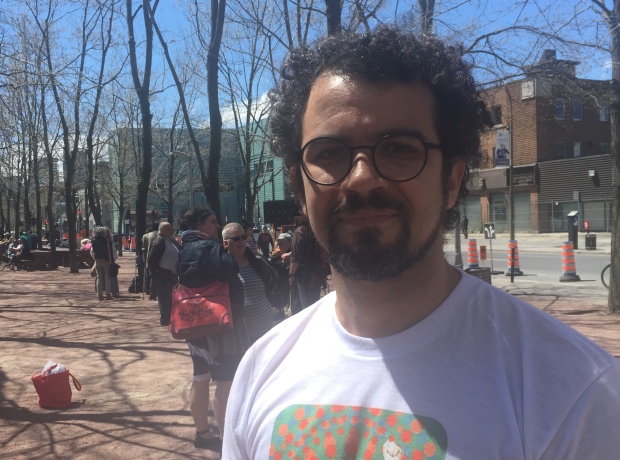
Friends in Quebec stage a protest in Montreal, Friday to bring attention to he alarming rise in use of electroshock in Quebec, highlighting the risks, and also just how little is known about it’s effects.
They also spotlight other, non-violent approaches that instead of controlling people seek instead to enable them to connect and express themselves, drawing on the arts and transcultural approaches that work by helping people learn and grow and without causing irreparable damage to brains and lives.
CBCNews |Montreal 7th May 2016
Increase in Quebec use of electroshock therapy alarming, advocates say
Psychiatrist says arts and culture can be used as alternative treatment for mental illness
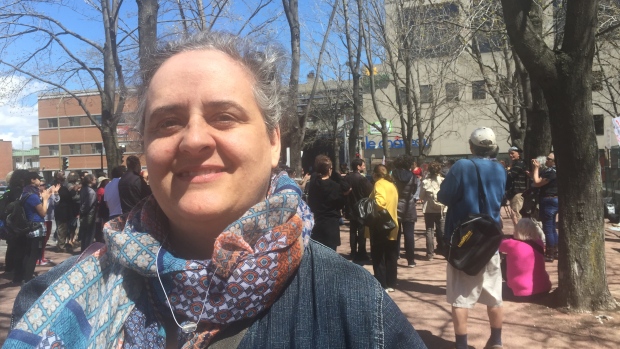
By Melissa Fundira, CBC News Posted: May 07, 2016 6:18 PM ET Last Updated: May 07, 2016 6:18 PM ET Céline Cyr, one of the founding members of the Comité Pare-Chocs, says she hopes the government will ban ECT, but fear that austerity measure will instead increase its use. (Melissa Fundira/CBC)
Dozens of protesters gathered at Place Émilie-Gamelin in downtown Montreal to call for an end to the use of electroshock therapy in Quebec.
In electroshock therapy, also known as electroconvulsive therapy (ECT), a brief electric pulse is applied to the scalp, causing a convulsion. It is often used to treat depression.
the event for last 10 years, said the treatment causes brain damage, proof of its effectiveness is “shaky,” and yet it is still being administered for several mental health issues from depression to schizophrenia and bipolar disorder.
“It’s too destructive, it’s too risky and it’s still a controversial experimental treatment,” said founding member Céline Cyr. “It should not be allowed in 2016.”
Pare-Chocs commissions statistics on the use of the treatment every year, and the numbers are alarming, she said. The latest data collected by RAMQ, the provincial public health insurance agency, show that the use of ECT has:
Increased 58 per cent between 2011-2015 (6,761 to 10,690 ECT treatments)
Increased 25 per cent between 2014-2015 (the highest annual increase in the last five years)
Increased 400 per cent at Rimouski Hospital in the last year
Increased 70 cent at Chicoutimi Hospital in the last year
Nearly doubled at both Hull and Charles-LeMoyne hospitals in the last year
Of the people who received the treatment, 60 per cent were women — many of them elderly — and some shocks were even administered to youth, Cyr added.
Francine Santerre, another founding member, said psychiatrists would never prescribe ECT to their patients if they knew its side effects.
Santerre was given the treatment 167 times between 1980 and 1984 at Lakeshore General Hospital. She said she was misdiagnosed and now lives with the consequences of ECT.
“I have some problems of concentration, to learn and to think. I’m a little bit slow,” she said.
Francine Santerre, comité pare chocs
Francine Santerre has been treated with ECT 167 times. She says she now suffers from memory loss and has a hard time concentrating. (Melissa Fundira/CBC)
The group hopes Quebec Health Minister Gaétan Barrette will ban the treatment but Cyr said she was afraid austerity measure would only mean an increase in the use of ECT.
Art and culture as an alternative
Dr. Vitor Pordeus, a Brazilian psychiatrist who spoke at the protest, said ECT was an “aggressive” approach that was justified in scientific milieus that look at the body as a machine.
Dr. Vitor Pordeus
Dr. Vitor Pordeus, a psychiatrist from Brazil, says his own experience with mental illness has changed the way he sees the treatment of mental health. He now uses theatre with mental health patients and has seen an improvement in their communication skills. (Melissa Fundira/CBC)
“In this model of the body as machine, there are no spaces for subjectivity, spirituality, emotions, affections,” Pordeus said. “I was a doctor like this… until I had a mental disease myself.”
Pordeus said he suffered from severe depression and found a cure in theatre — an approach he has since used on his own patients.
“The clinical experience is very clear and there is no doubt that there are many options — education, culture, theatre, poetry, painting, sculpting, all kinds of expressive means — that help to heal mental diseases,” he said.
Pordeus, who is about to study transcultural psychiatry at McGill University, said “mental diseases are very, very related to blocks in communication,” and expressing oneself through the arts has been shown to improve communicational levels in those suffering from mental illness.
“All of them have improved [and] all of them have developed a higher level of communication,” he said, adding that many have also been able to get off medication.
Pordeus said treating mental illnesses through arts and culture, unlike ECT, is cheap, easy and has no side effects.
“We must accept this common challenge of promoting mental health through culture.”





 Samuel Beckett was a master at capturing and conveying relentless, unceasing inner speech – taking what can drive us mad if we’re left to deal with it alone, and turning it into art.



















































 agnotarte
 dave umbongo
 drkenplacebo
 highfellow
 recoverynetwork:Toronto



 recovery network: Toronto
You must be logged in to post a comment.