Many folks these days talk of “othering”, its become a verb to other. When we other we categorise some other as “the other” – meaning other than us. and some credit the idea to Franz Fanon. But what is it to other another?
Fanon was much clearer in what he meant.
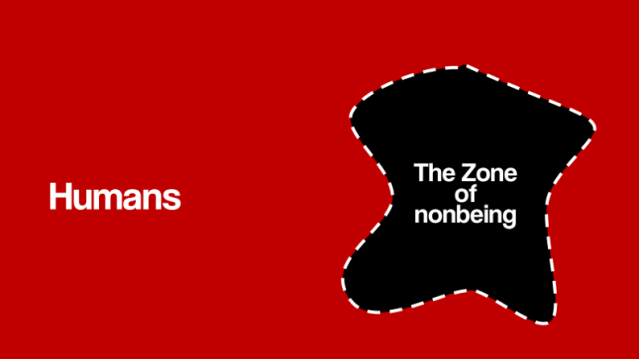
When we cast someone as “other”, he meant other than human – non-human. What we do when we “other” someone is to cast that person out into what Fanon called the “zone of nonbeing”.
Even more than non-human, as nonbeing we have no thoughts, experience of our own – for that would first required that we were a being; and to be placed in the zone of nonbeing, by being declared such we are denied opportunity and right to think of ourselves, nevermind as human, but not even as a being, or having being, being a being, beigness itsell has been stripped away from up- because there is and never was a “we” to have it in the first place…
And he was clear about why we do this to others:
so that we can feel ok about whatever is done to them- those whom we have placed in the zone of nonbeing.
Human history is full-enough of examples of how it works that you might think we don’t need any more, yet, somehow, though, we do keep coming up with new ones.
Note
Revised Dec 2018
Originally I had to give myself a step – “zone of non-human”: my colonised brain had difficulty grasping the enormity of Fanon’s term nonbeing.
The sky’s ablaze with ladies’ legs he used to say
They’re kicking from the clouds
Shoes fall thru the morning haze & splat like eggs amongst the crowds
Can you see them, son?
my father asked
Now they’re dancing plain as day
The Sky’s Ablaze – Was [Not Was]
My father used to take a drink or two when I was young
It was then hallucinations always dangled from his tongue
The sky’s ablaze with ladies’ legs he used to say
They’re kicking from the clouds
Shoes fall thru the morning haze & splat like eggs amongst the crowds
Can you see them, son?
my father asked
Now they’re dancing plain as day
His eyes were rolling fiercely, there was little I could say
How can you go on I’d like to ask How can you bear the night
Instead I hold my tongue, because I know we’d only fight
The sky’s ablaze with ladies legs, he’d say
They’re kicking from the clouds, shoes fall through the morning haze
And splat like eggs amongst the crowds,
can you see it, boy?
The sky’s ablaze with ladies legs, he’d say
They’re kicking from the clouds, shoes fall through the morning haze
And splat like eggs amongst the crowds,
can you see it, boy?
The sky’s ablaze with ladies legs, he’d say
They’re kicking from the clouds, shoes fall through the morning haze
And splat like eggs amongst the crowds,
can you see it, boy?
Ken Robinson is sought the world over as an adviser to those who run education systems.
We have model of education that came from 1900s and was designed to do two things
create university professors and as factories churning our workers for the jobs in factories.
“There’s nothing wrong with university professors but they live entirely within their heads, regard their body as a means of transport – for getting their head to the next meeting.”
We need to stop educating kids for the jobs we wanted to do when we were kids – because they’re gone, or will be before kids finish schooling.
The core experience of trauma is feeling disempowered and disconnected.
-Judith Herman, Trauma and Recovery
Trauma is not the thing that happens it is the effect left within us.
the core experience of trauma is being left feeling disconnected and disempowered.
Ironic then, that our approach to how we run “mental health services” is so often to further disempower and further disconnect those who are already disempowered and disconnected:
Disempowering us with endlessly repeated untruths, mistruths and fake stories about our broken brains, our faulty biology, or our inability to adapt, and about how we need to acquiesce to experts, their quick fixes: magic pills and magical technology, and “behavioural medicine”.
Disconnecting us from ourselves and each other by calling us names that have us fearing our experiences, fearing ourselves and fearing each other.
Were we to deliberately set out to design a system to leave people stuck we’d have to work really hard to make it work better than the one we already have.
Now, it really is not difficult to understand why people come to struggle and feel overwhelmed by life.
It really does not take too long listening to an individual to begin to make sense of the specifics of how it is they come to struggle, and start to figure out with them what avenues might be worth pursuing to begin the process of bringing about some change.
What if, instead of a system that degrades, dehumanizes, disconnects and disempowers people who do find themselves struggling, we built a system that helped them make sense and to find their way?
What if, instead of a system that requires people, who have already become disconnected and disempowered, to subjugate themselves to being experimented upon and passed from one expert to the next, further disconnected and disempowered?
What if…instead of treating people like broken machines and subjecting them to experts expertly diagnosticating and expertly fixing them, instead we created systems that focussed on enabling people to become more connected and more empowered..?
From New York Times Book Review, a review by Steve Silberman of ADHD Nation written by Alan Schwarz and telling the story of the Making of an American Epidemic, one that has sadly been followed in many other countries.
Disorders of attention used to be thought relatively rare by experts, affecting only 3% of preadolescent children. But kids are diagnosed so routinely that a prescription for Ritalin or Adderall has practically become a rite of passage.
The effects of stimulants on attention and eagerness to learn in the classroom was discovered by psychiatrist Charles Bradley in the 1930s, he was hoping to find relief for patients experiencing excruciating headaches from experiments he had been performing on them , replacing spinal fluid in their skulls with air to reveal irregularities in x-rays. Bradley believed children needed a broad range of support psychosocial therapy and calming nurturing environment, he was hoping the Smith, Kline & French’s benzedrine sulfate would relieve the pain they experienced after the a the tests. The next decades saw psychoanalysis dominate the field of psychiatry in North America but later Bradley’s research became the basis of “convincing parents, physicians and public health officials that 15 percent of American schoolchildren are sick enough that they would require powerful medication just to get through the day.”
The word “psychiatry” means “soul healing” this is part of the story of how the institutions of psychiatry lost their ability to heal souls by selling theirs.
Overselling A.D.H.D.: A New Book Exposes Big Pharma’s Role
ADHD NATION Children, Doctors, Big Pharma, and the Making of an American Epidemic
By Alan Schwarz
In the late 1930s, Charles Bradley, the director of a home for “troublesome” children in Rhode Island, had a problem. The field of neuroscience was still in its infancy, and one of the few techniques available to allow psychiatrists like Bradley to ponder the role of the brain in emotional disorders was a procedure that required replacing a volume of cerebrospinal fluid in the patient’s skull with air. This painstaking process allowed any irregularities to stand out clearly in X-ray images, but many patients suffered excruciating headaches that lasted for weeks afterward.
Meanwhile, a pharmaceutical company called Smith, Kline & French was facing a different sort of problem. The firm had recently acquired the rights to sell a powerful stimulant then called “benzedrine sulfate” and was trying to create a market for it. Toward that end, the company made quantities of the drug available at no cost to doctors who volunteered to run studies on it. Bradley was a firm believer that struggling children needed more than a handful of pills to get better; they also needed psychosocial therapy and the calming and supportive environment that he provided at the home. But he took up the company’s offer, hoping that the drug might eliminate his patients’ headaches.
It did not. But the Benzedrine did have an effect that was right in line with Smith, Kline & French’s aspirations for its new product: The drug seemed to boost the children’s eagerness to learn in the classroom while making them more amenable to following the rules. The drug seemed to calm the children’s mood swings, allowing them to become, in the words of their therapists, more “attentive” and “serious,” able to complete their schoolwork and behave. Bradley was amazed that Benzedrine, a forerunner of Ritalin and Adderall, was such a great normalizer, turning typically hard-to-manage kids into models of complicity and decorum. But even after marveling at the effects of the drug, he maintained that medication should be considered for children only in addition to other forms of therapy.
Bradley’s research was ignored for a couple of decades as psychoanalysis became dominant in the United States. But his discoveries laid the foundation for one of the most aggressive marketing campaigns in history, which succeeded not only in helping to transform the nascent drug industry into the multinational juggernaut known as Big Pharma, but in convincing parents, physicians and public health officials that 15 percent of American schoolchildren are sick enough that they would require powerful medication just to get through the day.
This campaign (which would have horrified Bradley and his peers) is the subject of an important, humane and compellingly written new book called “ADHD Nation,” by Alan Schwarz, a reporter for The New York Times. The title of the book, of course, refers to attention deficit hyperactivity disorder: a constellation of behaviors and traits codified as a neurobiological illness in the bible of psychiatry, the Diagnostic and Statistical Manual of Mental Disorders.
The boundaries of the A.D.H.D. diagnosis have been fluid and fraught since its inception, in part because its allegedly telltale signs (including “has trouble organizing tasks and activities,” “runs about or climbs in situations where it is not appropriate” and “fidgets with or taps hands or feet,” according to the current edition of the DSM) are exhibited by nearly every human being on earth at various points in their development. No blood test or CT scan can tell you if you have the condition — the diagnosis is made by subjective clinical evaluation and screening questionnaires. This lack of any bright line between pathology and eccentricity, Schwarz argues, has allowed Big Pharma to get away with relentless expansion of the franchise.
Numerous studies have shown, for example, that the youngest children in a classroom are more likely to be diagnosed with A.D.H.D. Children of color are also at higher risk of being misdiagnosed than their white peers. One clinician quoted in the book more or less admits defeat: “We’ve decided as a society that it’s too expensive to modify the kid’s environment. So we have to modify the kid.”
Schwarz has no doubt that A.D.H.D. is a valid clinical entity that causes real suffering and deserves real treatment, as he makes clear in the first two sentences of the book: “Attention deficit hyperactivity is real. Don’t let anyone tell you otherwise.” But he believes that those who are disabled by the condition deserve a wider range of treatment options than an endless litany of stimulants with chirpy names like Vyvanse and Concerta.
Disorders of attention were once thought to be relatively rare by experts, affecting only an estimated 3 percent of preadolescent children. But kids and teenagers are now diagnosed so routinely that getting a prescription for Ritalin or Adderall has practically become a standard rite of passage, particularly in the United States. And the diagnosis isn’t just for children anymore: Its ever-expanding boundaries now encompass allegedly hyperkinetic infants and the distractible elderly. What’s really going on?
Influential patient-advocacy groups insist that only now is the true prevalence of A.D.H.D. finally being recognized after being drastically underestimated — akin to the spike in autism diagnoses once the narrowly defined condition was broadened into a spectrum in the 1990s. But Schwarz makes a convincing case that the radical expansion and promotion of A.D.H.D. has resulted in the label being applied in ways that are far beyond the needs of a historically underserved community, while nonpharmaceutical methods of treatment like cognitive behavioral therapy (which have been proved to complement the effectiveness of medication) are overlooked.
While other books have probed the historical roots of America’s love affair with amphetamines — notably Nicolas Rasmussen’s “On Speed,” published in 2008 — “ADHD Nation” focuses on an unholy alliance between drugmakers, academic psychiatrists, policy makers and celebrity shills like Glenn Beck that Schwarz brands the “A.D.H.D. industrial complex.” The insidious genius of this alliance, he points out, was selling the disorder rather than the drugs, in the guise of promoting A.D.H.D. “awareness.” By bankrolling studies, cultivating mutually beneficial relationships with psychopharmacologists at prestigious universities like Harvard and laundering its marketing messages through trusted agencies like the World Health Organization, the pharmaceutical industry created what Schwarz aptly terms “a self-affirming circle of science, one that quashed all dissent.”
In a narrative that unfolds with the momentum of a thriller, he depicts pediatricians’ waiting rooms snowed under with pharma-funded brochures, parents clamoring to turn their allegedly underachieving children into academic superstars and kids showered with pills whose long-term effects on the developing brain (particularly when taken in combination) are still barely understood. In one especially harrowing section of the book, Schwarz traces the Icarus-like trajectory of Richard Fee, an aspiring medical student who fakes the symptoms of A.D.H.D. to get access to drugs that will help him cope with academic pressure. When he eventually descends into amphetamine psychosis, his father tells his doctor that if he doesn’t stop furnishing his son with Adderall, he’ll die. Two weeks after burning through his supply, Fee hanged himself in a closet.
“ADHD Nation” should be required reading for those who seek to understand how a field that once aimed to ameliorate the behavioral problems of children in a broad therapeutic context abdicated its mission to the stockholders of corporations like Shire and Lilly. Schwarz is sounding an alarm for a fire that looks nowhere near abating.
Steve Silberman is the author of “NeuroTribes: The Legacy of Autism and the Future of Neurodiversity.”
A version of this review appears in print on August 28, 2016, on page BR10 of the Sunday Book Review with the headline: Attention Must Be Paid.
A man liked milk,
now he owns a million cows
can you imagine all that milk?
Tell me that I’m dreaming…
Members of the Congress,
I have the high privilege,
and of the sick honor
of presenting to you,
the President of the United States.
Thank you very much.
Thank you very much.
Thank you very much.
I pulled into your town, saw two signs:
West and West
Tell me that I’m dreaming
Turned down a No-way street and saw another sign:
Drive in reverse or something like it
(We talked like men and ate fish at the end of the pier)
I tried 2 walk, but how?
The rest of U were dancing with pointy shoes on
Somebody pinch me, am I? (Na na na na na)
(Was I? Did I away the night?)
Nu Shooz, laser breakfast, fast target vehicles
Leather house, dreaming, somebody pinch me! (Ouch!)
Can we who man the ship of state deny it is somewhat out of control
Can we who man the ship of state deny it is somewhat out of control
Can we who man the ship of state deny it is somewhat out of control
Can we who man the ship of state deny it is somewhat out of control
Can we who man this
Can we who man this
Can we deny the control?
Thank you very much. Thank you.
Nightwatchman at a bank made some pirates walk the plank
Oh, I must be dreaming.
Tell me that I’m dreaming
One man liked milk, now he owns a million cows
Can you imagine all that milk?
Tell me that I’m dreaming
Tag! You’re it! No! It’s not funny! It’s not funny! Yaaaahh! Not!
One man liked milk, now he owns a million cows
One man liked milk, now he owns a million cows
One man liked milk, now he owns a million cows
(Tell me that I’m dreaming) Out of control
One man liked milk, (out of control) now he owns a million cows
(Tell me that I’m dreaming) Out of control
One man liked milk, now he owns a million cows
(Out of control, out of control)
One man liked milk, now he owns a million cows
(Out of control) One man liked milk (Out of control)
Now he owns a million cows (Out of control, out of control)
(Out of control) One man liked milk (Out of control)
Now he owns a million cows (Out of control)
(Out of control, out of control, out of control)
(Out of control, out of control, out of control)
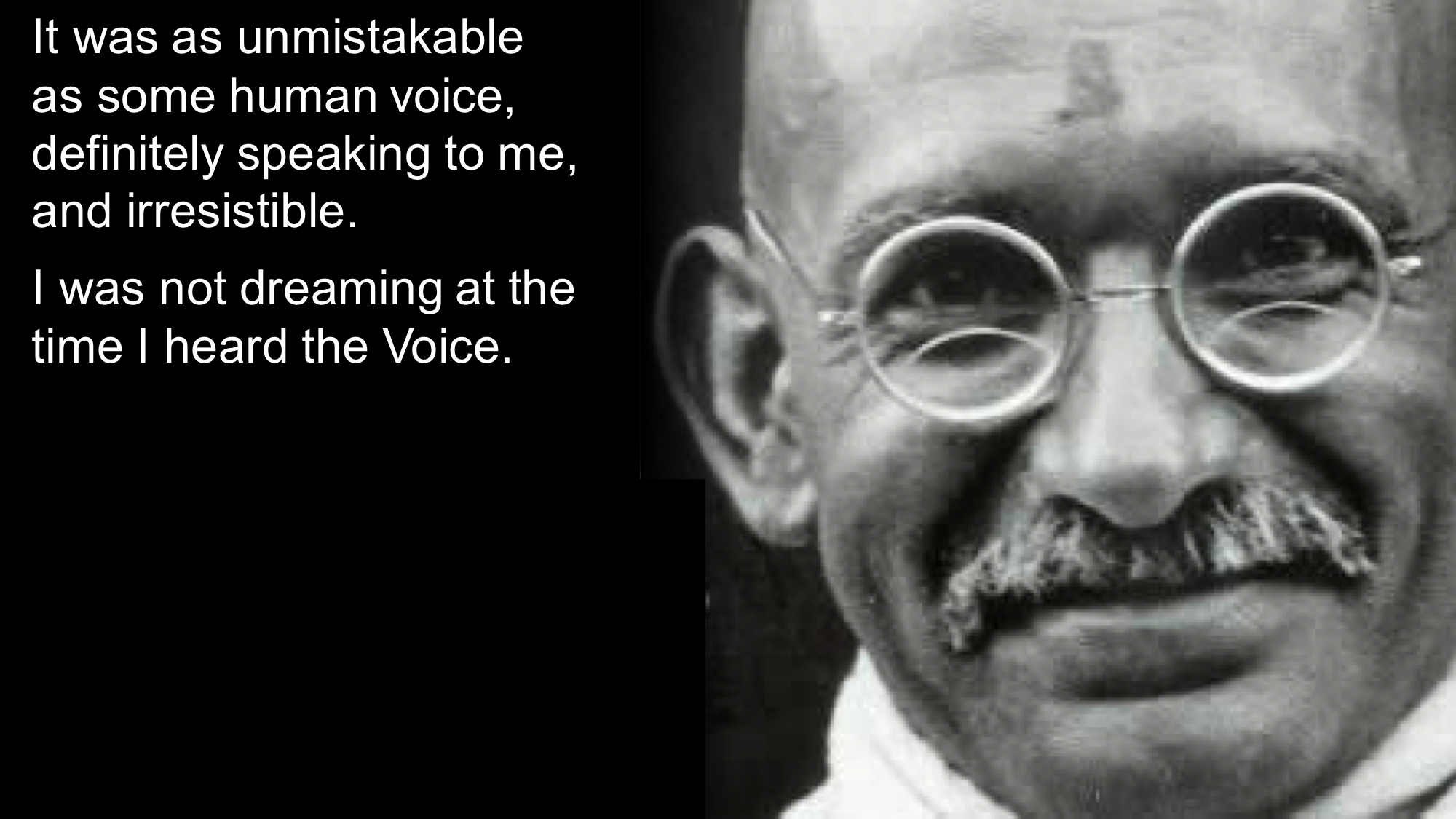
For those who prefer a more spiritual explanation, weaver Mahatma Gandhi on hearing the Voice, preceded by great struggle within him, then it came to offer him clear direction of “right path”. His commitment to non-violence enabled him to show the way a huge nation walk to emancipation and independence .
So, you’re hearing voices, eh ?
If you are, then then you’re amongst very good company.
The term “systems thinking” is really a mixed bag and I use it very cautiously.
First, both words are problematic, but the word system is very problematic:
if you say the word system the picture image that pops up into most people’s head is computer system, you know like “we need a systems expert, our system’s not working”.
The second most common association is “management control system”
as in: ‘’it’s not my fault, it’s the stoopid system!”
These are the two associations that come to people and neither of them is what we’re trying to help people understand.
So I usually start off by saying “are you part of a family?”
Have you ever seen, in a family, people producing consequences in the family – how people feel, how people feel act -that aren’t what anybody intended?
How does that happen?
We live in webs of interdependence…
A family is a fairly close-knit one, but still, you can kinda see most of the key players, but still, even though we can identify maybe the ten or fifteen and identify all the key people, still the complexity of interactions amongst those people is obviously such that, consistently, families produce outcomes that nobody wants.
It’s not to understand ‘systems’ – that’s an abstraction – it’s to understand that the problems that are the most vexing and difficult and intransigent that we all deal with come about.
…and obviously to get a perspective on those problems that gives us some leverage, some insight as to what we might do differently.



















































 agnotarte
 dave umbongo
 drkenplacebo
 highfellow
 recoverynetwork:Toronto



 recovery network: Toronto
You must be logged in to post a comment.