
No idea what “good girl” art looks like but can’t be this much fun
Bad Girl Art rocks..

Get more Bad Girl Art at https://www.facebook.com/badgirlart1/
No idea what “good girl” art looks like but can’t be this much fun
Bad Girl Art rocks..
Get more Bad Girl Art at https://www.facebook.com/badgirlart1/
Brene Brown at RSA Shorts
Brene Brown at a meeting of Blamers Anonymous…
 How many of you are blameless?
How many of you when something goes wrong, the first thing you wanna know is whose fault is it?
.
 “Hi, My name is Brene, I’m a blamer.”
.
I need to tell you a quick story.
So, this a couple of years ago before I realised the magnitude to which I blame.
I ’m in my house and I’m drinking a cup of coffee in my kitchen.
It’s a full cup of coffee.
,
,
I drop it. On the ti led floor.
It goes into a million pieces and splashes up all over me.
.
 And the first, I mean a millisecond after it’s on the floor:
“DAMN YOU STEVE”
Because, let me tell you how fast this works for me…
 Steve plays water polo with a group of friends and the night before he went to play water polo.
And I said “hey make sure you come home before ten because I can never fall asleep until you get home”
And he got back at ten-thirty.
 And so, I went to bed a little bit later than I thought.
Ergo, my second cup of coffee that I would probably not be having had he come home when we discussed.
therefore…
 So the rest of that story is I’m cleaning up the kitchen, Steve calls…
I’m like “hey.”
He’s like “hey what’s going on babe”
Huh What’s going on…
So I’ll tell you exactly what’s going on
I’m cleaning up the coffee, that spilled all….
duh……………………dial tone
because he knows…
how many of you go to that place:
 When something goes wrong,
When something BAD happens
 .
.
.
The first thing you want to know is
WHOSE FAULT IS IT?
.
.
I’ d rather it be my fault than no one’s fault.
…because,
.
 WHY?
WHY?.
.
.
 Here’s where, if you enjoy blaming,
this is where you stick your fingers in your ears
and do the “na-na-na!” thing.
…because I’m getting where I’ll ruin it [enjoying blame] for you.
Here’s what we know from the research:
 Blame is simply the discharging of discomfort and pain.
.
.
.
.
.
.
.
.
.
.
.

It has an inverse relationship with accountability.
Accountability is by definition a vulnerable process.
 It means me calling you and saying,
“hey my feelings were really hurt about this.. “
…and talking.
I t’s not blaming.
 Blaming is simply a way that we discharge anger.
.
.
.
.
.
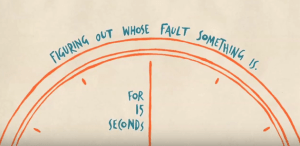 People who blame a lot seldom have the tenacity and grit to hold people accountable because we spend all of our energy raging for 15 seconds.
.
And blaming is very corrosive in relationships…
 .
.
.
And it’s one of the reasons we miss our opportunity for empathy.
 .
.
.
because when something happens and we’re hearing the story we’re not really listening.
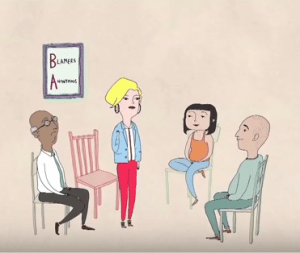 We’re in the place where I was, making the connections as quickly as we can about whose fault something was.
.
.
.
.
.
.
Watch Brene Brown on Blame at RSA Shorts here.
 What happens at a Hearing Voices Cafe?
Like any other café anywhere, people come together to meet, enjoy something to drink and something good to eat, talk, listen, maybe learn something, share and enjoy the experience.
If you hear voices, see visions, spirits, or not, or if you are curious about our own experiences, or if, maybe if you are just wondering where you can talk about experiences that you have but that no one talks about – then this may just be that place.
We invite you to come join a different, more curious conversation about the many ways that we can experience being human, including those that are not easy to talk about.
Or, since the café is open as normal, you can simply visit, enjoy a coffee, tea, a snack or light meal – in the conversation and hear the polyphony of many voices.
 Hearing Voices Cafe Toronto
Hearing Voices Cafe Toronto
meets First Monday of the month at
Coffee and All That Jazz
Roncesvalles, Toronto.
If you think hearing voices is solely the result of a broken brain, a degenerative brain disease then we invite you to think again.
Research shows that:
– 4 to 15% of us hear voices on a regular basis- that’s at least 300 million of us.
– 75% of us will have at least one experience of hearing a voice that others don’t hear.
Most who do find it valuable, others are learning how they can too.
Of those who do struggle, research shows that 70-80% relate the difficult experience with voices to distressing events in earlier life.
Individuals who experience severe distress in early years can be up to 195 times more likely to be diagnosed with “serious mental illness” in adult hood.
It is time for a different story.
If you are curious, then come join us at the Hearing Voices Cafe
– or start your own where you live.
https://recoverynetworktoronto.wordpress.com/2015/09/24/hearing-voices-cafe-toronto/
Here’s a brief segment from CBC Radio’s Metro Morning with Matt Galloway aired on Tue 3rd Nov 2015 at 6:25am.
Reporter-Editor Mary Wiens spent time talking with folks at The Hearing Voices Cafe, Toronto. Many thanks to Mary, Matt, at Metro Morning and to Sue and David at Coffee and All that Jazz.
More about the hearing voices cafe…
Hearing Voices Cafe – a Pamphlet
Hearing Voices Café Toronto-Pamphlet-Oct2015
Hearing Voices Cafe Toronto
The Hearing Voices Cafe
The Hearing Voices Cafe Newspaper
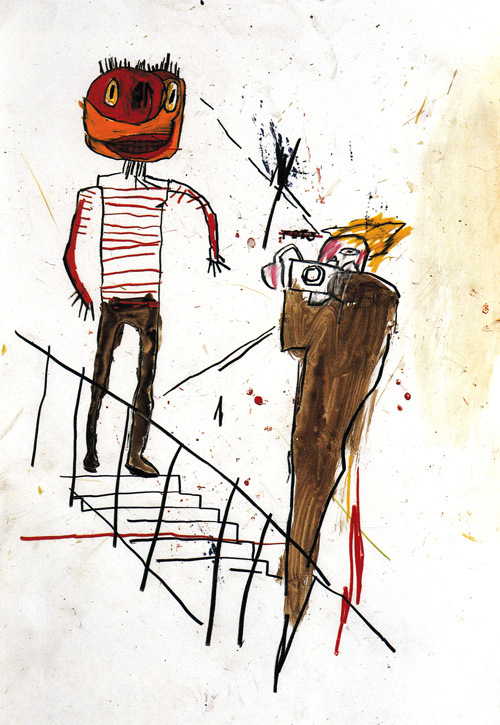
From the book combining Maya Angelou’s words with Jean Michel Basquiat’s paintings.
 Shadows on the wall
Noises down the hall
Life doesn’t frighten me at all
Bad dogs barking loud
Big ghosts in a cloud
Life doesn’t frighten me at all
Mean old Mother Goose
Lions on the loose
They don’t frighten me at all
 Dragons breathing flame
 I go boo
Life doesn’t frighten me at all.
 Tough guys fight
All alone at night
Life doesn’t frighten me at all.
 Panthers in the park
Strangers in the dark
No, they don’t frighten me at all.
 That new classroom where
.
 Don’t show me frogs and snakes
 Life doesn’t frighten me at all
.
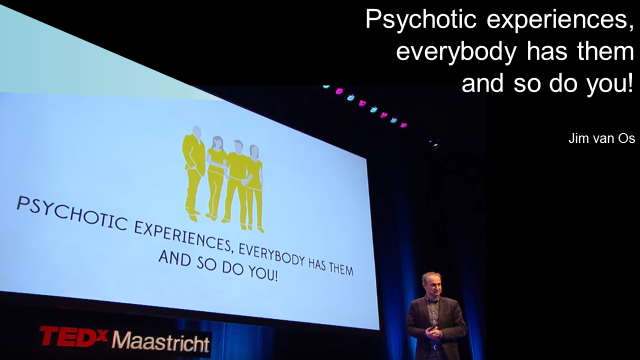
Think hearing voices is unusual and only limited to a few people with broken brains?
Think again
Research shows that 4% to 15% of all of us – the “general population”- hear voices on a regular basis, and that most of those are fine and never have need to call upon psychiatric services.
Y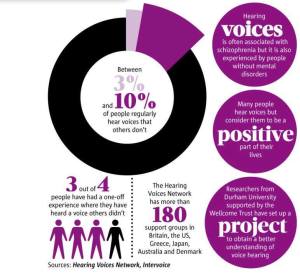 es some people -the minority- do struggle but how much of that is due to fear and isolation generated the myths and stories we tell and perpetrate in the media about what it must mean about a person if they do hear voices?
It’s high time we started telling each other different stories about what it means to hear voices.
Many people who hear voices regard it as enriching their experience of being in the world.
People who do struggle with voices are some of the most resilient and remarkable people you will likely ever meet. and research shows that there is a very high likelihood that they experienced adverse and distressing experiences in their early years and have struggled in live since as a result.
Rather than regarding people who hear voices as strange, scary, weird, it might be more useful ask how come you don’t?
 Even taking the low end of the range 4% – that’s three hundred million people.
That’s a lot of people to treat like crap just because we are different.
Jim van Os is a psychiatrist who knows understands the devastating consequences of the widespread stereotype of schizo diagnoses. He has been actively researching into relations between environment and diagnoses, especially early adverse experiences and how they relate to becoming diagnosed in later years, and involved in research leading to proposals that psychosis is not a discrete illness but a complex that arises on a continuum.
In this TEDx talk Jim van Os paints a picture of a typical scenario in which, typically a young person can get sucked into having slightly strange yet very common experiences of the type that most of us will have at some point, can become all important once they become interpreted as symptoms of a mystifying, debilitating and devastating brain disease.
He points out how this powerful consensus belief is the opposite of what is needed to support a person in recovering.
Instead Jim van Os suggests for us a different understanding – one built upon two or three decades of science and research into the relationship between adverse experiences in early years and coming to struggle and becoming diagnosed later in life.
Now, you don’t have to accept the idea set out here as some universal truth – nothing is – and I certainly don’t, there’s too much of an implication that all unusual experiences are “wrong” and “psychotic”, as he says”:
“Seeing signals in random noise is actually quite human so experiences of hyper meaning are quite common.”
“Psychotic experiences, everybody has then and so do you”
That said what he offers us is both easy to understand and useful.
What is offered here is a way of understanding that is both much more compassionate and useful as a way to interpret what a person might be experiencing.
From there its not too hard for even the dumbest amongst us to understand and imagine that we need offer much broader approach than casting out and throwing meds at people who are already struggling.
It is a classic case of the hyper-meaning of which Jim van Os speaks that such commonplace experiences tend to get diagnosed as first episode psychosis for people going through life-changing and transformational years teens to late twenties.
Jim van Os introduces us to one approach his team is working on that aims to use technology to put information and power into the hands of young people, placing them at the beginning and the centre of taking charge of their own their experience when the world takes a strange turn for them .
After an intro that gives rise to puzzlement and more than a few in the audience wondering where he’s going and squirming in their seats…
“So, maybe some of you start to worry a little bit about my mental health, maybe afterwards you want to take me to the local hospital for a psychiatric assessment.
Now, lets imagine that I tell the psychiatrist that apart from these thoughts I am also hearing voices and that I haven’t been functioning very well for the last six months.
 By this I will meet, likely criteria for one of these, so called, schizo diagnoses
Lets say I meet criteria for schizophrenia which is the prototypical diagnostic formulation for madness.
Now, my family will be notified of this diagnosis, and since they don’t know what it is they will start looking on the internet. And they look in the most prestigious scientific journals and they find that I have a devastating genetic brain disease or a debilitating neurological disorder.
So now they start being really worried…
…and they start looking for information about my likely prognosis and they find that my prognosis is bad:
I am totally disabled for the remainder of my lifetime.
Wow!
That’s scary isn’t it?
But you will note that that there is nothing in this terminology that actually allows them to understand what is the matter with me.
The information presented is disconnected from anything that we can understand as a mental function.
What is offered is a stereotype consisting of three things…
1. A mystifying greek name
2. An unproven hypothesis of a genetic brain disease and
3. A hopeless view of outcome.
 Next Jim introduces us to his cousin who completed two university studies and who is “witty and compassionate, quite unlike me”, they both ended up in psychiatry, he as Psychiatrist, she as patient.
She worked very hard at her recovery for fifteen years, numerous hospitalisations various treatments and various diagnoses, when she was offered a job, when her employer tried to fire her because of the diagnosis but found they couldn’t, she was forced to disclose her diagnosis and many people refused to work with her.
Five years later she has an exemplary employment record, yet because of the extremely negative expectations associated with psychosis, diagnosed persons continue to face difficult time.
So why to I tell you this?
These are conditions that typically start in adolescence .
There is widespread consensus that in order to recover from psychosis you need a perspective of hope and possibility to change.
And I think it is clear that the concept or the stereotype of psychosis is devoid of exactly that- of possibility for hope and change.
Jim van Os then goes on to outline a different way of understanding what we call psychosis- one actually based in research and that, based in understanding that for many people such experiences can be traced back to adverse experiences in early years, and that opens up options for treatment that are more hopeful and that put the individual in the centre of learning to master and change their own experience.
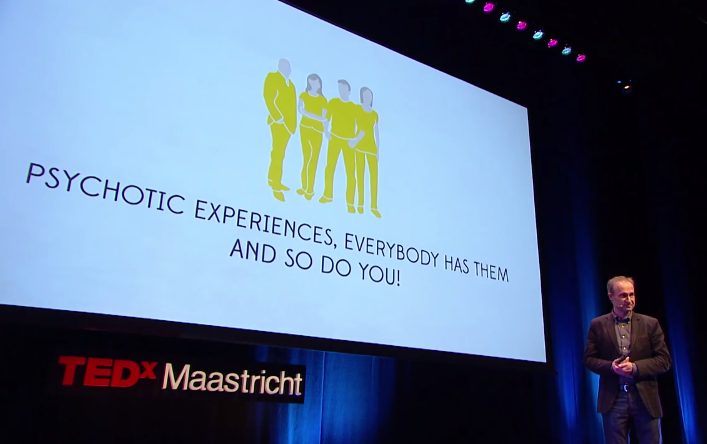 Psychotic experiences, everybody has them and so do you.
 Psychosis as experiencing
hypermeaning

Throughout the day we are exposed to stimulii that we hear, see, taste, feel,
and smell.
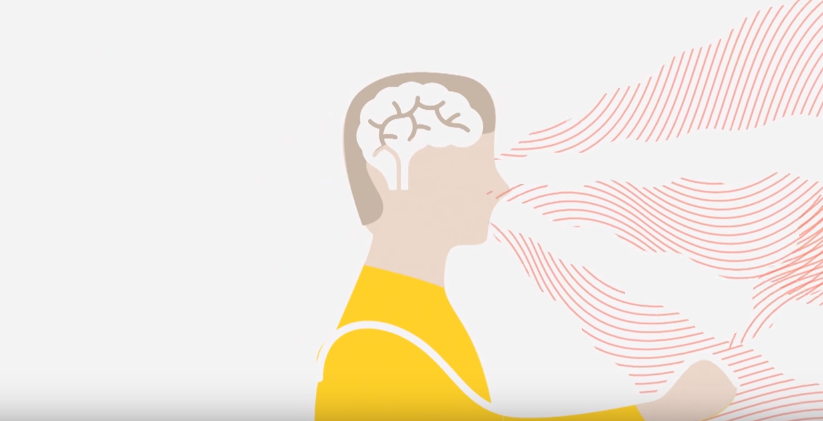 Our brain helps us to translate these data into an image of the surrounding world.
In other words we translate external sensory information from our environment into an internal mental experience.
 Sensory translations are highly personal .
For example, two people are walking through the woods…
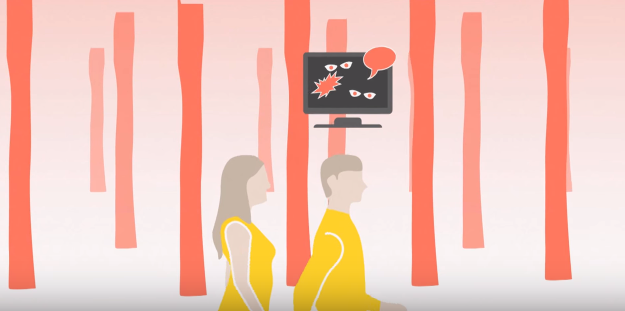
one has been watching a violent horror film earlier

whereas the other did not.
 As a result, the one hears rather different things compared with the other.
This is because powerful negative emotions occasioned by the film distort the person’s interpretation of sensory perception.
One could say therefore that this person is experiencing a mild psychotic episode.
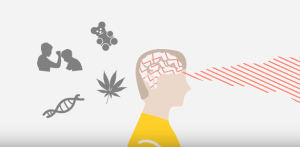 Childhood adversities, cannabis use, genetic factors can influence negative interpretation.
 This may cause you to feel that the world is full of threats, for example you may start thinking that you are being stalked or that people on TV are talking about you. Such ways of thinking are called “delusions”.
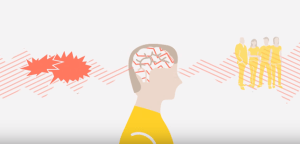 You may also interpret your inner mental processes, for example your thoughts may become so overpowering that you interpret them as external voices or visions. These experiences are called “hallucinations”.
If perceptions of inner thoughts or external environments become psychotic it’s possible to learn, with help, how to modify these. This is a learning process that many people with psychotic symptoms find profitable.
So do you notice the difference from the presentation of the schizophrenia stereotype?
Yet this is what science suggests psychosis is really about.
There are four important points of difference here.
1. what is psychosis?
2. what is the role of the brain?
3. what is the role of genes?
4.. what IS the prognosis of psychosis?
Psychosis is about what you could call “hyper-meaning”. Sometimes we attach too much meaning to the external environment.
Seeing signals in random noise is actually quite human so experiences of hyper meaning are quite common – think about being madly in love or madly worried that the one you love is being unfaithful…
or seeing a face in the dark.
 Actually thirty percent of the general population will admit to having had one or more psychotic experiences, things like hearing voices or seeing things, mind reading, thought broadcasting, having special powers, low level, mild but still the same all the things that are hallmark of psychosis.
So I want you to look at the person n your left, and then look at the person on your right.
If its not them, its you.
This is not to say that the brain is not important. The brain is very important. But it is like learning language. The brain provides us with the biological capacity to acquire speech but it is the early environment that programs this capacity so that we speak Chinese, English, French, Dutch.
And it’s the same with psychosis, the brain provides us with the biological capacity to have mental experiences in the first place but it is the environment that can program this capacity towards psychotic modes of thinking.
People growing up in circumstances of childhood trauma or un-safety or extreme exclusion have a higher risk of developing psychotic symptoms.
This because these environments can program our thinking towards the formation of psychotic symptoms.
Genes do play a role – genetic factors are important but their role is not nearly as dominant or as specific as is portrayed. And importantly, genes may act in ways that are complimentary to the environment by making people more or less sensitive to the environments that cause psychosis.
And with regard to outcome…this is a minority.
Some people indeed with psychotic symptoms have a very severe illness and very poor prognosis but this the is is a minority.
There’s also people with diagnosis of schizophrenia who find complete recovery . between these two extremes is a wide spectrum of variation.
 In fact extreme variation is the rule.
The notion of extremely uniform poor outcome is a myth.
 Psychosis is something that varies from day to day
even from moment to moment within a day .
 …and it is capturing this dynamic pattern of variation in response to environment and emotions that is key to treatment.
So, if psychosis  is all about variation – varying from day to day, even varying during the day – in response to the environment and emotions a remarkable opportunity presents itself..to diagnose psychosis at the level of experience itself in such a way that it becomes the first step towards treatment without a need to invoke the scary schizo labels.
and since young people are well versed in technology, why not use technology to empower them to track and monitor their experiences themselves so that they can gain insights
To this end our group developed a simple mobile app., that allows people to use their phone to monitor their mental states in daily life, feeding that info back to them so that they can learn and cope.
At random moments during the day app asks user to input information: emotions, thoughts, context, activities.
With this information, patterns of vulnerability and resilience can be made visible . people then have access to their patterns of experiences of hyper meaning as they evolve in the flow of daily life in response to emotions and environment, allowing them to understand what is going on and allowing them to develop better ways of coping.
In clinical practice we find this works very well, particularly with people in the early stages of psychosis.
So where does this leave us ?
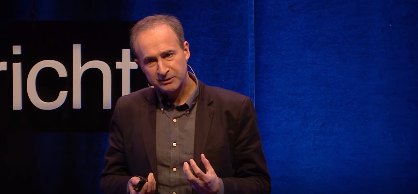 Well today [the event] is about reaching the impossible. I think it is in fact much simpler.
I think that nothing stands in our way to make today the first day that we can all feel connected to psychosis because it is all a question of perception.
When we see a person with psychosis we can, with a little effort, and information and in particularly education, we can not see the stereotype of a devastating brain disease
but instead see a person who is struggling with the way we attach meaning to the external and the external environments.
And this is sometimes a difficult and a painful process
but we are all experts.
http://tedxtalks.ted.com/video/Connecting-to-Madness-|-Jim-van/player?layout=&read_more=1
Don’t lay it on me, man
cos you can’t afford the ticket
back from Suffragette City
Ah don’t lean on me man, cause you can’t afford the ticket
I’m back from Suffragette City
Oh don’t lean on me man ’cause you ain’t got time to check it
You know my Suffragette City is outta sight, she’s all right
Hey man, ah Henry, don’t be unkind, go away
Hey man, I can’t take you this time, no way
Hey man, D-Droogie don’t crash here
There’s only room for one and here she comes, here she comes
Ah don’t lean on me man ’cause you can’t afford the ticket
I’m back from Suffragette City
Oh don’t lean on me man ’cause you ain’t got time to check it
You know my Suffragette City is outta sight, she’s all right
Oh hit me!
Ah don’t lean on me man ’cause you can’t afford the ticket
I’m back from Suffragette City
Oh don’t lean on me man ’cause you ain’t got time to check it
You know my Suffragette City
Don’t lean on me man ’cause you can’t afford the ticket
I’m back from Suffragette City
Oh don’t lean on me man ’cause you ain’t got time to check it
You know my Suffragette City is outta sight, she’s all right
A Suffragette City, a Suffragette City
I’m back from Suffragette City, I’m back from Suffragette City
Ooh, a Suffragette city, Ooh, a Suffragette City
Ooh haa, a Suffragette City, Ooh haa, a Suffragette
Ahh, wham bam thank ya ma’am!
A Suffragette City, a Suffragette City
Quite all right
A Suffragette City
Too fine
A Suffragette City, ooh, a Suffragette City
Oh, my Suffragette City, oh my Suffragette City
Ah, Suffragette
Suffragette!
Bikini Kill – Rebel Girl Lyrics
That girl thinks she’s the queen of the neighborhood
She’s got the hottest trike in town
That girl she holds her head up so high
I think I want to be her best friend, yeah
Rebel girl rebel girl
Rebel girl you are the queen of my world
Rebel girl rebel girl
I think I want to take you home
I want to try on your clothes
When she talks, I hear the revolution
In her hips, there’s revolutions
When she walks, the revolution’s coming
In her kiss, I taste the revolution!
Rebel girl rebel girl
Rebel girl you are the queen of my world
Rebel girl rebel girl
I know I want to take you home
I want to try on your clothes
That girl thinks she’s the queen of the neighborhood
I got news for you, she is!
They say she’s a dyke but I know
She is my best friend yeah
Rebel girl rebel girl
Rebel girl you are the queen of my world
Rebel girl rebel girl
I know I want to take you home
I want to try on your clothes
Love you like a sister, always
Soul sister, blood sister
Come and be my best friend, really
Rebel girl
I really like you, I really want to be your best friend
Be my rebel girl













































 agnotarte
 dave umbongo
 drkenplacebo
 highfellow
 recovery network: Toronto
You must be logged in to post a comment.