Fri 23rd Feb 2018 @The Imperial Pub
Call for performers….
If you have a story to tell -the weirder the better- about you, the challenges you’ve faced, the choices you made, the mistakes , stuff you wouldn’t tell your mom, your fuck-ups, and your shit-bombs.
and about what you learned … about life, the universe, and everything… but mostly what you learned about being you.
and how you’re learning to break free from the bullshit of who or what others would have you be….
and you want to share it in public – especially if it’s your first time- as short story, stand-up, song – or even as stuff
not beginning with S or P.
Then pitch us!
And:New!
MADx now has a house band so if you’d like some accompaniment…
ask us about adding some BULLx to your….
MADx
It’s a bit mad and it has an x in it. and this Feb it also has a lorra lorra Bs.
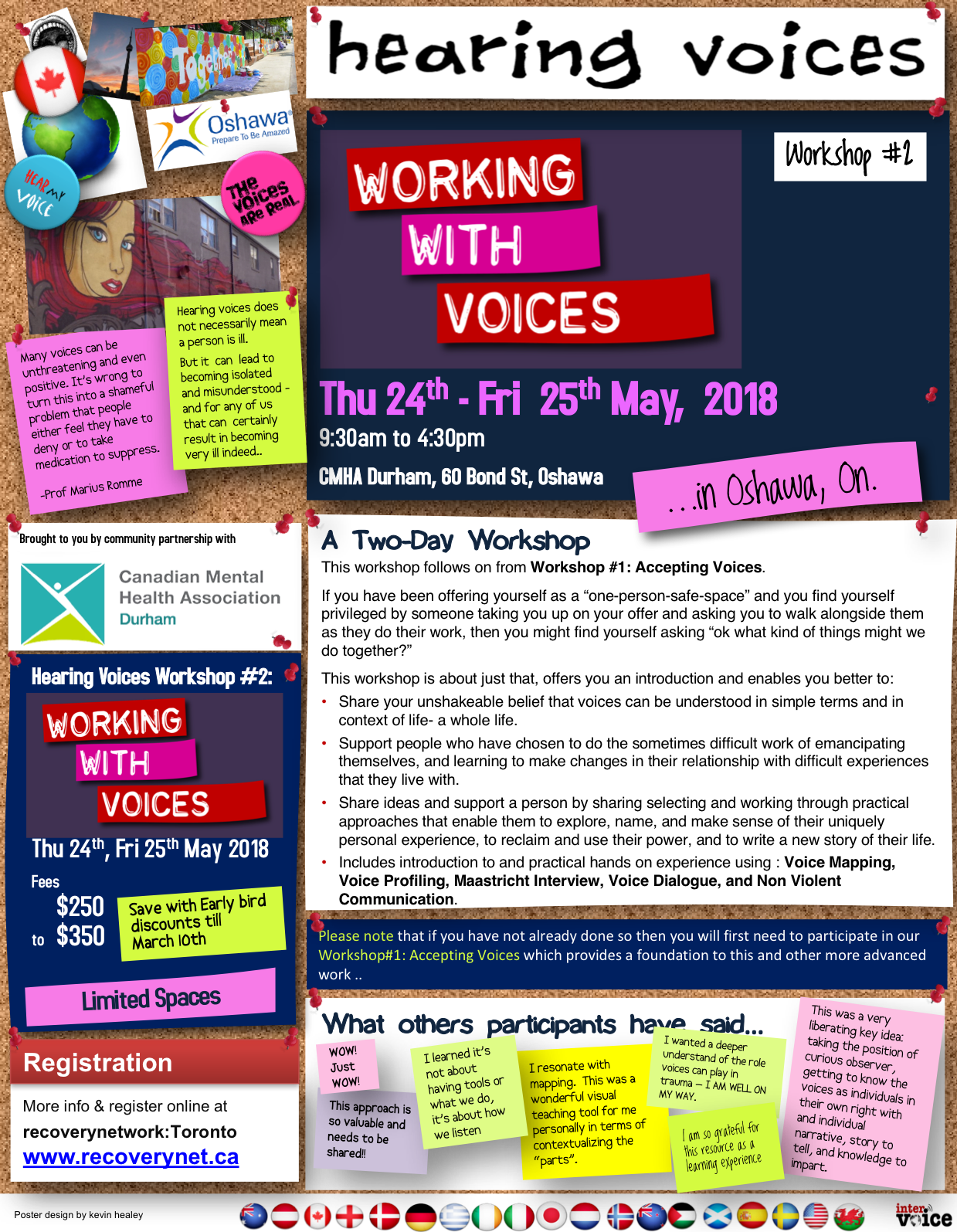
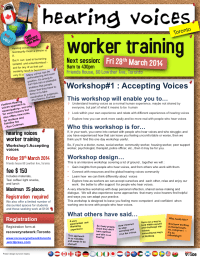
This two-day workshop follows from Workshop #1 Accepting Voices
If you support others with their voices and are looking for ways you can better understand and work with voices and other experiences that get called “psychosis”.
You will also gain introduction to creative, reflective ways you can explore and make sense of your own experiences behind the mask with which you face the world.
Most participants report that though it is not what they at all expected, they find participate in this workshop they learned most about how to access and understand their own experiences – and how that enables them to better relate with those they support.
Key Topics included
Voices and Trauma
Feeling Safe-Enough
Brief Intro to approaches that can be used singly or together.
Voice Mapping
Voice Profiling
Maastricht Interview
Voice Dialogue
Non Violent Communication
Culminates in participating in and reflecting on a voice dialogue session.
Unique, innovative and insight-filled workshop led by Kevin Healey recipient of INTERVOICE’s International Award for Innovation, 2016.
We welcome workers, professionals, students, professors, administrators, family members, friends, humans. We are all touched by experiences that get called psychosis , indeed, one-in-three of us will be experiencing at least one “symptom” of “psychosis right now, if its not the person to your left, or the person to your right, then its you.
Modern life – including University life – is driving more of us to be overwhelmed and seek support.
How might we make sense of experience we categorize as mystifying illness and make taboo and yet which are remarkably common and often filled with meaning?
Register Now
Go straight to registration, do not pass go, do not collect $200.
What voice says that voices can only come from a human body?
The universe has many voices.
Some do involve humans.
A cellist has a unique way of playing, the sound, the phrasing, the energy, emotions conveyed, this is it is termed their “voice” as a musician. even the cello itself that they play is also said to have a voice.
And similar is true for may instrumentalists and their instruments.
A writer has a particular, unique, characteristic, ” voice”.
That voice comes from a pen, a keyboard…
Many people who are born deaf and who have never heard a human voice [not in the conventional sense of sound waves hitting their ear drum] will hear voices that no one else hears.
And, of course, often they will have their experience dismissed, by other humans.
Humans do like to do that kind of thing to other humans.
If you’re reading this, then you might not “hear” me -in teh limited sense fo variations of sound-pressure-waves made by a human voice hitting your ear drums then being converted mechanically-electro-chemically into meaning that you you both create and interpret…
but if you did get this far then you’ve been hearing the words of a “voice”…
or if you prefer it…
the words of a “symptom” of “psychosis”
So what does that make you?
Voices hear voices too… We might be hearing yours, right now.
Voices eh?
Most are a lot like humans you know or have known
and also a lot like you.
– some, maybe,
mirror the parts of you that you like
others, parts you don’t much like.
Some voices don’t make sound
Some voices don’t say a word
Some voices have their own unique language
Some voices dance
Some voices don’t
Some voices ain’t no fun.
Some voices piss us off
Some voices just are pissed
Some voices have all the luck
Some voices are lookin’ for foo-ools
Some voices get all the breaks
Some voices are a pain
Some voices do nothing but complain.
Some voices remind us of a person we know or knew
Some times we find that comforting
Some times we find that unbearably painful
Some voices speak a truth we can’t
Some voices speak the pain we hold inside.
Some voices speak to what you are not ready to hear.
Some voices help us figure out how to say what we need to say
Some voices transcend sound, words, hearing.
Some voices are profound
Some voices are but farts in the wind
Some voices are funny
Some are just noise
Some are just mostly, full of crap
Howsoever, whensoever and whencesoever it emerges, if it speaks, sings, mumbles, murmurs, mutters or utters, words, barely words and even not-words, then it might be something we could call a “voice”…
It’s up to those who hear it to decide what they call it, or its up the voice, because sometimes if you ask they will tell what they like to be called even then, if you hear it, you always get to decide what you call it.
“Voice” is just a name we might use to name something we can experience.
And we do experience the world in our uniquely personal way. we do each experience the world in many, many ways and, so only we can choose.
“Thinking” is sometimes called the “voice inside” “my inner voice” and we tend to regard what we call “thinking” as “my” own voice. hearing that voice has sometimes been called, “basic” consciousness. What if more voices is more consciousness? Maybe more than we can handle at this time because we’ve yet to learn how… What if we could learn?
At times, if it doesn’t feel like our own “thinking”, if it doesn’t feel like “my” voice and we like neither what it says, nor how it says it, then we might call that a “daemon” voice.
We, each of us, divide the universe in the same way: me /not me yet we each draw that line between in a different place, and sometimes we move it.
If we like hearing it [a voice] then some call that a “positive voice”
And if we don’t like it , then we’re told that is “negative voice” What if it’s the same voice? Do you cleave humans Positive human negative human Zero human. Whole human.
Who’s to say? negative voice or negative hearer?
Somedays, I’m positive some days I’m negative Most days I’m both and each a thousand times and, if I move the line between then “positive” -“negative” is just a pair of words that don’t really mean much at all.
“Negative” schmegative What if we could learn to like it ? What if we could learn to give space to what we don’t like? What if we could find our power? power tit el ourselves no matter what we’re ok. and get to someplace that’s easier..
A voice I hear is but a voice I hear what I make of it and what I do is all mine, all me.
What if we could learn how to support people in finding their power? What if when someone trusts you enough, confides in you and says to you they hear a voice [that you don’t hear] Instead of reaching for your phone to call emergency services you could instead say something like …
“Cool, I wonder what they say.”
If I hear a voice you don’t hear then how come the default understanding is that there is something wrong with me? When it seems to me you might have a problem with your ability to hear.
This event is offered especially for family members and supporters to participate in this ground-breaking, innovative workshop that will enable you to transform your own understanding of experiences that get mystified and called “psychosis”; to make connections with trauma and pain; and to make connections between between difficult life experiences and difficult-to hear-voices.
The aim is that you will equip yourself to be less afraid and feel more able, when life calls upon you, to support someone who is struggling.
Limited Spaces, Register Now. For more see below.
About this workshop
This workshop offers a uniquely human way of understanding the kind of experiences that get called mystifying names like “psychosis”; a non-diagnostic way of understanding such experiences and deeper understanding of how we might better support those who live with these experiences and who struggle by coming from understanding, humanity and compassion.
Do you work with people who hear voices or other experiences that get called names like “psychosis” and who struggle with that?
Do you have someone in your life who hears voices and struggles and feel limited in your ability to understand and support them?
Have you come to realize how the story that a person hearing voices must mean “illness” ? limits not only them but limits you too, and limits all of us?
Are you weary of the notion that we must fear ourselves and fear each other ?
Are you curious to learn more and are you asking “what else can I do?”
If so then this workshop might help you tilt your universe and emancipate yourself. It offers new, very simple and very human ways to understand and begin to act .
If you’re looking for a workshop on how to diagnose and categorise your friends, family and colleagues and what dehumanizing names to call yourself and them, then know that this is not it.
Our aim is that you can feel more confident in your ability to offer yourself as a one person safe space to people who live with experiences that get called names like “psychosis” and that can be difficult to live with and more difficult to talk about.
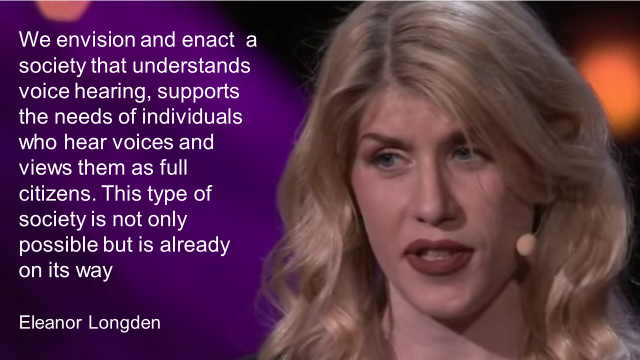
Join us in enacting a world that understands voice hearing, supports the needs of people who hear voices and regards them as full citizens.
Location:
Family Support programme
Whitby Mall, Lang Tower 1615 Dundas St E, Suite 202 Whitby, ON L1N 2L1
Register now…
Registration is required
Fees
Community $125
Early bird $100
This version of the workshop is aimed specifically towards family and community members supporting loved ones. Participation is also open to those working in services.
For those who work in services in any professional capacity. Worker $175 Early Bird $150
To go to registration page please Click the BIG RED BUTTON – or the link below.
This unique and innovative workshop offers you a non-diagnostic understanding of the kinds of experience like hearing voices that are that are sometimes called “psychosis”.
We offer you simple, everyday language to show you how you can understand such experiences not as “disconnected from” but intimately connected with reality and in ways that can be overwhelming, painful, frustrating, sometimes terrifying response to the reality we share,
It also offers a framework you can use to connect and draw from your own experiences to help you truly empathize and understand how better to support people who might be undergoing such difficult experiences.
You’ll leave feeling more at ease with both yourself and your ability to offer yourself as a one-person safe-space to people who struggle.
Join us in enacting a society that understands voice hearing, supports individuals who hear voices and views them as full citizens. .
What you can expect and connect yourself with a community of people doing just that.
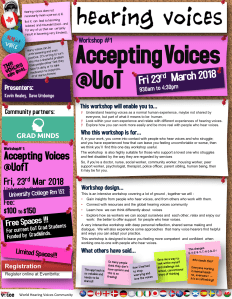
This workshop will enable you better to …
Understand hearing voices [and other experiences] as a normal human experience, that can become problematic, when a person is left to struggle without support..
Share simple data and stories about just how common it is to hear voices- how it is not in itself a problem and many people do – some cultures regard it as bringing great benefit.
Peer through and beyond diagnostic frameworks – resist the urge to catalogue and categorize everything you witness as “symptom”.and instead,
take an interest in the person struggling with their experience of voices and other experiences called “psychosis” as a human being having a hard time..
Begin to accept even the most difficult of human experiences as something that can be understood, explored and even valued.
Look within your own experience and relate with different experiences like hearing voices, visions, unshared beliefs.
Explore how you can be at ease in your role and be more real with people who have difficult experiences .
Offer yourself as a one-person safe-space to people who struggle with experiences like hearing voices.
Who this workshop is designed for…
We believe the hearing voices approach is emancipatory for all.
Workers If, in your work, you work with you come into contact with people who hear voices and who struggle with that; and you have experienced how that can leave you feeling uncomfortable or worse, then we think you’ll find this one day workshop useful.
So, if you’re a doctor, nurse, social worker, community worker, housing worker, peer support worker, psychologist, therapist, police officer, etc. then it may be for you.
Families, carers, everyone. The workshop is also highly suitable for you if you love, live with, care for people in your life who hear voices and struggle with that – and you have come to realise the limitations of an approach that limits understanding to illness-brain chemicals and you are curious about how else you may understand, and what else you can do..
Workshop design…
This is an intensive workshop covering a lot of ground , together we will :
Gain insights from people who hear voices, and from others who work with people who hear voices.
Learn how we can think differently about voices and other experiences that are sometimes labelled “psychosis”
Explore how, as workers, we can accept ourselves and each other, relax and enjoy our work: the better to offer support for people who hear voices.
Interact – with deep personal reflection, shared sense-making and dialogue.
We will also share some simple, practical approaches that you can use in your practice on return to work.
Connect with resources and both local network and the global hearing voices community.
This workshop is designed to leave you feeling more competent and confident in your own ability to offer yourself as a one person safe space for people who hear voices.
You will not become an expert in one day but you’ll have a good basis for starting and feeling more comfortable – and more human – as you do.
About the Presenters, Facilitators, Designers
Kevin Healey hears more voices than you can shake a stick at, so many that even his voices hear voices, and has done so for longer than either he – or they -care to remember.
Founder and coordinator of www.recoverynet.ca, Toronto Hearing Voices group, Anglophone Canada’s longest running, and of the Hearing Voices Café.
Creates and delivers innovative, taboo-busting talks, trainings and workshops that enable people to find new language, and simpler ways to understand surprisingly common human experiences that we’ve made fearful and taboo, so making life even harder both for those who struggle and also for the rest of us to understand.
Shows how we can make simple sense of trauma, pain, psychosis, taboo, and butt-hurt voices, and how they interweave and interconnect our inner-struggle with living in an outer-world that is fast becoming unfit for humans who built it and in which we keep creating results that nobody wants. After you’ve heard him talk you may join those who say they don’t hear voices but now wish they could.
A member of the global Hearing Voices Network and leading spokesperson in Canada and honoured to receive the first INTERVOICE International Annual Award for Innovation at the World Hearing Voices Congress in Paris, Oct 2016. Also Coordinator for the Toronto branch of ISPS-US International Society for Social Psychological Approaches to Psychosis.
Dave Umbongo For many years Dave would only say only one word, now he authors articles at http://www.recoverynet.ca and moderates online support groups for voices to talk directly with each other round the world, and coaches and co-presents in workshops for approaches like voice dialogue.
Enjoys creating memes: out of things voices say, about living in a universe that mostly comprises what he refers to as The Weird,and sharing his own wry observations on the human obsession with calling each another horrible names, categorizing and crushing each other into boxes that don’t fit.
Voices have stories too: His favourite pastime is pretending to be a jelly bean , second is remarking upon how “voices” and “humans” behave in ways that are often very much the-one-is–like-the-other. Dave doesn’t really have a bio – like other superheroes he has an “Origins Story”, and like “The Truth…”, at least some of it, “is Out there…”
Mark Roininen Mark’s direct involvement of late these days looks a lot like the photo. The workshop evolved and still does evolve from what emerged and still does emerge in conversations, sharing experiences both personal and work supporting others.
Mark has many years experience as “worker” with a major social services agency, and has worked with many who struggle with the kind of experiences that get calked “psychosis”.
He shares his personal perspective of how being confronted with his own dark side enabled him to how relate more simply with difficult experiences of the people he works with, in process freeing himself from merely following “the script” and playing “invisible worker” so that he can be both more professional and more human. His ability to share stories of his own experience of learning how to do this work offers others hope that they can too.
More Information
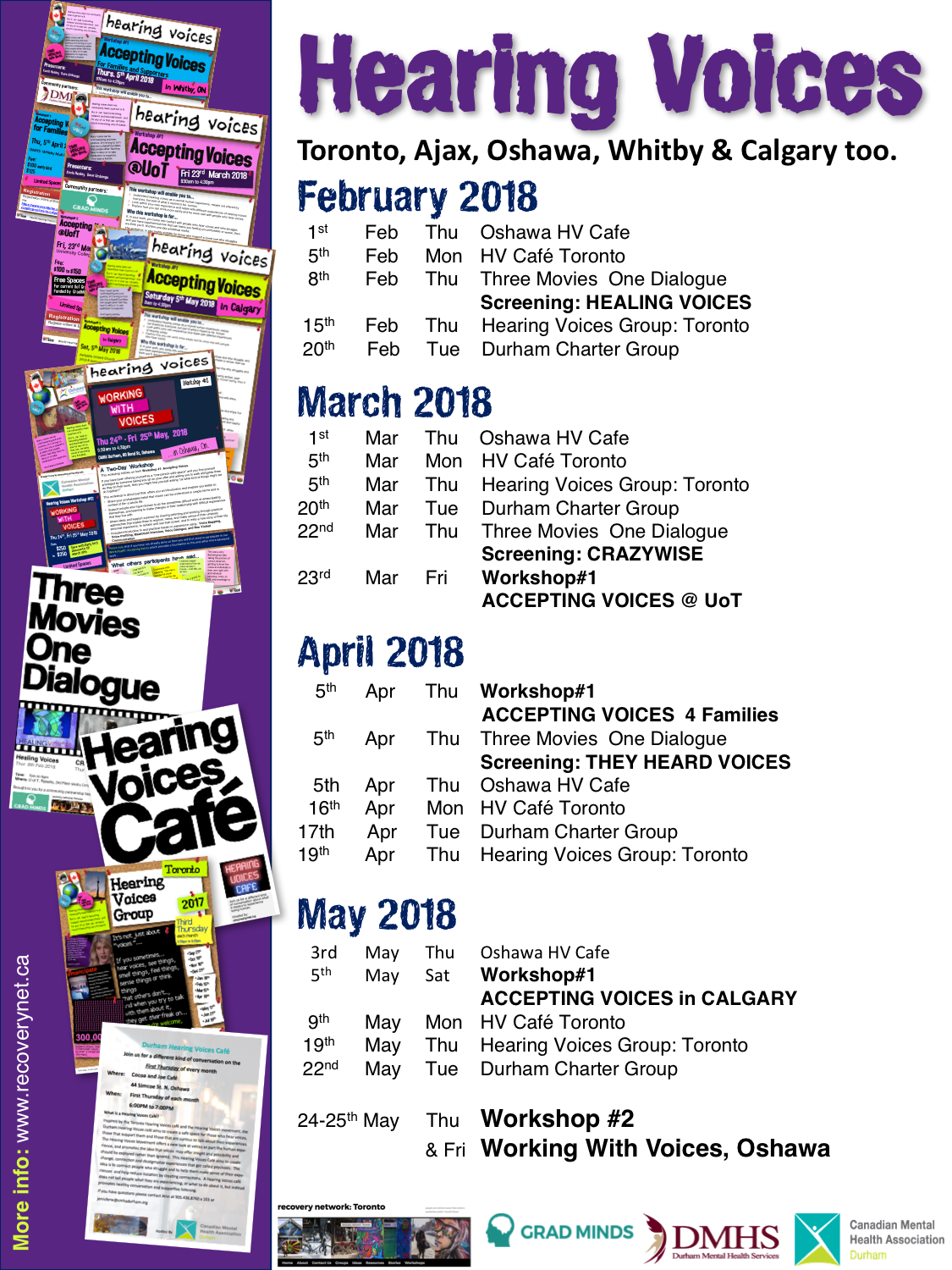
Poster Please feel free to share our poster wherever you can, it’s one way to support us in enacting a world that works for more of us…
Street livin’, caught in the trap
Guns or books, sell crack or rap
Be like kings or be like pawns
They called us coons, now they call us cons
Street niggas be packing pistols
Terrorists be blasting missiles
Crips and Bloods and retail thugs
CIA planes bring Colombian drugs in
Don’t push me ’cause I’m close to hell
The teachers in my neighborhood can hardly spell
And compare to them, prison guards get paid well
Ten years no bail is 4 years at Yale
So, forget about the statue of General Lee
Because the status of Blacks are generally
Gonna end up in some penitentiary
Systematically, that’s how they made it to be
Listen, they derailed the soul train
And put a nightmare in every Martin Luther King
And privatized prisons are owned by the same
Slave masters that owned the slave trade game
And racists no longer have to be racist
‘Cause niggas kill more niggas than the KKK did
Now, every time I hear a new def jam
Niggas killing niggas like they Ku Klux Klan
I understand what’s a nigga to choose?
Be the killer or be the dead dude in the news
I get it, what’s a nigga to do?
No education in the hood got a nigga confused
Street livin’, tough conditions
Brainwashed by the television
We lost in the war we live in
Double cross, love lost, no religion
Street livin’, oh my gosh
Another brother got shot by the searg’
Another cop got off with no charge
If you black in the hood, you at large
You’re guilty until you prove you’re innocent
If you’re ivory, they treat you different
If you’re ebony, they assume your temperament
Will be vigilant and they call you militant
And you’ll get shot and they’ll say the incident
Is ’cause you’re belligerent, what a coincidence?
Born and bred but you’re still an immigrant
And if you ain’t dead, you can see imprisonment
There’s more niggas in the prisons than there ever was slaves cotton picking
There’s more niggas that’s rotting in the prisons than there ever was slaves cotton picking
So, how we gon’ get up out the trap?
Guns or books, sell crack or rap
Street livin’, hustle or hoops
Guns or books, get shot or shoot
Street livin’, ain’t no rules
Break the law, make the breakin’ news
The life you choose could be the life you lose
Niggas getting stuck for the Nike shoes
Street livin’, ain’t no joke
It’s a cold world, better bring your coat
Revoke ’cause the streets are broke
And now they wanna take away our dreams and hopes
Street livin’, no economics
No way out of the Reaganomics
Infected by the black plague, new bubonic
No comprende, we speak ebonics
Street livin’, what’s your position?
You can take action or take a dick and listen
You can get fucked by the system
Or you can say “fuck the system”.
Songwriters: William James Adams / Allan Pineda Lindo / Jaime Luis Gomez / Stacy Ann Ferguson / Joshua Alverez
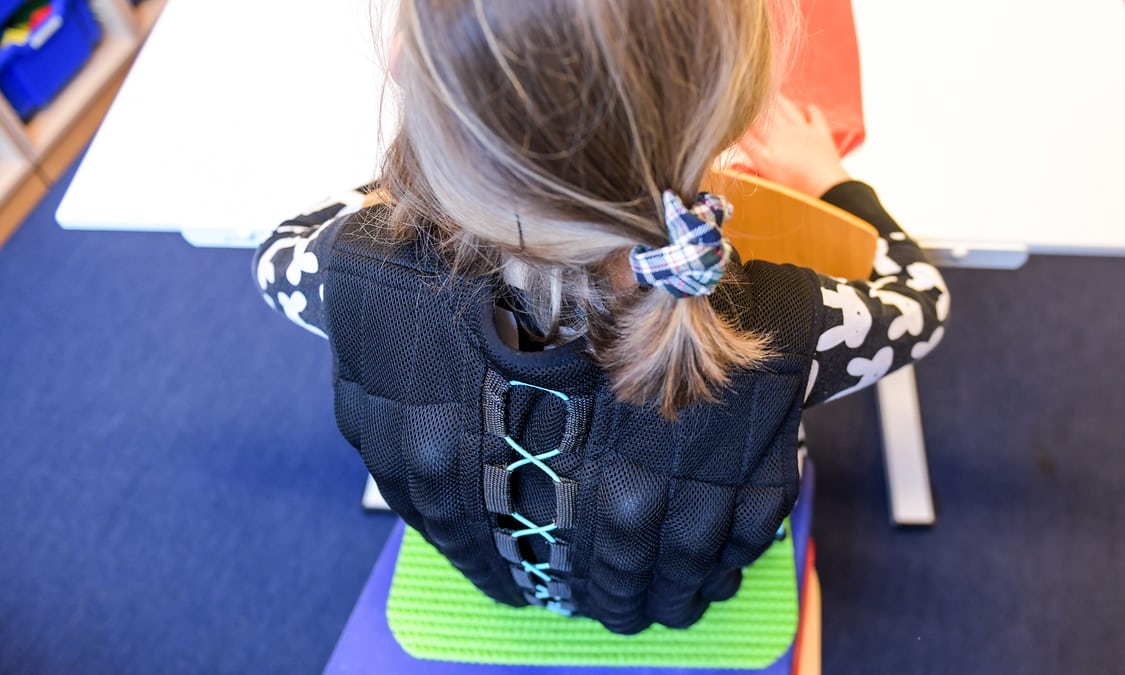
Note that a sand vest is not the vest you wear while having fun in the sand pit- it’s teh heavy sand filled vest kids are being forced to wear in class to stop them moving “too much” in classes and schools clearly not designed and run by people who have very little understsanding of kids.
Very little shocks me these days in regard the lengths institutions will go to to impose their power on individuals and their justifications for their action.
This did.
But perhaps by bringing out into the open – such open, visible oppression of children for being children – by literally pressing down on their bodies by putting them in a “heavy sand-filled vest” – will help us realise what we’re also doing when we do it in other ways that are less visible.
So, those experts who do this to kids, and those who justify it being done – what do we have them wear ?And what does it say of a school system that cant see hoe it create the problem its trying to solve by exerting its power over kids – the very people it exists to serve the needs of.?
Use of sand vests to calm children with ADHD sparks concern
Experts divided over heavy weights adopted by 200 schools in Germany to curb students’ restlessness
German schools are increasingly asking unruly and hyperactive children to wear heavy sand-filled vests in an effort to calm them and keep them on their seats, despite the misgivings of some parents and psychiatrists.
The controversial sand vests weigh between 1.2 and six kilograms (2.7 – 13Ib) and are being used by 200 schools across Germany.
Advocates of the vests, which cost between €140 and €170(£124 – £150), say they have witnessed a remarkable change in behaviour in many of the children who have worn them, claiming the heavy vests help to curb children’s restlessness.
A growing number of children are being diagnosed with attention deficit hyperactivity disorder (ADHD) each year in Germany, as elsewhere. Schools that use the vests argue they are an uncomplicated way of tackling the phenomenon head on, and a gentler and less complicated form of therapy than drugs such as Ritalin.
“Children love to wear the vests and no one is forced into wearing one against their will,” claimed Gerhild de Wall, head of the inclusion unit at the Grumbrechtstrasse school in the Harburg district of Hamburg, which has been one of the sand vest pioneers.
But critics say the vests are reminiscent of straitjackets used to constrain violent patients in psychiatric hospitals, and are in danger of stigmatising their wearers.
One parent who vented her anger over the use of the vests on Facebook, wrote: “It would be best if we avoided such torture methods. How can you say to a child, ‘You’re sick, and as a punishment you have to wear this sand-filled jacket which is not only physical agony but will make you look like an idiot in front of the rest of the class.’ I think some people have lost the plot”.
But another parent, Barbara Truller-Voigt, whose nine-year-old son Frederick has worn a 2kg sand vest at his Hamburg school for the past three years as a kind of therapy for his ADHD, said she was convinced it had a positive influence on him.
“He voluntarily puts it on,” she said, “and has the feeling that it helps him. He can concentrate better and is more able to take an active part in lessons because he’s not spending the whole time trying to keep his arms and legs under control.”
Frederick confirmed as much to the Hamburger Abendblatt: “The vest helps to calm me down,” he said. “And when I have it on my handwriting isn’t as scrawly.”
The long-term effect of using sand vests is not known. Photograph: Axel Heimken/DPA/PA Images
De Wall first came across the vests when she taught in the United States, where they are sometimes used for children with autism and are variously referred to as compression vests or squeeze jackets. She said that, far from constraining a child, they can help them to feel centred.
“Kids who fidget a lot or have a sensory disorder, often have problems being able to sort out one stimulus from another,” she said. “The vests help them to have a better sense of themselves, and that in turn helps them to concentrate.”
She said the vests should never be worn for more than 30 minutes at a time, but claims their weight is not a problem for most children because it is spread evenly over the upper body.
She also said there was great competition in her school to wear the vest. “The pupils jump at the opportunity to wear them, so we make sure to also let the kids wear them who don’t actually need them, which helps to ensure there’s no stigma attached to having one.”
One teacher, who declined to be named, said the experience of using the vests in her class led her to compare the use of the vests to “laying a hand on a child’s shoulder … or giving them a hug, which the children often need, but which we’re obviously not allowed to do”.
A sand vest made by Beluga Healthcare. Photograph: Beluga Healthcare
But many psychiatrists are sceptical about the vests’ use, particularly without knowing the long-term effect of them.
Michael Schulte-Markwort, director at the Child and Youth Psychiatry University Clinic in the north-western Hamburg district of Eppendorf, told German newspaper Die Tageszeitung the vests were “ethically questionable” and could easily be interpreted as a single remedy to fit all attention deficiency disorders.
Schulte-Markwort also criticised the fact that in schools too much emphasis was placed on ensuring a child changed their behaviour to fit the class, rather than focusing on the child’s individual problems. “We should be doing that far more,” he added.
Yvonne Gebauer, schools minister for the western state of North Rhine Westphalia, has said she could not support the use of the vests in her region. “This is an unusual method, whose application I can only view with a great deal of criticism,” she said in an interview with the Westdeutsche Allgemeine Zeitung. “Neither are there any verified findings or studies about their effectiveness.”
The main manufacturer of sand vests in Germany, Beluga Healthcare in Lower Saxony, said the company had made vests for “thousands of happy customers” and had been doing so for the past 18 years.
But the controversy unleashed following reports of the vests’ use in German schools has forced the company to put out a statement on its website. In it, Roland Turley owner of Beluga, which also produces diving vests for the German Navy, states: “We don’t want the vests to be viewed as a magic solution to be deployed in every case of concentration disorder. Not every restless child needs a sand vest. Children need to wear them voluntarily and it’s necessary to have an informed diagnosis from an occupational therapist or a paediatrician.”
He admitted that no study has been carried out on the long-term effectiveness of the vests. “We’ve tried to find an institute that might do it, but so far there’s been no interest,” he added.
Analysis: why the debate about sand vests is important
The revelation that schools in Germany are deploying sand vests intended to help children with ADHD raises important questions about how mental illness and special educational needs are approached in schools.
According to experts, there is still a lack of awareness of the condition in classrooms, resulting in many children becoming disillusioned with education.
“They’re often labelled the naughty kid and excluded,” said Louise Theodosiou, a consultant psychiatrist based in Manchester. “If you’ve already got that label it’s easy to see how you’re more vulnerable.”
Theodosiou said proactive support could make a significant difference to the school experience of children with ADHD, their self-esteem, and ultimately success.
However, any intervention – particularly one aimed at a group who already face extra challenges – needs to be carefully assessed before being rolled out, she said. There is some tentative evidence that weighted clothing could be useful. A 2014 study of 110 children wearing this clothing suggested they paid more attention in class. But questions remain about whether these improvements would be sustained in the long term and whether the garments would have other downsides.
“What we don’t want is something where children are wearing something visibly stigmatising,” said Theodosiou. “We need to know, how does the child feel about it, are they being teased about it?”
“I would want more studies on potential impact on breathing, pressure on the spine. There would be too many variables to understand before we recommended this.”
More broadly, the the evidence that sensory aids, such as fidget toys, are helpful for children with ADHD is fairly scant, although some parents anecdotally report that they are helpful.
“It’s an idea that has caught people’s imaginations, particularly among occupational therapists, but I’ve not seen good evidence for this,” says Philip Asherson, a professor of molecular psychiatry at King’s College London. “There’s a risk that you impose something on a child that they don’t like.”
Asherson said a crucial element of helping children with ADHD thrive is to find things they do well and are passionate about.
“It’s interesting to think about the people with ADHD who do quite well,” he said. “The ones who do well often found something that they were good at as children – it might be sport, drama or arts. They’re often in these areas that aren’t valued as much in [the classroom] but they’ve had parents who recognise that they’re really good at certain things and support them in developing that.”
Q&A
What is it? And what are the symptoms?
People with attention deficit hyperactivity disorder (ADHD) have a pattern of behavioural symptoms, including hyperactivity, impulsiveness and having difficulty concentrating. The traits are often noticeable at an early age, but can become more of a problem when a child starts school. The condition tends to run in families – parents and siblings of a child with ADHD are four to five times more likely to have ADHD themselves – and genetics plays a significant role.
MRI scans have showed up some subtle differences in the brain structure and activity, but how these translate into changes in behaviour aren’t well understood at this stage.
How is it diagnosed?
There’s no quick, simple test to diagnose ADHD and a challenge is that many of the relevant behaviours – fidgeting, being easily distracted and blurting out inappropriate comments – are a normal part of childhood. Such behaviours can also be triggered by external factors such as disruptions in home life or anxiety about school, so the person making the diagnosis (normally a psychiatrist or education specialist) first needs to rule out this possibility.
Children with ADHD lie at one extreme of a spectrum and tend to show these traits much more consistently, and to an extent that causes problems in learning and socialising. While a child without ADHD might find it hard to stay focused in a lesson, a child with the condition will also struggle to stay on topic when having a conversation about something they have a real enthusiasm for, such as their favourite football team or film.
An assessment will involve discussions with parents, a one-to-one conversation with the child and sometimes a standardised computer-based assessment, called the Qb test is used, which gives an objective score of symptoms.
How many people have it?
This depends a bit how people are counted. One of the biggest studies, a meta-analysis done in 2007, estimated the prevalence at between 6-7% in children and teenagers across the world. However, some studies, which have been based on parents or teachers reports have found higher figures – for instance, a recent study based on parent reports in the US put the figure at 9.5%. However, in some populations the rates are far higher – for instance, 20-30% of prisoners meet the ADHD diagnostic criteria.
It also depends what age group is being considered. About a third of children with mild ADHD will outgrow their symptoms or learn to manage them so they no longer have a significant impact.
What can be done to treat it?
Nice guidelines recommend that for children with mild symptoms, the first-line treatment should be family work, helping parents with boundary-setting and ensuring that strategies are put in place at school – for instance, assigned a teaching assistant to help with focused work sessions. Behaviour therapies can also help children learn strategies to help manage their symptoms.
Medication is only viewed as appropriate in moderate to severe cases of ADHD and for children of seven years or older. Ritalin is not widely used in the UK – a significant downside is that children need to take a second dose of medicine at lunchtime. Giving children a slow-release form of the active ingredient in Ritalin, called methylphenidate, can be helpful.
Why is medication so controversial?
Giving medication that has an influence on the brain while it is still developing is a concern for many parents. The drugs have been shown to be safe in the short-term, but the long-term effects on the human brain are not yet well understood. For some children, doctors and parents may decide that the benefits of being able to concentrate better and socialise more easily might outweigh potential risks.
There are also physical side-effects: methylphenidate can increase blood pressure and pulse rate and reduce appetite, meaning all these variables need to be closely monitored if a child is put on this kind of medication.
Which famous people have it?
People with ADHD may find it harder to concentrate, but with the right support it does not need to limit a child’s or adult’s expectations of what they can achieve – particularly if they find something that they are passionate about early in life. A number of high profile athletes, including the US swimmer Michael Phelps and British gymnast Louis Smith, have described how the structure of a training programme was helpful for them. The US gymnast Simone Biles also spoke out about her ADHD after it was revealed she took medication to help control symptoms. In a documentary last year, the comedian Rory Bremner described ADHD as like having a “brain like a pinball machine”.

 MADx is coming !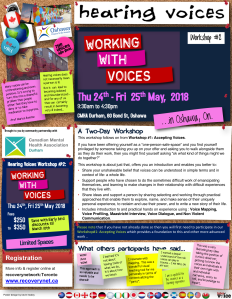
 Unique, innovative and insight-filled workshop led by Kevin Healey recipient of INTERVOICE’s International Award for Innovation, 2016.


















































 agnotarte
 dave umbongo
 drkenplacebo
 highfellow
 recoverynetwork:Toronto


 recovery network: Toronto
You must be logged in to post a comment.