What does “trauma informed” really mean?


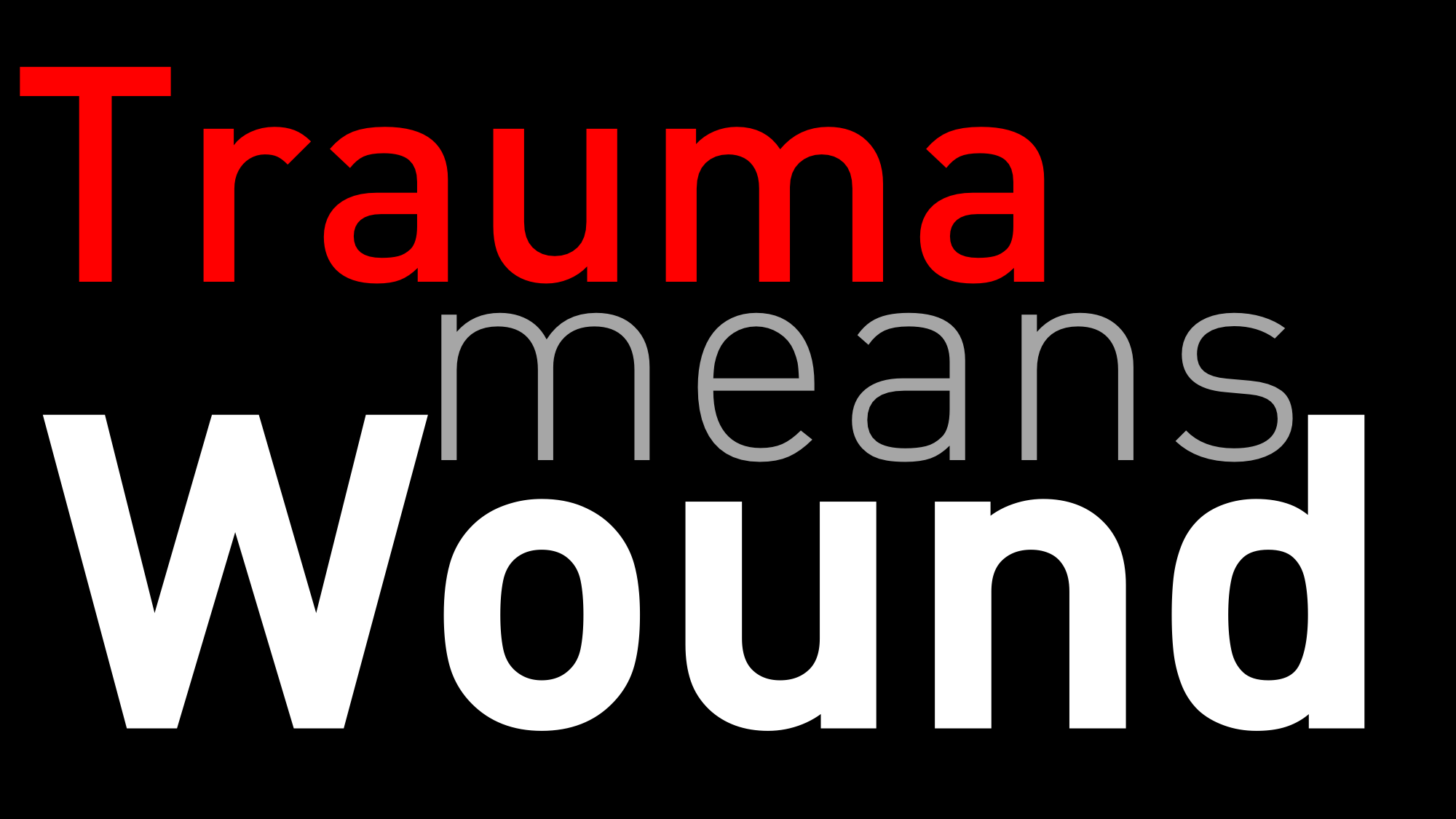
Trauma does not mean “that shit that happened”.

Trauma means “wound”.

Trauma is the effect left within us.

The essential experience of that effect- “trauma” – is being left feeling disempowered and disconnected .

That’s the nature of wound.

Thorns in The Spirit
“Thorns in the Spirit” – that’s what William James called it.

It can lead to all kinds of shit. Which of course leads to more wounding, wounds woundedness.

Freezing the conversation in talking about events – those that either do or do not qualify as trauma – or,  more accurately, that qualify us for treatment-  is itself traumatizing. It freezes us in a state of disempowered and disconnected state.

Sometimes what happens – is happening to affect us that way is so subtle, pervasive, endemic that we forget or blind ourselves and each other to awareness that it affecting us that way.

We can’t do much about what happened.

We can stop telling lies.
We can stop telling people who are struggling to feel safe in the world that they have a disorder, illness, biological deficit

We can learn to accept and understand how what did happen and especially how left us feeling unsafe in this world.
We can understand how that leaves us experiencing this world as one in which it is difficult to feel safe. 

The essential experience of living with trauma is being left feeling disempowered and disconnected – and when we feel like that it is difficult to feel safe. 

We can heal.

It takes time but we can
It takes as long as it takes.
We can learn to heal the wounds- our own.
And we can learn to support others in healing theirs,
at their own pace.

Pushing Trauma
Pushing “trauma” – goading us into telling retelling what happened to us  is itself traumatising.

Pushing people to fix themselves without first addressing what they need to feel safe- whatever that is-  that really is not “help”.

If you’re seeking to support someone who’s struggling to feel safe in the world
then one thing you can do is
stop making it about you, and stop making it about what you can do,  and stop making about how you can fix them.


Then, recognize that desire within you to fix them as a sign
– of the woundedness within you and of your own capacity for healing.

That’s what “trauma informed” really means.

Posted in Trauma | Tagged | Comments Off on What does “trauma informed” really mean?

To all the creatures within us…


From:
Star Trek The Next Generation
Season 5 episode 20 “The Cost of Living”

Alexander, son of Worf, on Holodeck 2 enjoying a mudbath with Lwaxana Troi…

“To all the creatures within us”


Alexander:
“to all the creatures within us?”


Lwaxana:
“Of Course!”

“Everyone of us has a thousand different kinds of
little people inside of us
and
some of them want to get out and be w-i-l-d
and some want to be a bit sad, or happy, or inventive
or even just go dancing
and that’s why we all have so many different urges at different times”

The mind opens and wisdom enters…

Posted in Crazy World | Tagged , , , | Comments Off on To all the creatures within us…

The Mad Ones – Jack Kerouac


Posted in Uncategorized | Comments Off on The Mad Ones – Jack Kerouac

We Are The Halluci Nation – A Tribe Called Red ft. John Trudell & Northern Voice


We are the human beings
The callers of names cannot see us but we can see them
We are the Halluci Nation


We Are The Halluci Nation
A Tribe Called Red

Featuring Northern Voice & John Trudell

We are the tribe that they cannot see
We live on an industrial reservation
We are the Halluci Nation
We have been called the Indians
We have been called Native American
We have been called hostile
We have been called Pagan
We have been called militant
We have been called many names
We are the Halluci Nation
We are the human beings
The callers of names cannot see us but we can see them
We are the Halluci Nation
Our DNA is of earth and sky
Our DNA is of past and future
We are the Halluci Nation
We are the evolution, the continuation
Hallucination
The Halluci Nation
We are the Halluci Nation

You Tube:   https://www.youtube.com/channel/UCQYo7hQsKKkHi4f0X-gB1yg
Website:     http://atribecalledred.com
Facebook:
Posted in music | Tagged , , , | Comments Off on We Are The Halluci Nation – A Tribe Called Red ft. John Trudell & Northern Voice

Why did I go Mad?


BBC Horizon documentary aired in UK on 2nd May, 2017.

Why Did I Go Mad?


It starts us off in familiar territory, deep within the orthodox belief – the story that that people who hear voices have a thing called “schit-so-free-nya” because the brain in their head ‘produces too much dopamine’- but hang in there because it takes a turn and goes where maybe you think they wouldn’t dare go.

Things are changing- they did dare and they did go.

What if the story that if you hear voices then you have a thing called “schizophrenia” which means that the brain in your head “produces too much dopamine ” is not the only way to understand?

BBC Horizon is a “popular science show” and this episode illustrates how science is not about claiming power to claim to be be right in order to sell us stuff but is actually a process of exploration.

Having set out the current state of “treatment” at about 18mins in we get to go exploring. We get to see glimpses of where the the real frontier of understanding is: not where the lion’s share of research money goes – looking at neurons and brain chemicals to find more drugs – but exploring the meaning of difficult experiences; making new meaning; learning new skills; learning new ways of interpreting our world;  and yes using “new” understanding of how our brains constantly change to find ways we might aid our own brains to interpret the world in ways that can help make life worth living.

We see glimpses of some ways being tested for supporting a person using technology that can help them play key role in their own healing.

Data Sampling
One is with Richard Bentall, data sampling: “a form of electronic diary keeping” that focuses on “how a person feels in everyday life” and taking notice of the situations in which a person feels unsafe.

Rather than the clinician use their power to diagnose and prescribe the person gets a phone app to collect their own personal data.

This to aid in noticing, naming and making sense of their own patterns of experience and that also helps them bring hard data, personal information into a therapy session so that the two people can explore and work with it together.

Avatar Therapy
Second we see a glimpse of “avatar therapy” that maybe has potential to help a person practice new ways of relating with a shitty voice a person might find disempowering to find and build both new skills and confidence.
In both cases we see not new approach but really quite old approaches that are being augmented by adding technology which might make them more appealing and sciencey seeming, for a bit more on “data sampling” kind of approach see Jim van  Os’ TEDx talk [here].

These are not the quick fixes or invasive technology-insertion common to allopathic [ie western] medicine but tech-enabled approaches that, done skillfully by the therapist, can assist in enabling a person to find their power to act in their own lives.


They are adaptions of approaches people have been using themselves or supporting each other in for some time. For example that “avatar therapy”  is a tech-laden version of an approach that can also work with a friend you trust and finger puppets you’ve made with craft and even dollar store store supplies. You may not need the technology nor need to wait for a professor of psychiatry- or even a therapist- to assist you but if you feel you do then it’s good to know some are learning how to work with approaches like these.

Voice Dialogue
At the end we also have a glimpse of voice dialogue as “therapy”. An adaption of an approach devised by Hal and Sidra Stone – which they say is ‘not a therapy’, perhaps best not practised by a therapist , but like any other it kinda depends on the therapist, and so we get to see Rachel and one of her “Not Yets” in voice dialogue with Dirk Corstens.  The aim is to better understand eth relationship between “voice” and “voice hearer” in ways that might lead to improving that relationship.
Dirk: “Our experience and research shows that if you only suppress your voices then they become stronger”


For those who do want to choose the path of exploring and changing their own difficult experiences and learn to live with whatever they do live with, the options are increasing. We need to make them more available.

This 56 minutes shows us that the best most useful hypothesis is:
This crazy shit might just work
let’s give it a go – and see what happens.
Especially if you find  he stuff you’ve been offered so far doesn’t “work” for you.

Its not easy- but then anyone who tells you it is easy is lying out their bumhole.


Exploring and making sense of terrifying experiences


We see it is very possible to explore our experience and make meaning out of even terrifying experiences and new approaches to support an individual in their process. 

We also learn a few simple tips on how we might find cunning ways to have professionals not ask us [yet again!] those invasive questions we’re not ready to answer, or because there isn’t an answer,  or we know they wont understand or because it’s just too bloody , you know…
like Rai’s “The Not Yets”.

Once the dopamine fog clears it’s good to see find information being presented about how adverse experiences especially in early years leave us many times more likely to struggle in adulthood in ways that we find ourselves being told we “have psychosis”.

For example, David Strange gives us a vivid portrait of some of his frightening experiences and how he feels his life is constantly under threat,  he cheerfully shows us his “drugs for the night” later we also find out how he’d been violently bullied in his childhood.

“Having psychosis is like this, being continually frightened and scared all the time.”

“Having psychosis is like this, being continually frightened and scared all the time.”

Swaran Singh:
And, even more rare at about 40mins we some on how it’s not just stochastic shock type of like experiences that can lead us to place but that where we live can  have a huge impact also finding ourselves trapped disconnected and disempowered unable to escape pernicious, soul-crushing, life-sapping environments where we are dehumanized and marginalized.
For instance around city dwellers are more likely to be diagnosed. Beyond urban living our ethnic background affects our chances – around the world “migrant populations” have higher rates of diagnosis than the “host populations”.  

As Swaran Singh tells us,

“what these groups have in common is social discrimination and adversity”. There is something about  “social defeat”, “repeated experiences of marginalisation, exclusion, and discrimination”.

This also happens when, for instance we move schools, the more times we do it the more likely we are to end up diagnosed.  We “leave behind our support network and start again,  as an outsider”.

“That chronic experience as an outsider is, we think related to development of psychosis” .

That chronic experience as an outsider is, we think, related to development of psychosis.


Traumatizing experiences have a powerful impact.

Jacqui Dillon takes us to a neighbourhood that holds some “terrible memories”. There is strong evidence linking childhood abuse with a range of diagnoses.

Richard Bentall talking with David: “Dissociating is a way of handling threat. In a situation when you cant escape, it’s a way of escaping” David shares how from age of four or five to thirteen lived in constant fear of one of the adults supposed to be caring for him launching a brutal attack. “The atmosphere at home was terrifying” and would “pretend not to be there”.

Then we come to the nub of the problem for us as a society, when in conversation with David Robyn Murray, having told of the dangers to health of long-term use of the drugs,  tells David:

“The medications you are taking are much cheaper than psychological therapy”.

“Psychosis has many names but research suggests it’s primarily the brain’s response to [traumatic] events.”

If, for no other reason then choose to watch this because we get to see a very cool thing about hearing voices that is often overlooked – how it’s an example of doing things very differently. Like how leadership comes from not only of people who hear voices but also from awesome women: Rachel Waddingham and Jacqui Dillon, Eleanor Longden are all featured.

Thank you all – and thank you David Strange too.

This used to be the future.
This -meaning right now- used to be the future.

The future is coming to what we currently called “mental health services” too.
It won’t be perfect but we get a glimpse hear of a few steps we can take now.

If you’re ready for a glimpse of what it can be like if only we choose to let it, then spend an hour of your life watching this.

BBC info page: Why Did I Go Mad
If you’re in UK you may be able to watch it here:
http://www.bbc.co.uk/programmes/b08pltgy


If that doesn’t work for you then this link may still work…

https://www.dailymotion.com/video/x5m331x


Posted in Difference and Diversity, Healing, hearing voices, skin I'm in, Trauma, Trauma | Tagged , | Comments Off on Why did I go Mad?

Psychiatry’s Identity Crisis ?


Op-Ed piece in New York Times by Psychiatrist and Psychopharmacologist Richard A. Friedman on the limitations of his own profession’s claims to being the world’s foremost authority and body of knowledge  but yet limits its own understanding of the struggles that emerge out of being human as simply “diseases of the brain” and also limits its own approach to soul-healing [the meaning of the word “psychiatry”] to highly experimental use of and drugs [toxic chemicals…] and electricity.

In the face of a rapidly declining number of patients who are offered anything other than drugs he calls for a broader approach and in particular more balanced funding towards research into psychotherapeutic approaches.

No wonder, as he reports, patients are three times more likely to want and request psychotherapy than psychotropic drugs.

It is part of the tragedy that if you can afford to pay then you will have no trouble finding the kind of support you think you need – even more so in Canada where “universal healthcare” means “universal” only for some.

From NYT:


Psychiatry’s Identity Crisis

by leonardi sonnoli

Image by Leonardi Sonnoli

AMERICAN psychiatry is facing a quandary: Despite a vast investment in basic neuroscience research and its rich intellectual promise, we have little to show for it on the treatment front.

With few exceptions, every major class of current psychotropic drugs — antidepressants, antipsychotics, anti-anxiety medications — basically targets the same receptors and neurotransmitters in the brain as did their precursors, which were developed in the 1950s and 1960s.

Sure, the newer drugs are generally safer and more tolerable than the older ones, but they are no more effective.

Even the new brain stimulatory treatments like repetitive transcranial magnetic stimulation don’t come close to the efficacy of electroconvulsive treatment, developed in the 1940s. (Deep brain stimulation is promising as a treatment for intractable depression, but it is an invasive treatment and little is known about its long-term safety or efficacy.)

At the same time, judging from research funding priorities, it seems that leaders in my field are turning their backs on psychotherapy and psychotherapy research. In 2015, 10 percent of the overall National Institute of Mental Health research funding has been allocated to clinical trials research, of which slightly more than half — a mere 5.4 percent of the whole research allotment — goes to psychotherapy clinical trials research.

As a psychiatrist and psychopharmacologist who loves neuroscience, I find this trend very disturbing. First, psychotherapy has been shown in scores of well-controlled clinical trials to be as effective as psychotropic medication for very common psychiatric illnesses like major depression and anxiety disorders; second, a majority of Americans clearly prefer psychotherapy to taking medication. For example, in a meta-analysis of 34 studies, Dr. R. Kathryn McHugh at McLean Hospital found that patients were three times more likely to want psychotherapy than psychotropic drugs.

Finally, many of our patients have histories of trauma, sexual abuse, the stress of poverty or deprivation. There is obviously no quick biological fix for these complex problems.

Still, there has been a steady decline in the number of Americans receiving psychotherapy along with a concomitant increase in the use of psychotropic medication in those who are treated in the outpatient setting. These trends are most likely driven by many factors, including cost and the limited availability that most Americans have to mental health practitioners. It is clearly cheaper and faster to give a pill than deliver psychotherapy.

The doubling down on basic neuroscience research seems to reflect the premise that if we can unravel the function of the brain, we will have a definitive understanding of the mind and the causes of major psychiatric disorders. Indeed, an editorial in May in one of the most respected journals in our field, JAMA Psychiatry, echoed this view: “The diseases that we treat are diseases of the brain,” the authors wrote.

Even if this premise were true — and many would consider it reductionist and simplistic — an undertaking as ambitious as unraveling the function of the brain would most likely take many years. Moreover, a complete understanding of neurobiology is unlikely to elucidate the complex interactions between genes and the environment that lie at the heart of many mental disorders. Anyone who thinks otherwise should remember the Decade of the Brain, which ended 15 years ago without yielding a significant clue about the underlying causes of psychiatric illnesses.

Sure, we now have astounding new techniques for studying the brain, like optogenetics, in which neurons can be controlled by light, allowing researchers to understand how neurons work alone and in networks. But no one thinks breakthrough biological treatments are just around the corner.

More fundamentally, the fact that all feelings, thoughts and behavior require brain activity to happen does not mean that the only or best way to change — or understand — them is with medicine. We know, for instance, that not all psychiatric disorders can be adequately treated with biological therapy. Personality disorders, like borderline and narcissistic personality disorders, which are common and can cause impairment and suffering comparable to that of severe depression, are generally poorly responsive to psychotropic drugs, but are very treatable with various types of psychotherapy.

There is often no substitute for the self-understanding that comes with therapy. Sure, as a psychiatrist, I can quell a patient’s anxiety, improve mood and clear psychosis with the right medication. But there is no pill — and probably never will be — for any number of painful and disruptive emotional problems we are heir to, like narcissistic rage and paralyzing ambivalence, to name just two.

Anyone who doubts the need for psychotherapy research should consider the case of post-traumatic stress disorder, for which the mainstay of treatment has been exposure therapy.

This requires patients to re-experience the circumstances of their traumatic event, which is meant to desensitize them and teach them that their belief that they are in danger is no longer true.

But we know that many patients with PTSD do not respond to exposure, and many of them find the process emotionally upsetting or intolerable.

Dr. John C. Markowitz, a professor of clinical psychiatry at Columbia University, recently showed for the first time that PTSD is treatable with a psychotherapy that does not involve exposure. Dr. Markowitz and his colleagues randomly assigned a group of patients with PTSD to one of three treatments: prolonged exposure, relaxation therapy and interpersonal psychotherapy, which focuses on patients’ emotional responses to interpersonal relationships and helps them to solve problems and improve these relationships. His federally funded study, published in May’s American Journal of Psychiatry, reported that the response rate to interpersonal therapy (63 percent) was comparable to that of exposure therapy (47 percent).

PTSD is a serious public mental health problem, particularly given the rates of PTSD in our veterans returning from war. This study now gives clinicians a powerful new therapy for this difficult-to-treat disorder. Imagine how many more studies like Dr. Markowitz’s might be possible if the federal funding of psychotherapy research were not so stingy.

The brain is notoriously hard to study and won’t give up its secrets easily. In contrast, psychotherapy research can yield relatively quick and powerful results. Given the critically important value — and popularity — of therapy, psychotherapy research deserves a much larger share of research dollars than it currently receives.

Don’t get me wrong. I’m all for cutting-edge neuroscience research — and lots of it. But we are more than a brain in a jar. Just ask anyone who has benefited from psychotherapy.

Original here:
https://www.nytimes.com/2015/07/19/opinion/psychiatrys-identity-crisis.html?_r=0

Posted in Crazy World, mental illness? or..., Psychiatry, sh!t is f#cked | Tagged , , , , | Comments Off on Psychiatry’s Identity Crisis ?

Who teaches us to be normal when we’re a one of a kind?


You, and every one of us is one of a kind.
Best estimates have it that there have been about 100 billion humans, each one unique: a one-off.
Only you gets to be you.

Who teaches us to be normal when we’re a one off?
– Sydney Barrett

From the TV show: Legion: ch 5

Posted in Emancipate yourself..., human diversity, human potential, Uncategorized | Tagged , , , | Comments Off on Who teaches us to be normal when we’re a one of a kind?

leave me alone – New Order


Leave Me Alone
New Order

On a thousand islands in the sea
I see a thousand people just like me
A hundred unions in the snow
I watch them walking, falling in a row
We live always underground
It’s going to be so quiet in here tonight
A thousand islands in the sea
It’s a shame

And a hundred years ago
A sailor trod this ground I stood upon
Take me away everyone
When it hurts thou

From my head to my toes
From the words in the book
I see a vision that would bring me luck
From my head to my toes
To my teeth, through my nose
You get these words wrong
Everytime
You get these words wrong
I just smile

But from my head to my toes
From my knees to my eyes
Everytime I watch the sky
For these last few days leave me alone
But for these last few days leave me alone
Leave me alone
Leave me alone


Posted in Uncategorized | Comments Off on leave me alone – New Order

Questionable – MunizO


MunizO

WWW. MunizO.com
Facebook  https://www.facebook.com/munizo023/

In The News  https://www.thestar.com/entertainment/2016/06/16/munizo-ditches-label-deal-in-japan-to-busk-in-toronto.html


Posted in Uncategorized | Comments Off on Questionable – MunizO

The Crunch – Charles Bukowski


who put this brain inside of me?

it cries
it demands
it says that there is a chance.

it will not say
“no.”


The Crunch
Charles Bukowski

too much too little

too fat
too thin
or nobody.

laughter or
tears

haters
lovers

strangers with faces like
the backs of
thumb tacks

armies running through
streets of blood
waving winebottles
bayoneting and fucking
virgins.

an old guy in a cheap room
with a photograph of M. Monroe.

there is a loneliness in this world so great
that you can see it in the slow movement of
the hands of a clock

people so tired
mutilated
either by love or no love.

people just are not good to each other
one on one.

the rich are not good to the rich
the poor are not good to the poor.

we are afraid.

our educational system tells us
that we can all be
big-ass winners

it hasn’t told us
about the gutters
or the suicides.

or the terror of one person
aching in one place
alone

untouched
unspoken to

watering a plant.

people are not good to each other.

I suppose they never will be.
I don’t ask them to be.

but sometimes I think about
it.

the beads will swing
the clouds will cloud
and the killer will behead the child
like taking a bite out of an ice cream cone.

too much
too little

too fat
too thin
or nobody

more haters than lovers.

people are not good to each other.
perhaps if they were
our deaths would not be so sad.

meanwhile I look at young girls
stems
flowers of chance.

there must be a way.

surely there must be a way that we have not yet
thought of.

who put this brain inside of me?

it cries
it demands
it says that there is a chance.

it will not say
“no.”

Posted in Uncategorized | Comments Off on The Crunch – Charles Bukowski